Blog Details

  • Home
  • Blog
  • Is Preschool a Recession-Proof Business?

Is Preschool a Recession-Proof Business?

Is Preschool a Recession-Proof Business? Exploring Preschool Franchise Investment and Profitability in India

By Vishal Chiripal, Shanti Juniors

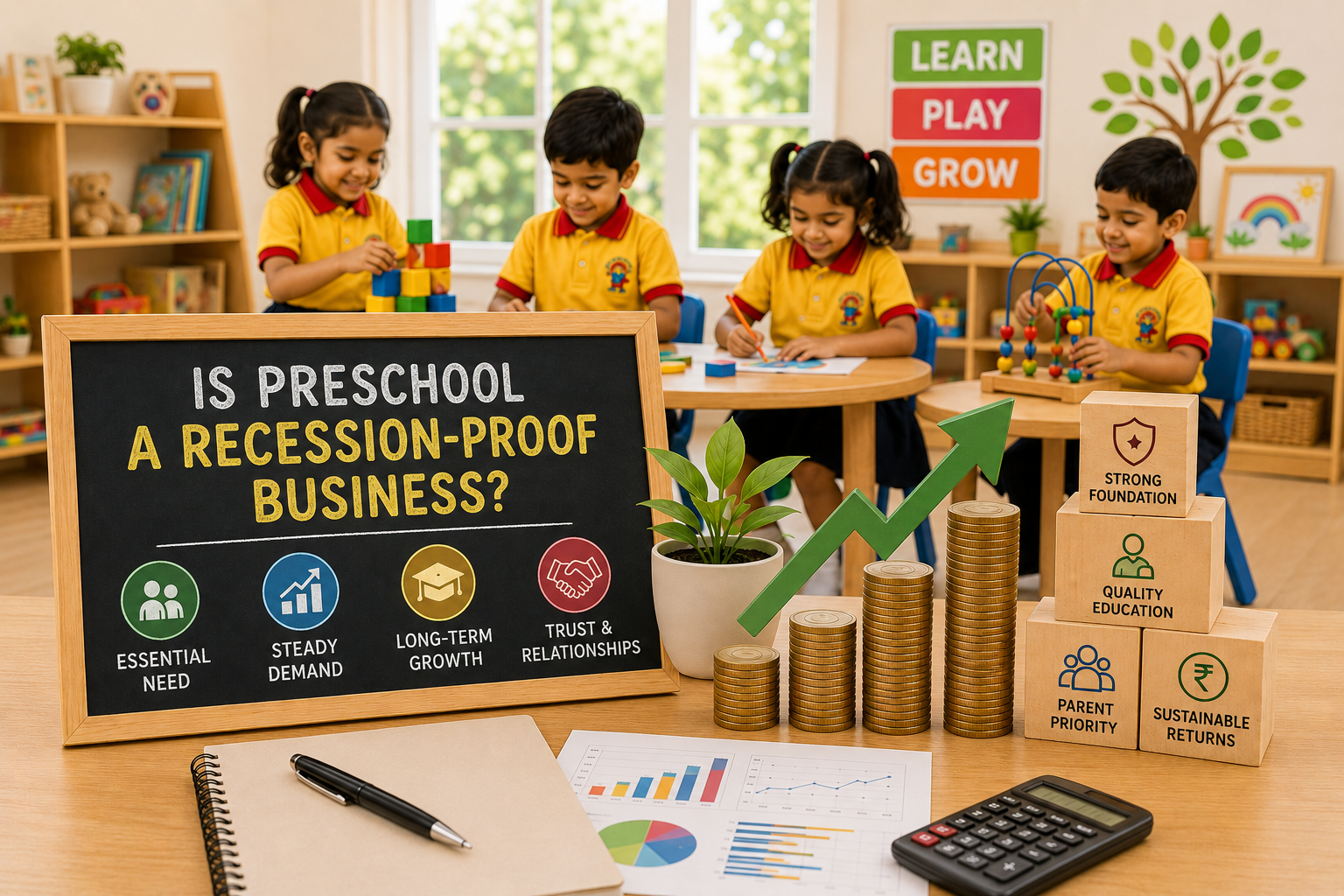
As economic fluctuations often influence business viability, many investors are turning their attention to sectors that demonstrate resilience during recessions. The preschool industry, particularly through franchise models, stands out as a potential opportunity for those seeking to invest in a recession-proof business. In this article, we will delve into the recession-resistant nature of preschool franchises, focusing on investment opportunities, profitability metrics, and market trends that support the stability of early childhood education.

The preschool business offers unique advantages that can provide reliable revenue streams, even in economic downturns. We’ll explore the operational dynamics of this industry, examining how recurring admissions cycles and a focus on quality education contribute to its resilience. Additionally, we’ll consider specific benefits of investing in a preschool franchise, with a focus on the Shanti Juniors franchise, known for its robust support systems and proven business frameworks.

Investment Opportunities

Investing in a preschool franchise involves several financial commitments that can vary significantly depending on the location and specific business model chosen. Understanding these costs is crucial for potential investors eager to tap into this growing market.

  1. Initial Investment Costs: Typically, initial investment costs can range from ₹10 lakhs to ₹50 lakhs, allowing for flexibility based on the franchise model and location.
  2. Franchise Fees: Franchise fees can range from ₹1 lakh to ₹5 lakhs, providing access to established business frameworks and brand recognition.
  3. Setup Costs: Setup costs often vary widely, usually between ₹5 lakhs to ₹30 lakhs, covering facilities, equipment, and initial operational expenses.
  4. Profit Margins: Investors can expect profit margins between 15% to 40%, depending on operational efficiency and local market demand.

This financial overview highlights the various aspects of funding a preschool franchise, making it an accessible option for many investors looking for stable undertakings in education.

Profitability Metrics

To evaluate the profitability of a preschool franchise, key performance indicators must be considered. These metrics provide insights into financial health and potential returns, enabling savvy business decisions.

  1. Return on Investment (ROI): Franchisees may anticipate a return on investment between 20% to 30% within the first three to five years, making it a lucrative choice.
  2. Market Demand: The preschool market in India is projected to grow significantly, potentially reaching USD 10 billion by 2028 due to increasing parental focus on quality early education.
  3. Financial Forecasts: Success is often supported by thorough financial forecasting practices that project long-term sustainability and growth potential.

These indicators emphasize the attractive profitability landscape that preschool franchise investors can benefit from, promoting the viability of such businesses even in challenging economic climates.

Recession-Proof Nature

The perception of preschools as recession-proof rests on several foundational attributes.

  1. Demand Stability: Early childhood education services are often viewed as essential, maintaining demand irrespective of economic fluctuations.
  2. Parent Priorities: During economic downturns, parents prioritize stability and quality for their children, often leading them to sustain preschool enrollments.
  3. Government Support: Initiatives promoting early childhood education reinforce financial viability, as they often provide funding or grants to facilitate enrollment.

This understanding of the recession-resistant nature of preschools highlights their essential role in society, irrespective of external economic pressures.

Market Trends

Several current trends are driving growth within the preschool market, contributing to its durability during economic downturns.

  1. Increasing Awareness: The growing awareness of early childhood education’s benefits among parents significantly contributes to consistent enrollment numbers.
  2. Urbanization: Rapid urban growth leads to changing demographics, with more families seeking reliable preschool options.
  3. Dual-Income Families: With both parents working in many households, there is a strong need for quality preschool care, which boosts demand in the market.

Understanding these trends is crucial for stakeholders looking to enhance their position within the preschool industry.

Why Is the Preschool Business Considered Recession-Resilient?

The preschool business exhibits unique characteristics that underscore its resilience in the face of economic uncertainty.

  • Essential Service: Preschools provide an essential service that many families consider non-negotiable, ensuring a sustained demand for their services.
  • Stable Demand: Established preschools often enjoy a stable enrollment rate due to consistent community engagement and trust.
  • Community Engagement: Many successful preschools thrive on strong community ties and involvement, which further secures their operational stability.

Exploring these elements can help investors understand why the preschool model is becoming increasingly favorable during economic fluctuations.

Comparative Analysis of Preschool Franchises in India vs. Other Sectors

It is important to compare the investment and profitability potential of preschool franchises with other business sectors.

  1. Investment and Profitability: Preschool franchises often require lower initial investments compared to other sectors like retail or manufacturing while offering comparable profit margins.
  2. Operational Support: The operational support provided by franchisors in the education sector is significantly greater than that often seen in other sectors.
  3. Market Growth: The early childhood education sector is currently experiencing robust growth, outpacing many traditional investment horizons.

This comparative approach reveals the distinctive advantages that preschool franchises hold over alternative business models.

How Do Economic Downturns Affect Preschool Admissions?

Economic conditions can influence preschool enrollments, but generally show stable performance even during recessions.

  1. Enrollment Stability: Historically, preschools maintain stable enrollments during economic downturns, as families prioritize educational stability for their children.
  2. Impact of Financial Conditions: While some families may reconsider private schooling, many still opt for preschools due to the essential nature of the services provided.

Assessing these dynamics further emphasizes the preschool industry’s resilience during tough financial times.

What Market Trends Support Stability in Early Childhood Education?

Several key trends bolster the stability of the preschool market in the face of economic uncertainty.

  1. Post-Pandemic Growth: The COVID-19 pandemic has led to increased awareness of early childhood education’s importance, resulting in greater demand.
  2. Government Initiatives: Ongoing government initiatives aim to promote early childhood education and improve infrastructure, securing future growth.

These trends highlight the ongoing evolution of the preschool sector, supporting its growth potential.

What Are the Key Benefits of Investing in a Preschool Franchise in India?

Investing in a preschool franchise in India offers several unique advantages:

  1. Potential Returns: Investors can enjoy attractive returns due to rising enrollment rates and sustained consumer demand.
  2. Market Demand: The increase in dual-income families creates a heightened demand for early childhood education options.
  3. Operational Advantages: Franchise models provide essential training and support, reducing the risks typically associated with starting an independent preschool.

By analyzing these benefits, potential investors can make informed decisions regarding their involvement in this sector.

How Does a Preschool Franchise Reduce Investment Risks Compared to Independent Startups?

Investing in a preschool franchise presents numerous advantages over independent startups.

  1. Brand Recognition: Franchisees benefit from established brands that attract customers more readily than new, independent ventures.
  2. Operational Support: Comprehensive support from the franchisor helps navigate challenges that new business owners might otherwise encounter alone.
  3. Financial Metrics: Attendance and revenue tracking systems are often provided, ensuring data-driven decisions can be made to enhance performance.

Understanding these benefits places franchise offerings in a distinct position compared to independent startups.

What Franchise Support Services Boost Preschool Business Success?

Support services offered by preschool franchises enhance growth and operational efficiency.

  1. Training Programs: Comprehensive franchise training equips owners with the knowledge needed to operate their businesses effectively.
  2. Marketing Support: Franchisors provide marketing assistance to help franchisees attract families and increase enrollment.
  3. Community Engagement: Programs that foster community connections bolster trust and reputation, which are essential for business continuity.

These support mechanisms are integral to the growth and sustainability of preschool franchises.

How Does Shanti Juniors’ Franchise Model Enhance Investor Confidence?

Shanti Juniors is recognized for its robust franchise model that fosters investor confidence through various key aspects.

  1. Established Reputation: The brand has built a solid reputation in the industry, which helps attract families seeking quality education.
  2. Curriculum Quality: High standards in curriculum design and implementation reassure parents regarding the education their children will receive.

Understanding the Shanti Juniors model provides insight into the factors that contribute to its success in the preschool franchise sector.

What Proven Systems Does Shanti Juniors Offer Franchisees?

Franchisees of Shanti Juniors benefit from several proven systems that streamline operations and enhance profitability.

  1. Comprehensive Training: The training programs focus on teaching best practices, encouraging consistency across franchises for better customer experiences.
  2. Marketing Assistance: Ongoing marketing support helps franchises successfully navigate competitive environments and attract students effectively.

By leveraging these systems, franchisees can enjoy a streamlined approach to running their businesses while increasing the likelihood of success.

How Does Shanti Juniors Build Community Trust and Brand Strength?

Building community trust and brand strength is vital for preschool franchises.

  1. Community Engagement: Engagement initiatives, such as local events and partnerships, help strengthen connections with families and build a supportive network.
  2. Targeted Marketing: Strategic marketing efforts aimed at educating parents about the importance of early childhood education further solidify Shanti Juniors’ presence within local communities.

These strategies exemplify how Shanti Juniors fosters its reputation as a trusted provider of preschool education.

What Factors Influence Preschool Business Profitability in India?

Several factors play a critical role in determining the profitability of preschool businesses in India.

  1. Market Demand: Growing awareness around quality preschool education drives higher enrollment numbers and enhances profitability.
  2. Operational Costs: Managing operational costs effectively is essential to ensure profit margins remain healthy.

By considering these aspects, investors can adopt practices that optimize profitability in the preschool sector.

How Do Recurring Admission Cycles Create Reliable Revenue Streams?

Recurring admission cycles are foundational to the financial performance of preschool franchises.

  1. Predictable Income: This business model allows for predictable income as families typically enroll children at similar times each year, creating steady cash flow.
  2. Financial Forecasting: Accurate financial forecasting becomes feasible as enrollment patterns can be analyzed over time, aiding in budget planning.

The role of these recurring cycles is crucial in ensuring the stability of income for preschool franchises.

What Are the Key Cost Drivers and ROI Expectations for Preschool Franchises?

Understanding the cost drivers and return on investment expectations for preschool franchises can guide prospective investors’ decisions.

  1. Initial Investment: Initial startup costs significantly influence overall business operations and anticipated ROI.
  2. Operational Costs: Ongoing operational expenses dictate profitability, making it essential to monitor and control these factors carefully.
  3. Expected ROI: Investors should expect a return in the range of 20-30% within the first three to five years, establishing a strong justification for capital investment.

Evaluating these financial parameters empowers investors to make informed choices regarding their preschool franchise endeavors.

How Does Early Childhood Education Demand Sustain Preschool Businesses During Recessions?

The demand for early childhood education is a stabilizing force for preschool businesses, particularly during economic downturns.

  1. Parental Priorities: Regardless of financial conditions, parents often prioritize quality education for their children, driving sustained demand for preschool services.
  2. Stable Demand: The industry sees fewer fluctuations in enrollment, making it resilient against economic shifts that typically affect other business sectors.

This demand underscores the durability of the preschool model even in challenging times, ensuring ongoing opportunities for enrollment and growth.

Why Do Parents Prioritize Quality Education Despite Economic Slowdowns?

Despite economic constraints, parents continue to prioritize their children’s educational needs, highlighting the preschool sector’s resilience.

  1. Parental Awareness: Parents are increasingly aware of the long-term benefits associated with quality preschool education, such as improved social skills and better preparedness for primary education.
  2. Long-Term Benefits: Many parents recognize that investing in early childhood education can lead to better academic outcomes, making them less likely to cut these services from their budgets.

This steadfast commitment to quality education creates stability for preschool franchises by continuing to attract families even in uncertain economic climates.

What Demographic and Social Trends Increase Preschool Enrollment in India?

Several demographic and social trends contribute to increasing preschool enrollment rates in India, creating vast opportunities for investors.

  1. Urbanization: As urban areas expand, the demand for quality preschool options is rapidly increasing, benefiting those who invest in this sector.
  2. Dual-Income Families: The rise in dual-income households leads to greater demand for preschool services, as both parents often seek quality childcare while working.

These trends indicate fertile ground for preschool franchises, paving the way for sustained interest and investment in early childhood education.

What Are the Differences Between Preschool Franchise and Independent Startup Models?

Understanding the differences between preschool franchises and independent startup models can inform investment decisions.

  1. Cost Structure: Franchises typically have a well-defined cost structure, aiding in financial predictions.
  2. Operational Challenges: Franchisees benefit from support systems that mitigate challenges associated with starting new businesses independently.
  3. Profitability: Established franchises often demonstrate quicker paths to profitability compared to new startups.

By comparing these models, investors can make more strategic choices regarding their entrepreneurship journeys in the preschool sector.

What Operational Advantages Do Franchises Have Over Independent Preschools?

Franchises often hold operational advantages that make them a favorable choice compared to independent preschools.

  1. Brand Support: Established franchises come with brand recognition, which greatly assists with attracting new families.
  2. Operational Efficiency: The systems in place for franchises can lead to greater operational efficiencies, reducing overhead costs and complexities.

These operational aspects underscore the tactical benefits of investing in franchises over independent models.

How Does Franchise Training Affect Business Sustainability?

Effective franchise training is crucial for long-term business sustainability in the preschool industry.

  1. Training Benefits: Franchise-specific training helps ensure that all franchisees adhere to quality standards and operational procedures, boosting brand strength.
  2. Business Longevity: Continued support and training help franchise owners adapt to changing market dynamics while maintaining high-performance levels.

These training elements play an important role in ensuring the brand’s success and the sustainability of the investment involved.

Which Structured Data and Content Enhancements Improve Preschool Franchise Online Visibility?

Increasing online visibility is essential for preschool franchises aiming to attract new clientele.

  1. Use of Schema Markup: Implementing structured data can significantly enhance searchability and improve the online presence of preschool franchises.
  2. Improving Website Structure: Optimizing websites for user experience can lead to higher engagement and conversion rates.

Investing in these digital enhancements can greatly support preschool franchises in reaching a broader audience and strengthening market presence.

How Can FAQ and Organization Schema Support Franchise Queries?

Employing structured data methodologies such as FAQ and organization schema can enhance visibility and communication.

  1. Search Engine Visibility: Structured data helps search engines better understand the content, leading to improved positioning in search results, which can support franchise inquiries.
  2. Answering Common Questions: Including FAQs directly on the site or leveraging structured data can provide immediate answers to potential customers, enhancing user experience.

Utilizing these techniques is essential for preschool franchises aiming to maintain a competitive edge in digital marketing.

Leave A Comment

Your email address will not be published. Required fields are marked *