
- Email info@shantijuniors.com
- Phone +91 99796 66660

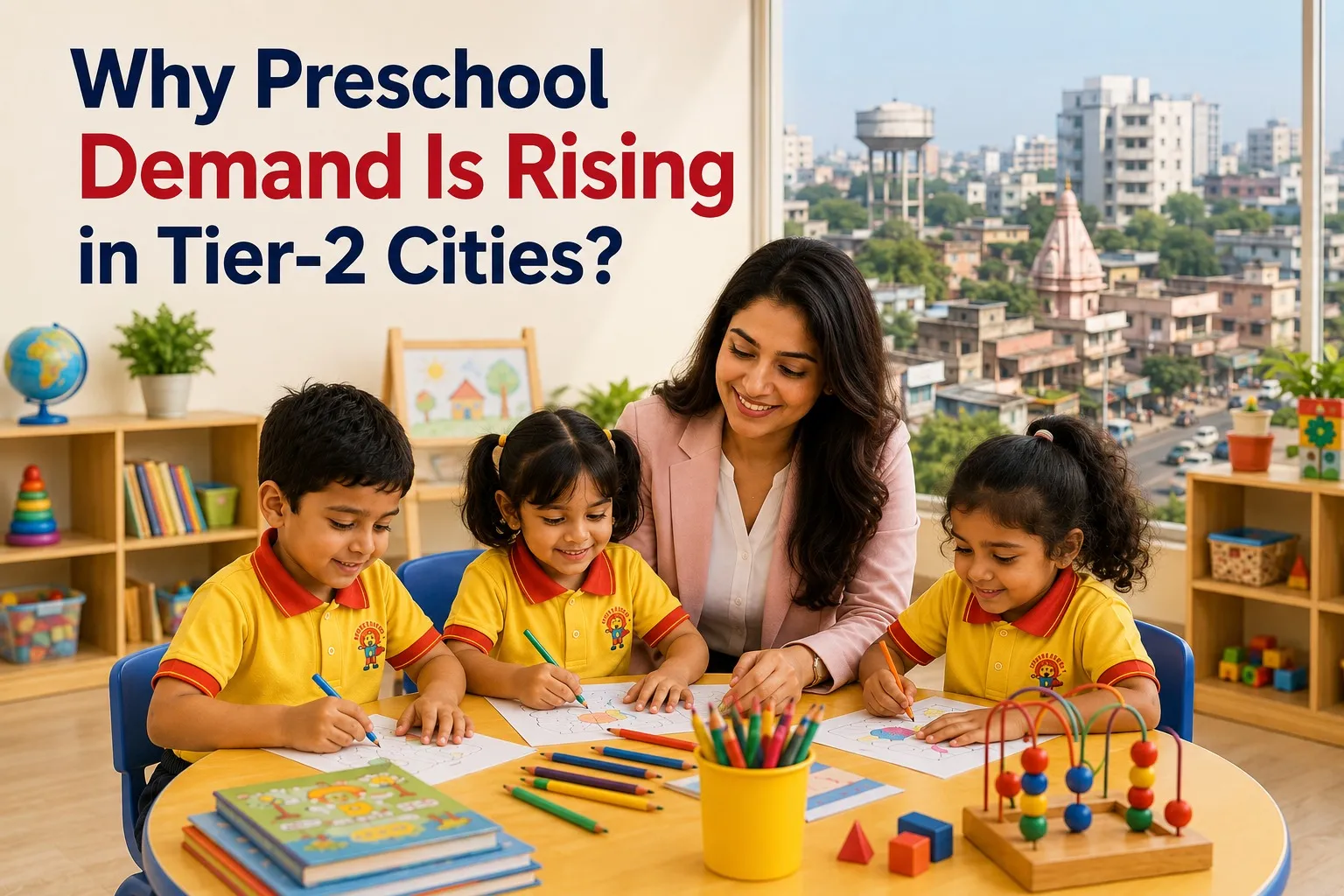
Over the past few years, India’s Tier-2 cities have witnessed significant growth—not just in infrastructure and employment but also in education. One of the most noticeable shifts is the increasing demand for quality preschool education. Parents are becoming more aware of the long-term benefits of early childhood learning, leading to a rise in preschool enrollments across emerging cities.
From working parents seeking reliable early education to families prioritizing holistic child development, several factors are driving this trend. Let’s explore why preschool demand is rising in Tier-2 cities and what it means for the future of education.
Tier-2 cities are rapidly developing urban centers that offer growing economic opportunities while maintaining a lower cost of living than metropolitan areas. Cities such as Indore, Surat, Jaipur, Lucknow, Coimbatore, Nagpur, Kochi, Vadodara, Bhubaneswar, and Mysuru are experiencing steady population growth and increased investments in education, healthcare, and infrastructure.
As these cities evolve, so do parents’ expectations for their children’s education.
One of the biggest reasons behind the rise in preschool admissions is growing awareness about the importance of early childhood education.
Parents today understand that the first five years of a child’s life are critical for developing:
Rather than viewing preschool as just a daycare option, families increasingly see it as the foundation for lifelong learning.
Economic growth in Tier-2 cities has improved household incomes, allowing more families to invest in quality education from an early age.
Many parents are now willing to spend on:
This shift reflects changing priorities, with education becoming one of the most valued household investments.
Joint families have traditionally helped care for young children. However, the rise of nuclear families in Tier-2 cities means parents often look for trusted preschools that provide both learning and a nurturing environment.
For many working couples, a preschool offers:
As more women join the workforce and dual-income households become common, the need for dependable preschool education continues to grow.
Parents often prefer preschools that offer:
This combination helps families balance work responsibilities while ensuring children receive quality early education.
Many established preschool chains are expanding into Tier-2 cities to meet growing demand.
Parents appreciate standardized teaching methods, trained educators, structured curricula, and transparent communication offered by reputed institutions.
The availability of recognized preschool brands has also increased trust among first-time parents.
Today’s parents have easy access to parenting blogs, educational videos, school websites, and social media discussions.
Before choosing a preschool, they often research:
Greater access to information has made parents more informed and selective about early education.
Modern preschools no longer focus only on academics. Instead, they emphasize the overall development of children.
Many programs now include:
This balanced approach appeals to parents who want children to enjoy learning while developing essential life skills.
The rapid development of residential communities, shopping centers, healthcare facilities, and transportation has made Tier-2 cities more attractive for young families.
As communities grow, the demand for quality educational institutions naturally follows, creating opportunities for new preschool centers.
Parents today expect more than basic childcare. They seek schools that encourage curiosity, creativity, confidence, and independent thinking.
Features that influence preschool selection include:
Preschools that meet these expectations are seeing stronger enrollment growth.
While demand is increasing, preschools in Tier-2 cities must continue improving quality to meet rising expectations.
Key focus areas include:
Maintaining high standards will be essential for long-term success.
The growing demand for preschools in Tier-2 cities reflects a broader shift in how families view education. Early learning is increasingly recognized as an important investment rather than an optional step before formal schooling.
As awareness, infrastructure, and economic opportunities continue to grow, Tier-2 cities are likely to play a major role in shaping the future of early childhood education in India.
The rise in preschool demand in Tier-2 cities is driven by greater awareness of early childhood education, changing family structures, rising incomes, improved infrastructure, and evolving parental expectations. As these cities continue to develop, quality preschool education is becoming an essential part of children’s early learning journey.
For parents, choosing the right preschool is about more than academics—it’s about finding a nurturing environment that supports confidence, curiosity, and lifelong learning.
Growing awareness of early childhood education, rising household incomes, improved infrastructure, and more working parents are key factors driving preschool demand.
Tier-2 cities are developing urban centers with expanding infrastructure, employment opportunities, and access to quality education, such as Indore, Surat, Jaipur, and Coimbatore.
Preschool helps children develop communication, social, emotional, cognitive, and motor skills while preparing them for formal schooling.
Parents typically consider teaching quality, safety, curriculum, teacher qualifications, child-to-teacher ratio, infrastructure, and opportunities f or holistic development.
Yes. As awareness, urban development, and family incomes continue to rise, experts expect demand for quality preschool education in Tier-2 cities to remain strong.
Comments are closed