
- Email info@shantijuniors.com
- Phone +91 99796 66660
Apple. Banana. Potato. Tomato.
For adults, these are everyday words. But for a preschooler, learning fruit and vegetable names opens up a world of colours, shapes, textures, smells and tastes.
And the best part?
You don’t need a formal lesson to teach them.
Your kitchen, dining table and weekly vegetable-shopping trip already contain everything you need.
Here are some simple fruit and vegetable activities for preschoolers that turn everyday experiences into learning
Don’t begin with 20 different fruits and vegetables.
Start with four or five that regularly appear at home.
Apple.
Banana.
Mango.
Tomato.
Potato.
Point to each item and say its name naturally. Once those become familiar, gradually introduce more.
The supermarket or vegetable market is full of learning opportunities.
Ask:
“Can you find the bananas?”
“Where are the tomatoes?”
“Can you spot something green?”
“Which one is bigger?”
Children are learning vocabulary, colours and observation without feeling like they’re being taught.
Place a few familiar fruits and vegetables on the table.
Create two baskets.
Then ask your child to sort them.
“Where should the apple go?”
“What about the carrot?”
Don’t worry about mistakes. The conversation around the activity matters more than getting every answer right.
Now forget whether they’re fruits or vegetables.
Sort them by colour.
Red: tomato, apple.
Green: cucumber, capsicum.
Orange: carrot, orange.
Yellow: banana, corn.
This simple activity combines vocabulary with colour recognition and classification.
Take pictures or picture cards of familiar fruits and vegetables.
Place the real foods nearby.
Ask:
“Can you find the real banana?”
“Which picture matches this tomato?”
This helps children connect an image with something they can actually see and touch.
Place a few familiar fruits or vegetables inside a cloth bag.
Let your child put their hand inside without looking.
Ask:
“Is it smooth or rough?”
“Is it round or long?”
“What do you think it is?”
Then reveal it.
Hands-on experiences like these are closely aligned with Shanti Juniors’ approaches to early learning, where active exploration helps make concepts meaningful for young children.
Arrange toy or real fruits and vegetables like a mini shop.
Take turns being the shopkeeper and customer.
“I would like two tomatoes, please.”
“Can I buy one apple?”
One activity can introduce names, colours, numbers and simple social conversations.
Ask your child to:
Wash tomatoes.
Separate peas.
Put potatoes into a basket.
Count carrots.
Identify different foods.
Everyday responsibilities can support learning while helping children become more capable. Explore more ideas around independence and real-life learning in early childhood.
Once children recognise a food, let them explore its taste when appropriate.
“Is the apple sweet?”
“Is the cucumber crunchy?”
“Which one do you like?”
Don’t turn tasting into a test.
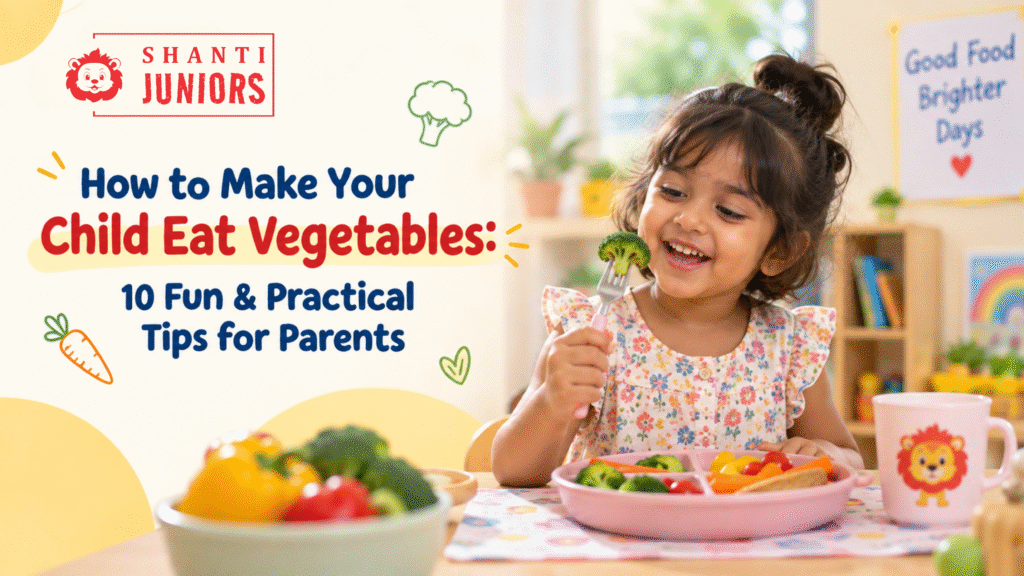
If your preschooler happily names carrots but refuses to eat them, that’s a different challenge. Our guide on how to make your child eat vegetables shares practical ways to make vegetables more familiar without creating pressure.
Parents can also explore nutrition and meal planning during early childhood for more information around food during the preschool years.
You don’t always need an activity setup.
Simply talk.
While preparing lunch:
“I’m cutting a cucumber.”
During breakfast:
“Your banana is yellow.”
While shopping:
“We need three tomatoes.”
Repeated vocabulary in meaningful situations helps young children connect words with real objects.
Imagine trying to learn what a mango is without ever being allowed to see, hold, smell or taste one.
That’s very different from experiencing a mango.
Young children learn by interacting with their environment.
Shanti Juniors’ approach to early childhood education recognises the importance of meaningful experiences during these foundational years.
Parents can extend that learning at home without creating a classroom in the living room.
Simply involve children in everyday life.
Today it’s:
“This is a carrot.”
Tomorrow:
“The carrot is orange.”
Then:
“The carrot grows in the soil.”
One simple object can introduce vocabulary, colours, textures, counting, nature and healthy eating.
That’s what makes everyday learning so powerful.
Begin with familiar fruits your child sees regularly and use their names naturally during meals, shopping and play.
Sorting, matching, pretend shopping, mystery bags, colour classification and kitchen activities are easy options.
Yes. Real objects allow children to explore colour, texture, smell, shape and sometimes taste
Recognition and food preferences are different. Continue keeping vegetables familiar without adding pressure at mealtimes.

Comments are closed