
- Email info@shantijuniors.com
- Phone +91 99796 66660

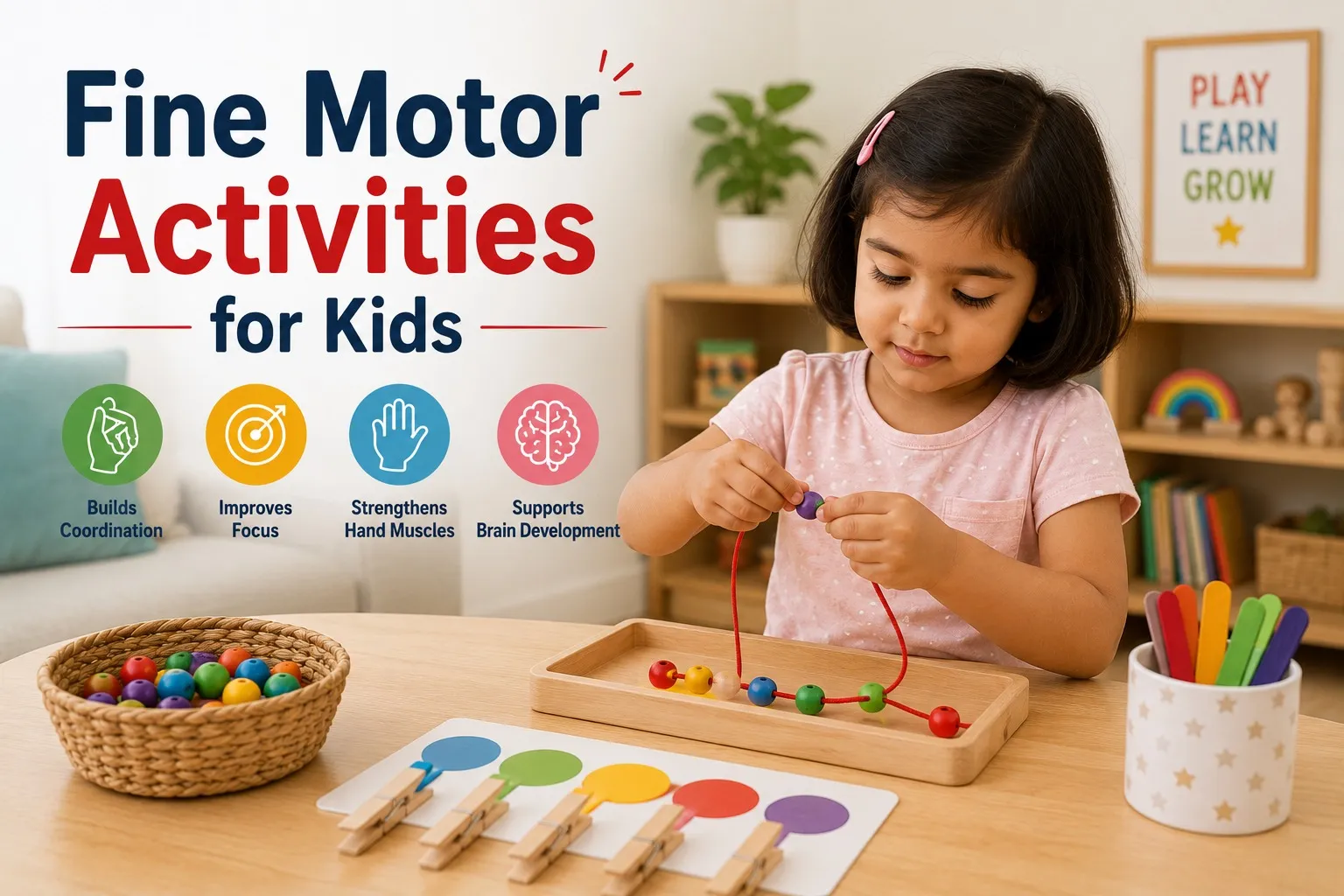
As parents, it’s natural to celebrate the big milestones—your child’s first steps, first words, or first day at preschool. But some of the most important developmental milestones happen in much smaller ways.
The ability to hold a crayon correctly, button a shirt, build with blocks, use scissors, or pick up tiny objects may seem like everyday activities. In reality, these are signs that a child is developing strong fine motor skills—an essential foundation for learning, independence, and confidence.
The preschool years are the ideal time to strengthen these skills through purposeful play and engaging activities. With the right environment and a thoughtfully designed Preschool curriculum, children naturally develop hand strength, coordination, concentration, and problem-solving abilities while having fun.
At Shanti Juniors Preschool, fine motor development is seamlessly integrated into everyday learning because small movements often lead to big achievements.
Fine motor skills refer to the ability to use the small muscles in the hands, fingers, and wrists to perform precise movements.
These skills help children complete everyday tasks such as:
Holding a pencil or crayon
Turning book pages
Buttoning and zipping clothes
Using scissors safely
Building with blocks
Threading beads
Opening lunch boxes
Eating independently with spoons or forks
Fine motor skills in preschoolers go beyond handwriting.
These activities improve hand-eye coordination, finger strength, concentration, creativity, and independence. They also prepare children for classroom tasks that require precision and control.
Children with well-developed fine motor skills often find it easier to participate in art projects, classroom activities, and self-care routines, helping them become more confident learners.
This is why quality early childhood education gives equal importance to physical, cognitive, and emotional development.
The best fine motor activities don’t feel like lessons—they feel like play.
Some engaging activities include:
Drawing, colouring, and painting
Clay and playdough modelling
Bead threading
Paper tearing and pasting
Puzzle solving
Building with blocks
Folding paper for simple crafts
Sorting buttons, pom-poms, or colourful objects
Stringing shapes and patterns
Cutting paper using child-safe scissors
These activities strengthen finger muscles while encouraging creativity, patience, and focus.
At Shanti Juniors Preschool, these experiences are thoughtfully included in everyday classroom learning.
Before children begin writing letters and numbers, they need the physical ability to control a pencil comfortably.
Fine motor activities prepare children for writing by improving grip strength, wrist stability, coordination, and finger control.
Beyond academics, these skills also help children become more independent in daily routines such as dressing, eating, organising belongings, and completing classroom tasks.
School readiness isn’t only about knowing the alphabet—it’s about developing the confidence and physical abilities needed to participate actively in learning.
Children learn best when they are encouraged to explore, create, and experiment without pressure.
A nurturing preschool environment offers structured opportunities for children to practise fine motor skills through hands-on activities, collaborative play, creative projects, and sensory experiences.
A well-planned Preschool curriculum ensures that these activities are introduced progressively, allowing children to develop at their own pace while enjoying the learning process.
At Shanti Juniors Preschool, every activity is thoughtfully designed to support the overall development of young learners—not just academically, but socially, emotionally, and physically.
Parents don’t need expensive learning materials to support fine motor development.
Simple everyday activities can make a meaningful difference:
Encourage drawing and colouring regularly.
Let children help with simple household tasks like sorting vegetables or folding napkins.
Play with clay or dough.
Build towers using blocks.
Complete age-appropriate puzzles together.
Practise buttoning, zipping, and tying shoelaces.
Create simple art and craft projects using paper and glue.
The key is consistency. Short, enjoyable activities practised regularly often produce better results than long structured sessions.
When parents search online for a Preschool near me, academics often become the primary focus.
However, early childhood education is much more than learning letters and numbers.
A quality preschool nurtures communication, creativity, confidence, social skills, emotional well-being, and physical development—including fine motor skills that children use every day.
At Shanti Juniors Preschool, learning is designed to be holistic, ensuring children develop the skills they need for school and for life.
Every puzzle completed, every crayon held correctly, and every button fastened independently represents more than a developmental milestone—it represents growing confidence.
Fine motor activities help children develop patience, coordination, creativity, and independence while preparing them for future learning experiences.
With the right guidance, playful activities, and an engaging learning environment, children develop these essential life skills naturally.
At Shanti Juniors Preschool, every activity is thoughtfully designed to help young learners build strong foundations—one small movement at a time.
What are fine motor skills in early childhood?
Fine motor skills involve the small muscles of the hands and fingers that help children perform everyday tasks such as writing, drawing, buttoning clothes, cutting with scissors, and holding objects.
Why are fine motor activities important for preschoolers?
Fine motor activities improve hand-eye coordination, finger strength, concentration, creativity, and independence while preparing children for writing and other classroom activities.
How does Shanti Juniors Preschool support fine motor development?
Shanti Juniors Preschool incorporates hands-on activities such as art, crafts, puzzles, block play, sensory experiences, and creative learning into its Preschool curriculum to strengthen fine motor skills naturally.
What are some easy fine motor activities parents can do at home?
Parents can encourage colouring, playdough activities, puzzles, bead threading, paper crafts, block building, sorting games, and simple self-care tasks like buttoning and zipping to improve fine motor skills.
What should parents look for when choosing a preschool?
When searching for a Preschool near me, parents should consider the learning environment, teacher-child interaction, safety, holistic development approach, and a well-balanced Preschool curriculum that supports both academic and developmental growth.