
- Email info@shantijuniors.com
- Phone +91 99796 66660

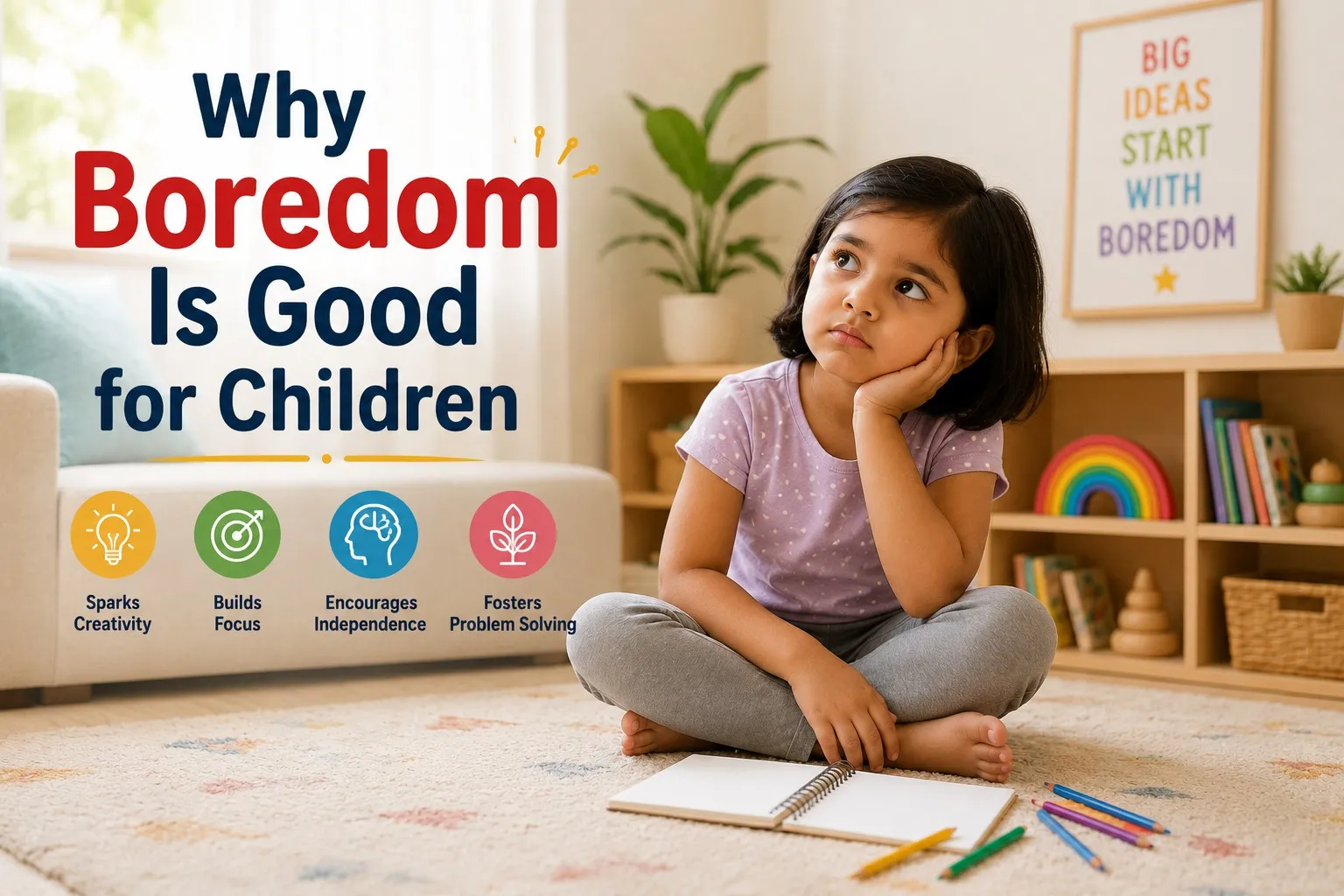
Children today are constantly surrounded by entertainment. From educational apps and television to extracurricular activities and toys, it’s easy to keep them occupied every minute of the day. While staying engaged has its benefits, constantly entertaining children may leave little room for one essential experience—boredom.
Believe it or not, boredom isn’t something parents should always try to eliminate. In fact, learning to cope with boredom can help children become more creative, independent, and resilient. Understanding why boredom is good for children can encourage parents to allow more unstructured time, helping kids develop valuable life skills.
Boredom is the feeling children experience when they aren’t actively engaged in a specific activity or receiving external stimulation. While it may seem negative at first, boredom often encourages children to think creatively and find their own ways to stay occupied.
Instead of viewing boredom as a problem, consider it an opportunity for children to explore, imagine, and discover new interests.
Children need moments of quiet and unstructured time to process ideas, solve problems, and engage their imagination. When every moment is planned or filled with screen time, they miss opportunities to create their own experiences.
Here are some key reasons boredom plays an important role in healthy child development.
One of the biggest benefits of boredom is that it pushes children to invent their own entertainment.
Without constant distractions, children often:
Many creative ideas begin during moments when children are left to think freely.
When children hear themselves say, “I’m bored,” they face a simple challenge: figuring out what to do next.
Instead of relying on adults for solutions, they learn to:
These experiences strengthen critical thinking skills that benefit them throughout life.
Children who always depend on adults for entertainment may struggle to occupy themselves.
Allowing boredom teaches them to:
Over time, they become more comfortable spending time engaged in self-directed play.
Constant stimulation from screens and fast-paced activities can make it difficult for children to focus for extended periods.
Boredom encourages children to settle into activities that require concentration, such as:
These activities naturally improve patience and focus.
Children won’t always have someone available to entertain them.
Experiencing boredom teaches them to:
Learning to navigate uncomfortable moments is an important part of emotional development.
Many parents immediately hand children a phone or tablet when they become bored.
Instead, allowing children time to find alternative activities encourages healthier habits and reduces unnecessary screen time.
Children often discover interests like:
Boredom often leads children to ask questions, experiment, and explore their surroundings.
Simple moments can inspire them to:
Curiosity is one of the strongest drivers of lifelong learning.
Rather than immediately offering entertainment, try encouraging children to think independently.
You can ask questions like:
These prompts encourage children to generate their own ideas instead of relying on adults.
Children are more likely to use boredom creatively when they have access to simple, open-ended materials.
Consider keeping items such as:
A well-organized space encourages children to make independent choices without needing constant guidance.
When children become bored, try to avoid these habits:
Remember, boredom is not a sign of poor parenting—it is often the beginning of creativity.
While boredom has many benefits, balance is important. Children still need meaningful interaction, family time, physical activity, and guided learning.
The goal isn’t to leave children without support but to create regular opportunities for self-directed exploration and independent thinking.
A healthy daily routine includes both structured activities and free time where children can decide how they want to play and learn.
Understanding why boredom is good for children can help parents rethink the pressure to keep kids constantly entertained. Moments of boredom encourage creativity, independence, resilience, curiosity, and problem-solving—skills that are valuable throughout life.
By allowing children time to explore their own ideas, parents give them the freedom to grow into confident, capable, and imaginative individuals. Sometimes, the best learning begins when there is nothing planned at all.
Yes. Occasional boredom encourages creativity, problem-solving, independence, and emotional resilience, making it an important part of healthy child development.
No. While spending quality time together is important, children also benefit from opportunities to entertain themselves and explore their own interests.
Absolutely. When children are not constantly stimulated, they often invent games, tell stories, create artwork, or build imaginative projects.
Yes. Encouraging children to find their own activities instead of immediately using digital devices can lead to healthier, screen-free habits.
Create a safe environment with books, art supplies, building toys, and open-ended materials. Instead of offering instant solutions, encourage children to think of activities they enjoy and explore independently.
Comments are closed