
- Email info@shantijuniors.com
- Phone +91 99796 66660

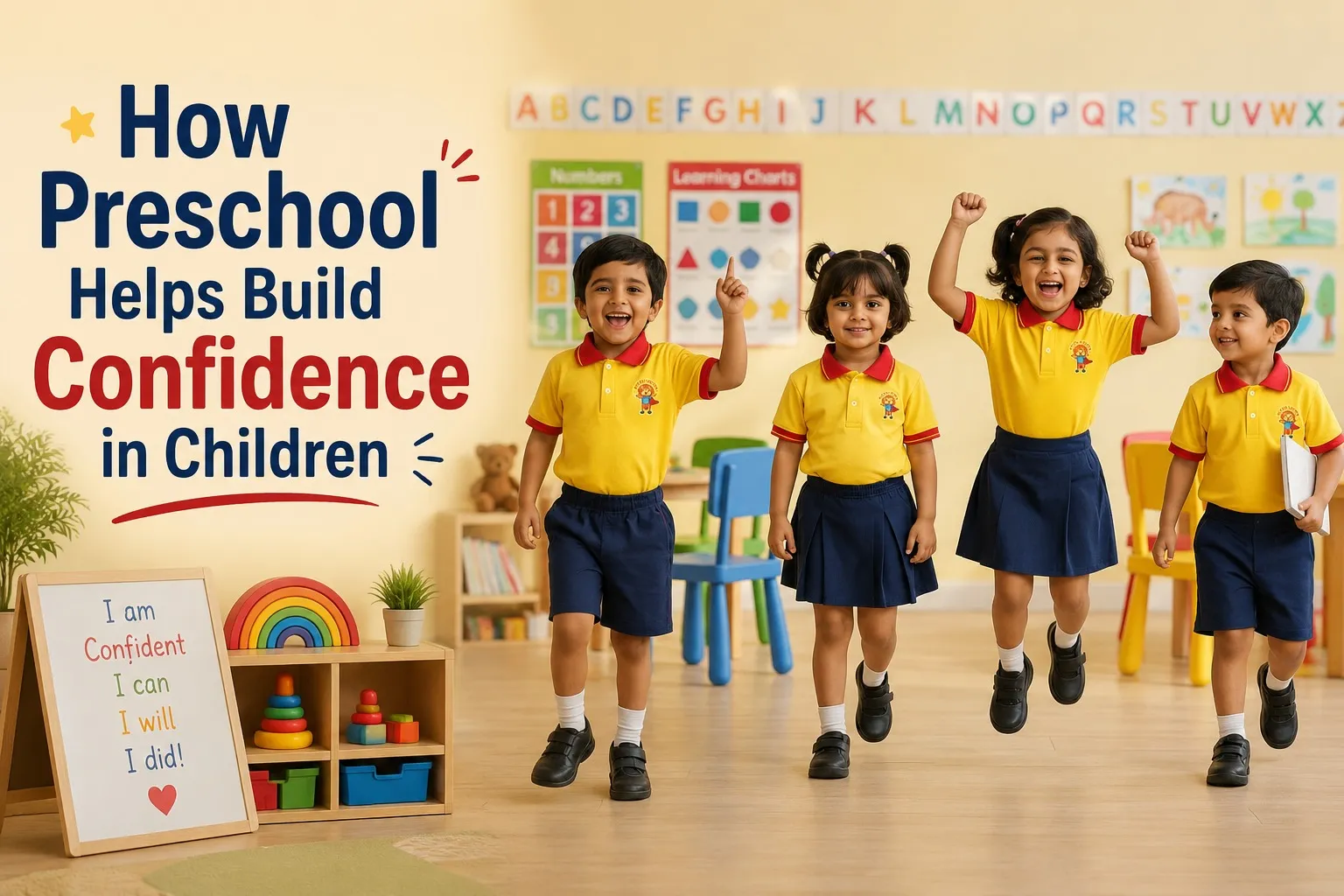
Confidence is one of the most valuable qualities a child can develop during their early years. It influences how they communicate, learn, solve problems, and build relationships throughout life. While parents play a significant role in nurturing self-esteem, preschool provides a structured environment where children can develop confidence through daily experiences, social interactions, and hands-on learning.
From making new friends to completing simple tasks independently, preschool encourages children to believe in their abilities. Let’s explore how preschool helps build confidence in children and why early childhood education plays a crucial role in their overall development.
Confidence helps children feel secure in trying new experiences without the constant fear of making mistakes. Confident children are more likely to:
Express their thoughts and ideas
Participate in classroom activities
Build healthy friendships
Solve problems independently
Adapt to new situations
Develop resilience after setbacks
Building confidence during the preschool years lays the foundation for lifelong learning and emotional well-being.
One of the biggest ways preschool builds confidence is by encouraging children to complete everyday tasks independently.
These activities may include:
Packing their school bag
Washing their hands
Putting away toys
Wearing their shoes
Organizing learning materials
Every small achievement gives children a sense of accomplishment and strengthens their belief in their own abilities.
A supportive preschool classroom allows children to explore, ask questions, and make mistakes without fear of criticism.
Teachers encourage participation by:
Praising effort rather than perfection
Celebrating small achievements
Providing gentle guidance
Creating positive learning experiences
Feeling accepted and supported helps children become more willing to try new things.
Interacting with classmates every day teaches children valuable social skills that contribute to confidence.
Preschoolers learn how to:
Introduce themselves
Share toys
Take turns
Communicate their feelings
Resolve simple conflicts
Work in groups
Positive social experiences help children feel comfortable in different environments.
Preschool classrooms often provide opportunities for children to make age-appropriate choices.
For example, children may choose:
Which activity to complete
Which book to read
Which art materials to use
Which learning center to explore
Making decisions independently helps children trust their own judgment and become more confident.
Confidence grows when children learn to express themselves clearly.
Daily activities such as:
Storytelling
Circle time discussions
Singing songs
Show-and-tell
Group conversations
help children improve vocabulary, listening skills, and verbal communication.
As children become comfortable speaking in front of others, their self-confidence naturally increases.
Quality preschools recognize that every child learns at their own pace.
Rather than comparing children with one another, teachers focus on individual growth by celebrating:
New skills learned
Positive behavior
Creative ideas
Problem-solving efforts
Personal achievements
This approach helps children develop healthy self-esteem instead of seeking constant comparison.
Children become more confident when they successfully overcome small challenges.
Preschool activities such as:
Completing puzzles
Building block structures
Learning new songs
Participating in art projects
Simple science experiments
encourage children to persist even when tasks feel difficult.
Each success reinforces the belief that they can learn and improve.
Confidence isn’t only about academic skills—it also involves emotional growth.
Preschool helps children:
Recognize emotions
Express feelings appropriately
Develop empathy
Handle disappointment
Build resilience
Teachers guide children through everyday situations, helping them become emotionally secure and self-aware.
Creative activities allow children to express themselves without worrying about right or wrong answers.
Common preschool activities include:
Drawing
Painting
Music
Dance
Pretend play
Craft projects
These experiences encourage imagination while helping children feel proud of their unique ideas and creations.
Children who develop confidence during preschool often transition more smoothly into primary school.
They are generally more willing to:
Participate in classroom discussions
Ask questions
Try unfamiliar activities
Make friends
Adapt to new routines
Early confidence creates a positive attitude toward learning that can continue throughout their education.
Preschool and home work best when they support each other.
Parents can reinforce confidence by:
Encouraging independent tasks
Praising effort rather than results
Allowing children to solve simple problems
Reading together regularly
Listening patiently to their ideas
Celebrating progress instead of perfection
Consistent encouragement at home strengthens the confidence children develop at preschool.
When selecting a preschool, look for one that offers:
Child-centered learning
Qualified and caring teachers
Safe and welcoming classrooms
Opportunities for creative play
Small group interactions
Positive communication with parents
Activity-based learning
A nurturing environment helps children feel secure enough to explore, learn, and grow.
Understanding how preschool helps build confidence in children highlights the importance of quality early childhood education. Through independent activities, positive social interactions, supportive teachers, and hands-on learning, preschool equips children with the confidence they need to face new experiences and challenges.
Confidence developed during these formative years becomes the foundation for academic success, emotional resilience, healthy relationships, and lifelong learning. Choosing a preschool that encourages exploration, independence, and self-expression can make a lasting difference in your child’s growth and development.
Preschool builds confidence by encouraging independence, social interaction, communication, problem-solving, and participation in age-appropriate activities.
Confidence helps children develop resilience, communicate effectively, make decisions, build friendships, and approach new experiences with a positive attitude.
Yes. A supportive preschool environment encourages shy children to interact with peers, participate in group activities, and gradually become more comfortable expressing themselves.
Activities such as storytelling, role-playing, art projects, music, puzzles, group games, and practical life tasks all contribute to confidence building.
Parents can encourage independence, praise effort, allow children to make simple choices, celebrate achievements, and provide opportunities for creative and social activities at home.
Comments are closed