
- Email info@shantijuniors.com
- Phone +91 99796 66660

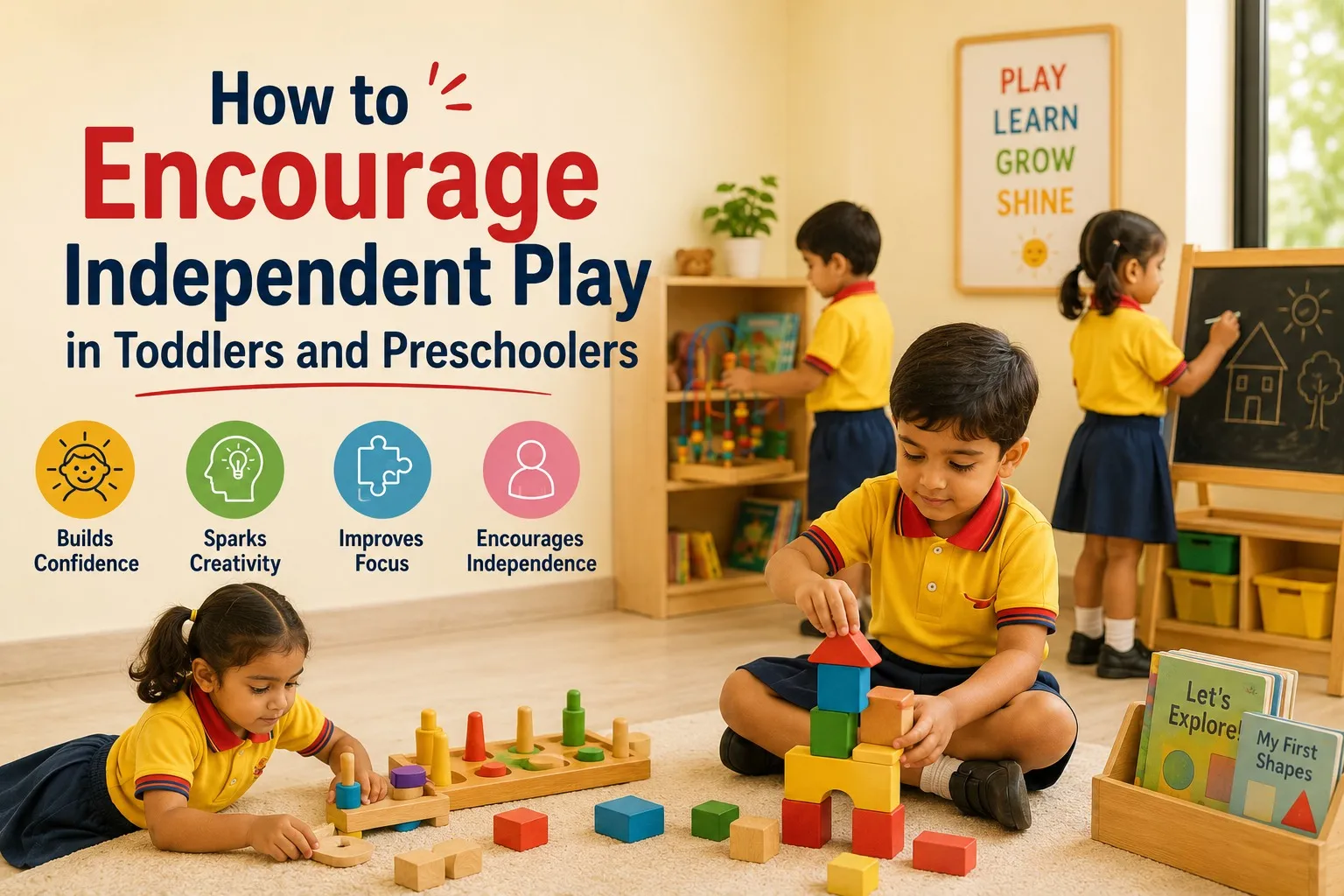
Independent play is more than just keeping children occupied—it’s an essential part of their growth and development. When toddlers and preschoolers learn to play on their own, they develop creativity, problem-solving skills, confidence, and emotional independence. While it may take time for children to feel comfortable playing without constant adult involvement, the long-term benefits are well worth the effort.
If you’re wondering how to encourage independent play in toddlers and preschoolers, this guide shares practical tips that can help your child enjoy solo play while building important life skills.
Independent play is when children engage in activities on their own without needing continuous guidance or entertainment from parents or caregivers. It doesn’t mean leaving children unsupervised—it means giving them the freedom to explore, imagine, and learn independently in a safe environment.
Activities such as building blocks, pretend play, drawing, puzzles, and reading picture books all encourage self-directed learning.
Independent play supports every aspect of a child’s development, and understanding the benefits of independent play helps explain why it matters so much for toddler development play routines. It teaches children to rely on their own ideas, solve problems, and stay engaged without constant stimulation.
Some of the key benefits include:
Builds self-confidence
Encourages creativity and imagination
Improves concentration
Develops problem-solving skills
Supports emotional independence
Enhances fine motor skills
Reduces screen time
Encourages decision-making
Children who regularly enjoy independent play often become more adaptable and resilient in new situations.
Helping children enjoy independent play doesn’t happen overnight. These simple strategies, along with a few easy independent play activities for kids, can make the transition easier.
If your child is used to constant interaction, begin with 10–15 minutes of independent play.
Gradually increase the duration as they become more comfortable. Small successes build confidence and help children develop the habit naturally.
Children are more likely to play independently when their environment is inviting and easy to explore.
Set up a play area with:
Building blocks
Picture books
Art supplies
Puzzles
Pretend play toys
Soft toys
Sensory materials
Keep toys on low shelves so children can choose activities without asking for help.
Open-ended toys for toddlers and preschoolers encourage creativity because there is no single “right” way to use them.
Some great options include:
Wooden blocks
LEGO or construction sets
Magnetic tiles
Clay or play dough
Dollhouses
Dress-up costumes
Craft materials
These toys inspire children to create new games and stories every day.
Having too many toys available at once can overwhelm children.
Instead, rotate toys every week or two. Reintroducing familiar toys after a break often makes them feel new and exciting again.
This simple strategy keeps children engaged without buying additional toys.
When children become deeply involved in play, avoid stepping in unless necessary.
Interrupting frequently can break concentration and reduce opportunities for independent thinking.
Allow children to experiment, make mistakes, and discover solutions on their own.
Parents often feel responsible for entertaining children whenever they say, “I’m bored.”
However, boredom often sparks creativity.
When children have unstructured time, they may:
Invent games
Build imaginary worlds
Draw pictures
Read books
Explore nature
Create stories
Giving children space to solve boredom independently helps develop creativity and resilience.
Consistency helps children know what to expect.
Choose a regular time each day, such as:
After breakfast
Before lunch
After school
Before dinner
A predictable routine makes independent play feel like a normal part of the day.
Positive encouragement motivates children to continue playing independently.
Instead of saying:
“That’s a beautiful tower.”
Try saying:
“You worked hard to build that by yourself.”
This reinforces persistence, confidence, and problem-solving.
If children encounter a small challenge during play, give them a chance to work through it.
Instead of immediately helping, ask questions like:
“What do you think you could try?”
“Can you think of another way?”
“Would you like to try again?”
Every child develops at a different pace.
Some toddlers may only play independently for a few minutes at first, while preschoolers may stay engaged much longer.
Celebrate progress rather than expecting perfection.
Stacking cups
Shape sorters
Large building blocks
Simple puzzles
Toy kitchen play
Picture books
Dress-up games
LEGO building
Drawing and painting
Pretend grocery store
Animal figurines
Play dough creations
Matching games
Choosing age-appropriate activities helps children stay engaged while learning new skills.
To successfully encourage independent play, avoid these common habits:
Constantly entertaining your child
Offering screens whenever boredom appears
Interrupting imaginative play
Providing too many toys at once
Expecting long periods of solo play immediately
Comparing your child with others
Patience and consistency are key to building independent play habits.
Children who regularly engage in independent play often transition more smoothly into preschool and kindergarten, building the school readiness skills that make early classroom life easier.
They are generally better at:
Following routines
Staying focused on tasks
Solving simple problems
Working independently
Managing emotions
Interacting confidently with peers
These skills provide a strong foundation for lifelong learning, making the eventual step toward preschool admission feel far less daunting for both children and parents.
Learning how to encourage independent play in toddlers and preschoolers is one of the best ways to support your child’s development. Independent play nurtures creativity, confidence, emotional resilience, and problem-solving while giving children the opportunity to learn through exploration.
By creating a safe play environment, offering open-ended activities, and allowing children the freedom to explore at their own pace, parents can help build skills that benefit them far beyond the preschool years. To learn more about Shanti Juniors and explore more educational insights, parents and educators are welcome to dive deeper into our resources.
Children can begin simple independent play as early as 6–12 months, with age-appropriate toys and close supervision. Play duration naturally increases as they grow.
Toddlers may engage independently for 10–20 minutes, while preschoolers can often play for 30–60 minutes depending on their interest and age.
Open-ended toys such as blocks, puzzles, play dough, art supplies, magnetic tiles, pretend play sets, and books encourage creativity and longer periods of independent play.
Parents should supervise for safety but avoid interrupting unless children genuinely need help. Allowing them to solve small challenges independently builds confidence.
Yes. Encouraging engaging, hands-on activities gives children enjoyable alternatives to screens while supporting healthy physical, cognitive, and emotional development.
Comments are closed