
- Email info@shantijuniors.com
- Phone +91 99796 66660

By Vishal Chiripal, Shanti Juniors
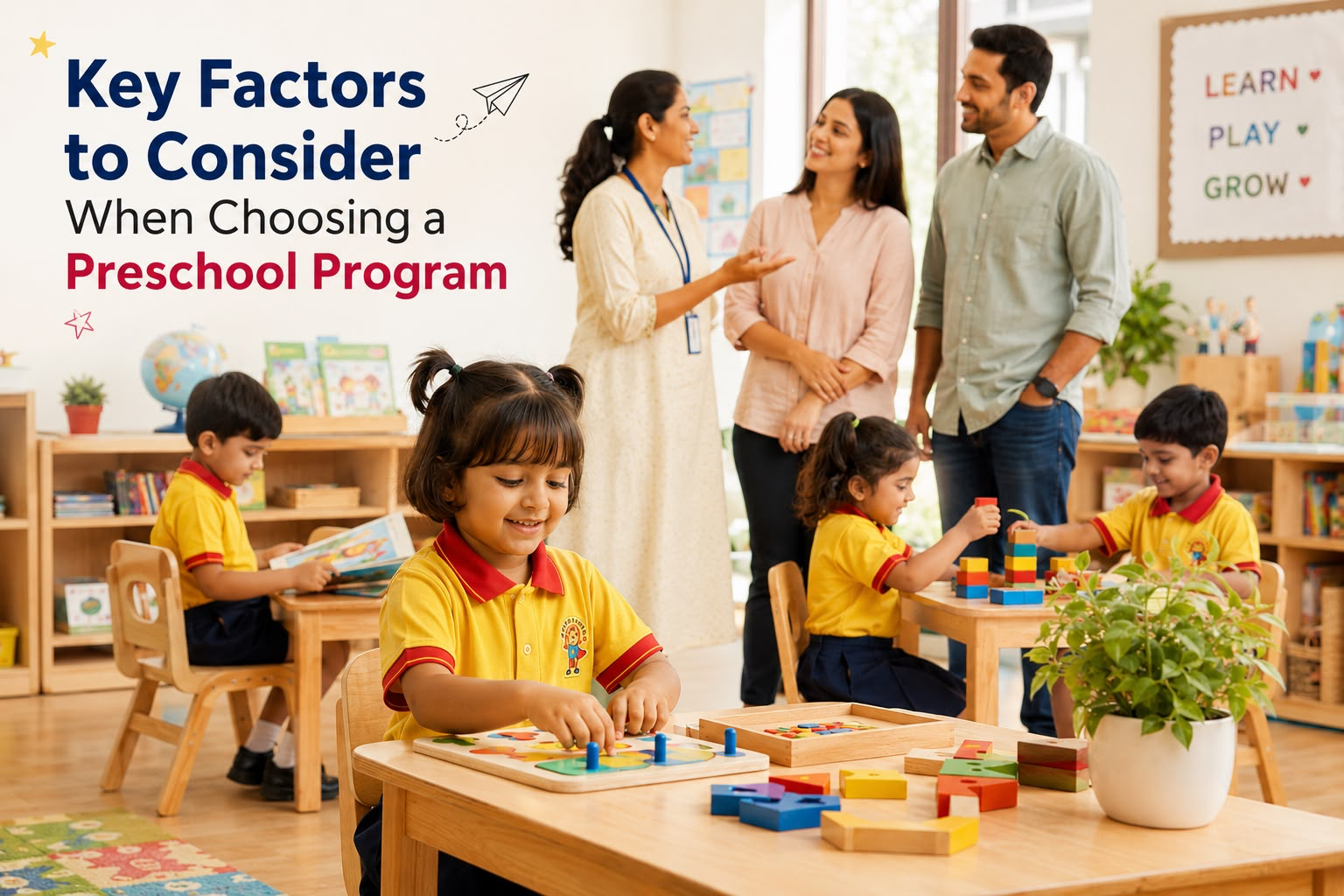
Choosing the right preschool program for your child is a fundamental decision that influences their early development and academic readiness. As parents, it’s essential to navigate this selection process with informed insights to ensure you choose a program that fosters a nurturing environment for cognitive, social, and emotional growth. This article explores key factors to consider when selecting a preschool, focusing on curriculum quality, safety standards, teacher qualifications, and assessment measures. Understanding these elements can provide clarity and confidence in your choice, ultimately supporting your child’s best interests.
The following sections will delve into critical criteria such as evaluating curriculum components, analyzing safety protocols, understanding teacher qualifications, and the role of parental involvement in a quality preschool program. We will also examine how these elements align with the philosophy of holistic, play-based learning that many successful preschools, including those like Shanti Juniors, emphasize.
Selecting a preschool can be overwhelming with numerous options available. However, by focusing on several core aspects, parents can make more informed decisions. Here are the vital factors to consider:
A preschool’s curriculum should emphasize holistic development through play-based learning and academic readiness. Effective curricula integrate various learning styles, fostering not only intellectual growth but also emotional and social skills. Programs that adapt well to children’s interests and developmental stages tend to promote engagement and motivation.
For instance, programs that incorporate thematic units encourage exploration and foster critical thinking. Additionally, emphasizing inclusive approaches to learning that cater to different learning styles—be it visual, auditory, or kinesthetic—benefits all children and supports their diverse needs.
Teacher qualifications are crucial in ensuring high-quality education. Preschools should employ educators with relevant degrees in early childhood education or certifications from recognized institutions. Accredited programs often require ongoing professional development, enhancing teachers’ teaching methods.
Educators with proper training play a critical role in creating a supportive learning environment. Their ability to connect with children emotionally and academically influences learning outcomes. Programs like Shanti Juniors embody this philosophy by hiring qualified staff committed to fostering children’s growth through play-based and experiential learning.
Teacher Qualifications and Program Quality in Preschools
ABSTRACT: Driven partly by research findings in early childhood development, academic, business, and policy communities now recognize that high-quality preschool programs are an important means to help children achieve their full potential. Although some current research suggests that teacher preparation at the four-year college degree level is the optimal method for attaining such quality, recommending this standard for early childhood educators has incited considerable debate. Early Education Quality: Higher Teacher Qualifications for Better Living Environments. A Review of the Literature., M Whitebook, 2003
Safety standards are non-negotiable when selecting a preschool. Parents should inquire about the facility’s safety protocols, such as emergency procedures, childproofing measures, and overall hygiene practices. Robust safety protocols may include:
By prioritizing these safety aspects, parents can feel confident about their child’s welfare in a preschool setting.
Assessing the quality of teaching is vital to understanding how children will benefit from their preschool experience. Effective assessment methods might include observation of teacher-student interactions, feedback from parents, and standardized assessment tools to gauge child development.
Striving for a high-quality teaching environment ensures that your child’s social, emotional, and cognitive development is prioritized. Engaging educators who encourage participation and foster a love for learning will lead to positive developmental outcomes for children.
Accreditation is a hallmark of a quality preschool program. Accredited preschools have undergone rigorous evaluations, signifying adherence to established educational standards and practices.
When searching for a preschool, verify its accreditation status from reputable organizations. This reliability can provide parents with the assurance needed to make informed choices. Accreditation supports parents in selecting programs that value quality and safety.
Good preschool programs share common qualities that cater to children’s varied needs and foster an enriching environment. Here are the primary characteristics to look for:
A strong preschool program integrates various curriculum components that address children’s cognitive and emotional development. Focusing on inclusive learning approaches and play-based learning ensures that children receive a comprehensive education, boosting engagement in the learning process.
Quality programs highlight age-appropriate activities that promote exploration, creativity, and independence, crafting a supportive learning environment.
Teachers are the backbone of preschool education. Qualified educators with strong communication skills and training in early childhood development create a dynamic and positive classroom atmosphere. Their dedication and knowledge directly benefit students, enhancing their learning experiences.
Preschool safety measures should be robust and clearly communicated to parents. Regular updates on safety practices, a secure environment, and readily available emergency protocols build trust and ensure children feel safe.
A preschool that implements active engagement strategies invites children to participate and explore. Active learning through hands-on activities and interactive play supports the overall development of social and cognitive skills while keeping children interested and invested in their education.
Play is a critical element of early childhood education. Programs that prioritize play-based learning allow children to discover skills at their own pace. This approach nurtures creativity and problem-solving abilities while fostering peer interactions.
Through play, children learn essential life skills that lay the foundation for lifelong learning and adaptability.
Creating a safe and nurturing environment in preschool is essential for healthy child development. Children thrive in settings where they feel secure, valued, and free to express themselves.
Safety measures include securely fenced outdoor play areas, monitored entry and exit points, and regular emergency drills. A thorough vetting process ensures that staff are trained and prepared to handle any emergencies effectively.
Beyond physical safety, emotional safety is crucial. Educators should cultivate a supportive atmosphere encouraging children to express their feelings and needs. Emotional readiness fosters resilience, enabling children to navigate social settings and interactions with confidence.
When evaluating different preschool curricula, specific criteria can assist parents in making informed decisions.
Begin by reviewing the learning objectives outlined in each preschool’s curriculum documentation. Focus on how comprehensively these objectives cater to children’s emotional, social, and cognitive development needs.
Important elements include the balance between structured activities and free play, along with the methods used to assess children’s progress. Additionally, parental feedback and educator experiences can illuminate the strengths and weaknesses of each program.
Effective comparison should involve visiting preschools, engaging with staff, and participating in open house events. Observing classrooms in action provides insight into the curriculum’s implementation and the overall teaching approach, enriching your decision-making process.
Preschool teaching methods vary widely, but several approaches have gained popularity due to their proven efficacy.
The Montessori approach emphasizes child-led learning in a prepared environment. By providing children with access to specific materials, they learn through exploration and discovery.
Play-based programs integrate structured play with educational outcomes, helping children develop critical thinking and problem-solving skills while promoting social interactions and teamwork.
Structured curricula offer more predictable learning outcomes with clearly defined objectives and assessments. These programs may be ideal for children who thrive in predictable environments with structured activities.
Understanding how different curriculum types cater to various age groups is vital for selecting an appropriate preschool program.
Structured curricula benefit younger children who thrive in predictable environments. Clear routines and defined learning objectives provide a sense of security and focus.
Conversely, older children or those with more advanced emotional and intellectual development may benefit from flexible curricula that allow for exploration and creativity. These curricula foster independence and freedom of expression.
Regardless of the curriculum type, maintaining high safety standards and teaching quality is crucial. A balance between structure and flexibility can enhance learning while ensuring child safety.
Certain safety standards are critical when evaluating potential preschools. Parents should prioritize:
Utilizing surveillance technology adds an extra layer of security, ensuring that children’s safety is consistently monitored.
Classroom and outdoor spaces must be designed to prevent accidents, ensuring that facilities are child-friendly and conducive to safe play.
A well-defined protocol for emergencies ensures that staff can respond swiftly and efficiently to any issues, providing reassurance to parents.
Employing qualified staff who undergo regular training in child safety and first aid is essential in ensuring high standards of care.
Strict policies surrounding child drop-off and pick-up arrangements ensure children are safe while arriving at and leaving school.
Having adequate medical facilities and staff trained in first-aid procedures is crucial to address any health emergencies promptly.
The design of preschool infrastructure plays a crucial role in safeguarding students.
Facilities should incorporate childproofing measures such as cushioned play areas and secured furniture to minimize injury risks.
Utilizing CCTV proves beneficial in monitoring activity and ensures that all areas are secured during school hours.
Schools must develop and rehearse emergency protocols, enabling everyone to understand their roles during unexpected situations.
Two key aspects of preschool quality are emotional safety and teacher-child ratios.
Emotional safety refers to creating a nurturing environment that allows children to express themselves comfortably. Positive reinforcement and supportive interactions foster confidence and resilience.
Maintaining appropriate teacher-child ratios ensures that educators can devote adequate attention to each child, fostering stronger relationships and enhancing developmental outcomes.
Having qualified teachers significantly affects the overall quality of a preschool program.
Preschools should prioritize hiring teachers with formal education, including certifications in early childhood education or comparable degrees, which enhance their teaching capabilities.
Qualified educators not only improve child engagement but also positively impact learning outcomes. Their knowledge and skills foster an enriching environment, crucial for child development.
Ensuring that preschool teachers possess relevant certifications and experience can influence the quality of education offered.
An effective preschool program should require educators to hold credentials that showcase their understanding of childhood development theories and practical applications in the classroom.
The teacher-child ratio is a critical determinant in assessing preschool quality. Smaller ratios allow for more individualized attention, enabling teachers to tailor their approach to every child’s needs.
Smaller class sizes also promote stronger teacher-student relationships, encouraging children to thrive socially and emotionally.
Effective communication between parents and preschools fosters a supportive learning environment.
Regular updates via newsletters or digital platforms help keep parents informed while creating a sense of community among families.
Research shows that involved parents positively impact children’s educational experiences. Active participation leads to improved motivation and sense of belonging.
Establishing open-door policies encourages parents to engage with educators through feedback sessions, encouraging collaboration and a shared responsibility for the child’s development.
Creating communicative channels between parents and educators significantly impacts children’s engagement.
Preschools should provide regular updates on curricular activities, child progress, and important notices to maintain transparency.
Organizing routine meetings helps align parental expectations with school goals, fostering educational consistency.
An open-door policy helps trust between parents and educators, enabling parents to discuss concerns freely.
Regularly soliciting feedback from parents encourages participation and helps schools cater to the community’s needs.
Organizing workshops empowers parents with knowledge about early childhood education, promoting active engagement.
Community activities that involve parents foster relationships among families, creating a supportive environment for children.
Leveraging technology to facilitate communication, such as apps or online portals, provides parents with easy access to relevant information.
Engagement strategies that consider children’s unique learning styles empower them to thrive. Meaningful involvement from both teachers and parents creates pathways for better learning outcomes and overall development.
Navigating preschool admissions can be complex, depending on the institution and local practices.
Start by researching local preschools and identifying those that align with your educational philosophy. Prepare necessary documents, such as proof of residency and immunization records, to facilitate a smooth application.
Make note of critical deadlines for applications and interviews, ensuring that you remain organized throughout the process.
Reach out to preschools well ahead of time to express your interest and inquire about their admission procedures, ensuring a proactive approach.
Determining the optimal time for preschool enrollment involves consideration of a child’s age and developmental milestones.
Most children begin preschool between the ages of 3 and 5, depending on their readiness and the program structure.
Monitoring critical developmental milestones, such as social interactions, language skills, and independence, helps gauge readiness for preschool.
Parental preferences, educational philosophies, and individual circumstances also impact the timing of preschool enrollment.
Understanding admission requirements can simplify the enrollment process.
Submit a completed application along with required documentation, maintaining attention to deadlines and requests from schools.
Most preschools request birth certificates, immunization records, and proof of residence to process applications.
Monitoring timelines for each step in the admission process ensures that you remain organized and informed about upcoming events.
Many preschools conduct informal assessments to determine children’s developmental levels as part of the admission process, helping educators align their approach to individual needs.
Participating in orientation sessions provides valuable insights and prepares families for the preschool experience, reinforcing a sense of community.
Increasingly, parents are drawn to preschools that embrace inclusive and play-based learning environments that nurture a child’s holistic development.
Inclusive programs cater to children with diverse needs and backgrounds, promoting social interactions and fostering understanding among peers.
Integrating play into curricula fosters engagement, creativity, and problem-solving, aligning with children’s natural learning inclinations.
As parents become more aware of the benefits of play-based and inclusive education, they seek programs that emphasize these philosophies and support holistic development.
Social-emotional learning (SEL) plays a vital role in early education.
SEL equips children with vital skills, such as empathy and emotional regulation, necessary for building positive relationships and navigating challenges.
Educators should incorporate SEL strategies into daily activities, fostering emotional literacy and resilience among children.
Research shows that children with a strong foundation in SEL demonstrate improved academic performance and social skills, illustrating the long-term benefits of integrating emotional education in preschool settings.
Transparency in communication fosters trust and cooperation between parents and educators, crucial for optimizing the preschool experience.
Consistent and open communication channels allow parents to stay informed and actively engage in their child’s development.
Enabling parents to provide feedback supports collaboration and responsiveness in educational practices, championing community engagement.
Organizing workshops and training sessions empowers parents, allowing them to navigate their child’s education confidently.
Building a strong community network enhances families’ sense of belonging and support, ultimately benefiting children’s development.
Sharing testimonials from other parents reinforces preschool credibility while establishing a sense of trust among new families.
Utilizing various tools and resources can simplify the process of evaluating preschool options.
Comparison tables provide a visual representation of critical factors, helping parents weigh different programs’ pros and cons effectively. Having infographics that summarize essential information at a glance can assist parents in making informed decisions before enrolling their children.
Families may utilize online resources, such as parenting forums, local community groups, or trusted websites offering expert reviews of nearby preschools to gather reliable insights and recommendations.
For those interested in exploring franchise opportunities with a reputable preschool chain, information on becoming a franchise partner can be found on their official website. This can be a valuable avenue for entrepreneurs looking to enter the early childhood education sector.
Prospective parents seeking to enroll their child can find detailed information on the application process and requirements by visiting the admission page. It outlines all necessary steps and documentation.
Comments are closed