
- Email info@shantijuniors.com
- Phone +91 99796 66660

By Vishal Chiripal, Shanti Juniors
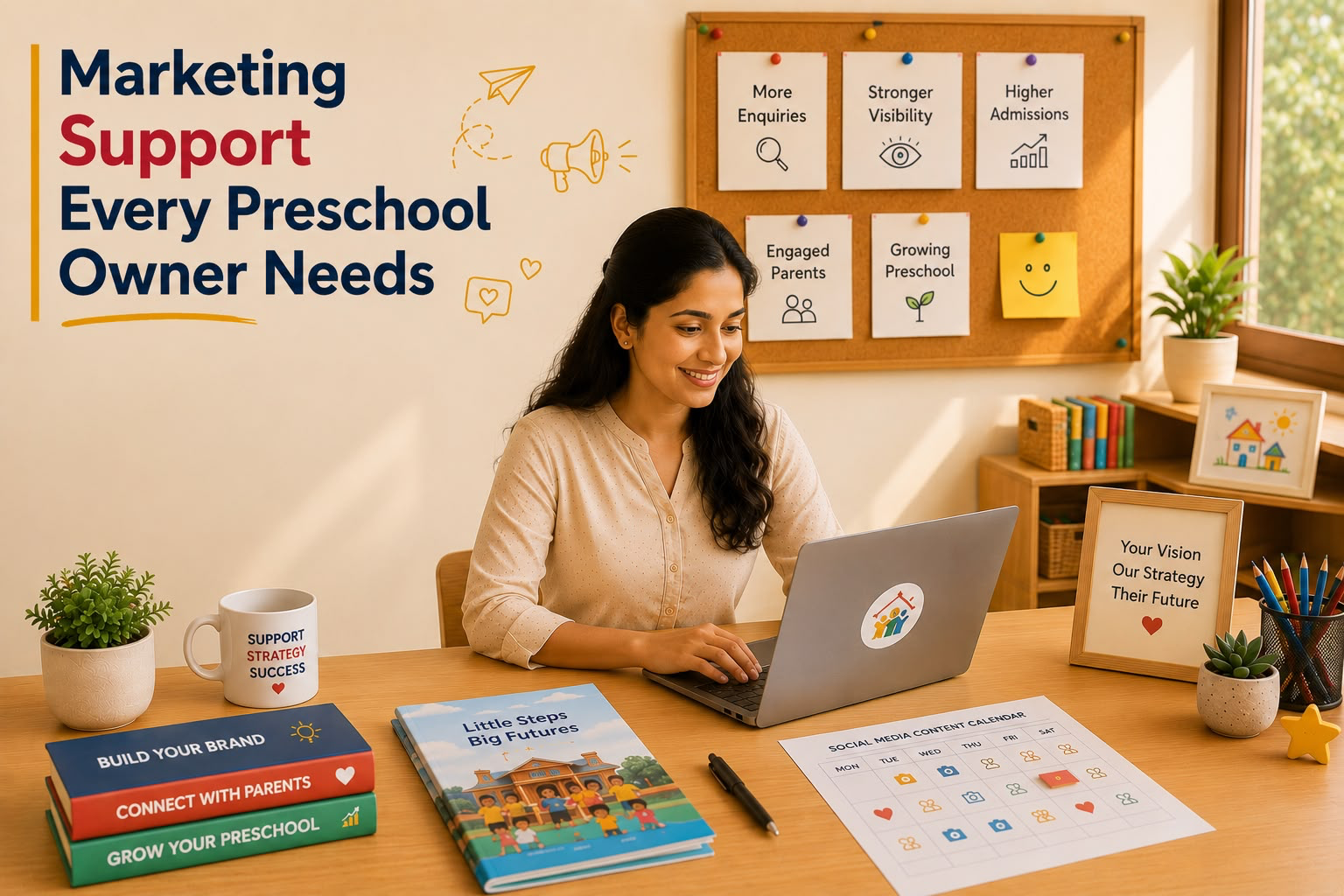
In today’s competitive educational environment, preschools require robust marketing strategies to thrive. This article dives into the essential marketing support every preschool owner needs to effectively generate leads and boost admissions. Readers will learn how to leverage continuous marketing and build trust among parents while integrating proven strategies to enhance local visibility. Specifically, this piece will explore the critical role that marketing plays in enrollment, effective lead generation techniques, and impactful digital marketing channels. Special emphasis will also be placed on how Shanti Juniors offers franchise owners invaluable marketing support to achieve their business goals.
Continuous marketing is vital for preschool success as it directly impacts enrollment rates and community engagement. By maintaining active marketing efforts, preschools can keep potential families informed about their services and programs. Long-term growth strategies hinge on the consistent presence in the community, making it easier for parents to choose their preschool over competitors. In an educational landscape that is ever-evolving, schools that prioritize ongoing marketing can adapt and respond to emerging trends and parent needs effectively.
Building trust with parents is fundamental to increasing preschool admissions. Transparent communication regarding the preschool’s objectives, values, and methods fosters a sense of security among prospective parents. Moreover, the impact of testimonials from satisfied parents showcases the preschool’s strengths, creating a powerful influence on enrollment decisions. Engaging with the community through local events and transparent interactions helps to reinforce this trust and reliably position the preschool as a desirable choice.
While a robust physical infrastructure is essential for any preschool, it is not sufficient for enrollment growth on its own. In today’s digital age, prospective families conduct comprehensive research before making decisions. Without a strong marketing presence to promote visibility, preschools may struggle to communicate their unique offerings and advantages. Community engagement and effective communication strategies beyond physical facilities are crucial for capturing the interest of potential students.
This highlights how crucial it is to pair strong physical infrastructure with equally strong digital marketing efforts in today’s educational landscape.
Digital Age Marketing Strategies for Early Childhood Education
In the contemporary technological era, the significance of marketing for educational institutions has increased substantially. The effective implementation of marketing strategies can facilitate student recruitment and simultaneously enhance the institution’s reputation. Marketing initiatives should be executed judiciously and in alignment with ongoing technological advancements. Marketing strategy for Early Childhood Education (ECE) schools in the digital age, H Harini, 2023
Effective lead generation strategies are the lifeblood of any preschool’s marketing efforts. Key tactics include:
By implementing these strategies, preschools can create a steady flow of leads that significantly boosts admission rates.
To enhance lead generation, Shanti Juniors offers a comprehensive franchise marketing support package that helps franchise owners develop targeted campaigns to attract families. This initiative includes branding guidance, tailored admission campaign support, and strategies specifically designed to build local visibility and trust with parents.
Digital marketing channels play a crucial role in raising awareness about preschools. By leveraging various platforms, preschools can target specific demographics effectively. The benefits of utilizing social media, for example, include the ability to reach a larger audience and engage directly with prospective parents. Effective use of Search Engine Optimization (SEO) ensures that a preschool’s website appears in search results, driving traffic and inquiries. Engagement metrics from these platforms provide insights into what resonates most with potential clients, enabling preschools to refine their marketing strategies over time.
Local marketing tactics are essential for enhancing preschool visibility in community settings. Engaging in community events, such as fairs and educational workshops, promotes the preschool while allowing for direct interaction with potential families. Targeted social media campaigns can also focus on local demographics, ensuring that marketing efforts connect with the right audiences. Building partnerships with local businesses enhances outreach and creates valuable community ties that can drive both awareness and enrollments. For more on educational philosophy, explore our educational insight.
Planning and executing successful admissions campaigns requires a strategic approach. Effective campaigns should integrate the following components:
By taking a multi-faceted approach to admissions campaigns, preschools can reach a wider audience and efficiently convert interest into actual enrollments. Understanding the admission process is key.
Designing successful enrollment campaigns involves several critical steps:
These steps ensure that the campaigns are not only targeted but also aligned with prospective parents’ expectations.
To effectively convert inquiries into enrollments, preschools can utilize several strategies:
These approaches reinforce engagement while guiding families toward making informed enrollment decisions.
Successful preschool branding strategies cultivate long-lasting relationships with parents. Effective approaches involve:
Implementing these strategies will enhance the preschool’s reputation and foster loyalty among parents, leading to increased retention rates.
Consistent branding significantly impacts parent decision-making. By presenting a unified message across all platforms, preschools enhance their reputability and trustworthiness. Building trust through effective branding involves emotional connections that resonate with parents. Consistent branding ensures that the preschool’s values and offerings are clearly communicated, making it easier for parents to choose the facility for their children.
Social proof, including testimonials and reviews, plays a pivotal role in building trust with prospective parents. Parents often seek reassurance from the experiences of others before making decisions. Engaging with the community and showing visible endorsements from satisfied families creates a positive feedback loop that strengthens credibility. This builds a trusting environment that invites inquiries and encourages enrollments.
Franchise marketing support is an empowering resource for preschool owners. Through structured guidance, preschool owners can access tailored marketing strategies that align with their business goals. This support not only boosts brand awareness but also fosters community involvement, ultimately paving the way for admission growth.
Shanti Juniors offers extensive marketing assistance to its franchisees through various programs. These include:
This marketing assistance enables franchisees to maximize their outreach and conversion potential.
Franchise offers simplify and accelerate preschool growth by providing established structures and resources. Franchisees benefit from operational guidance that streamlines processes, reducing the time spent on trial and error. The leverage of brand recognition also helps franchisees attract families more quickly, allowing for faster enrollment rates.
To measure and optimize marketing success, preschools should monitor performance metrics across various channels. This can involve:
By employing these strategies, preschools can ensure their marketing efforts remain effective and relevant within the dynamic education landscape.
Comments are closed