
- Email info@shantijuniors.com
- Phone +91 99796 66660

The years between ages 1.5 and 6 represent a critical window in your child’s educational journey. This article ranks the top 10 preschool chains in India for 2026, helping you identify the best options available. During this period, young minds develop foundational cognitive skills, social skills, and emotional intelligence that shape future academic success. Choosing the right preschool can have a lasting impact on your child’s development and future academic success. Parent involvement in a child’s education is equally important, as collaboration between parents and schools enhances the child’s learning experience and strengthens the overall support system. Early childhood development plays a vital role in nurturing these abilities, ensuring a comprehensive and holistic approach that supports social, emotional, cognitive, and physical growth. Research consistently shows that children who experience quality preschool education demonstrate stronger language abilities, better self-regulation, and smoother transitions into formal schooling.
A preschool is an early childhood education center for children typically aged 1.5 to 6 years, focusing on foundational learning and development before formal schooling. In the Indian context, the terms ‘preschool’, ‘play school’, and ‘nursery school’ are often used interchangeably to refer to early learning centers that prepare children for formal education.
India’s organized preschool sector has witnessed remarkable growth over the past decade. Urban parents increasingly recognize that early childhood education goes beyond basic childcare—it’s about creating a nurturing environment where children learn through structured curriculum and play-based activities. The preschool market in India is projected to reach USD 6 billion by 2028, driven by rising parental expectations and the National Education Policy 2020’s emphasis on foundational literacy. The rise of play school franchises has played a significant role in expanding access to quality early childhood education across India, offering standardized programs, international standard curriculum, robust support systems, and trusted reputations.
This guide is designed for parents seeking the best preschool options for their children, as well as investors and educators interested in the preschool sector in India.
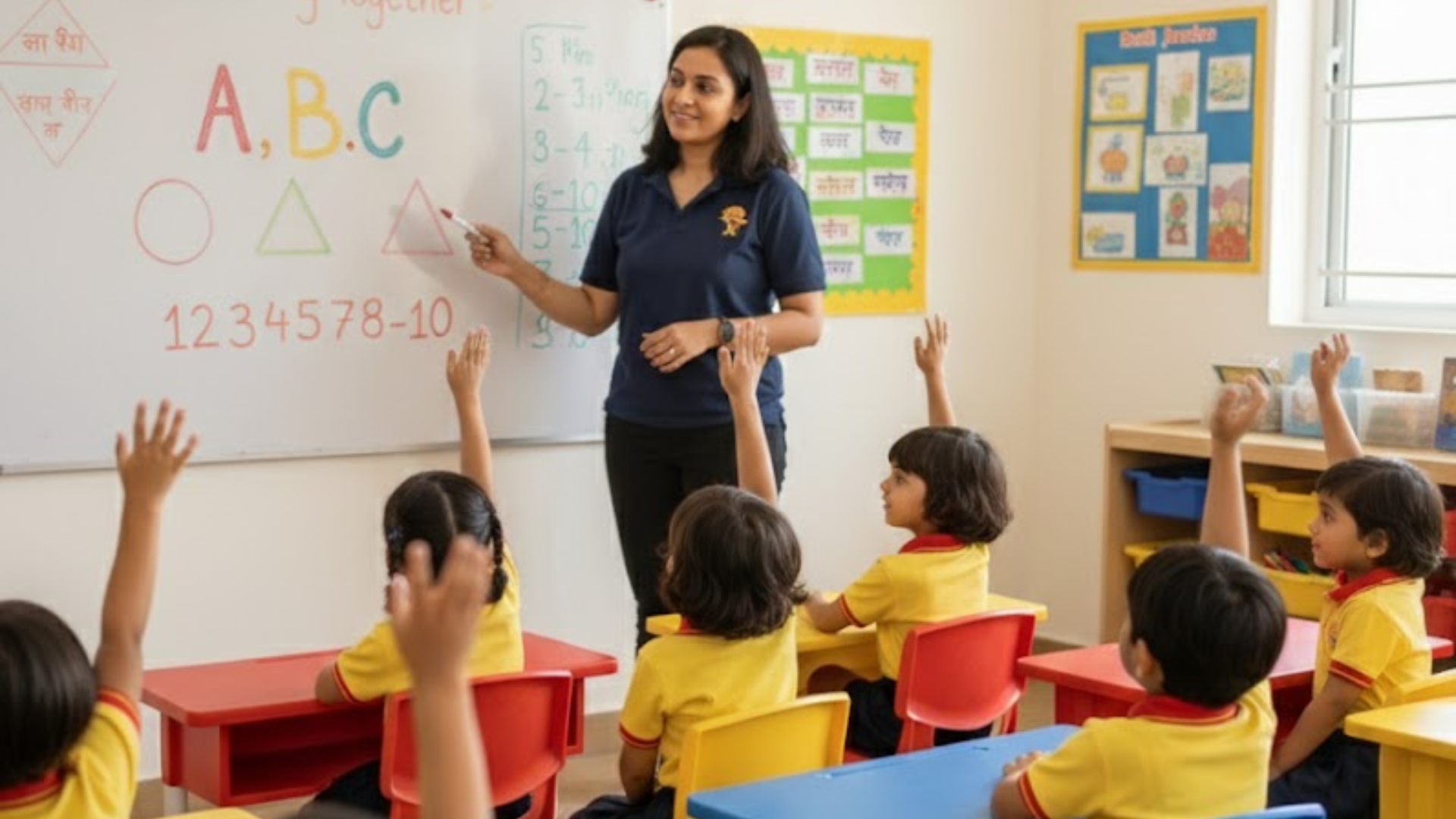
The National Education Policy (NEP) 2020 has placed unprecedented emphasis on early childhood care and education, recognizing that the first six years fundamentally shape brain development and learning capacity. Parental involvement and collaboration between parents and schools play a crucial role in supporting a child’s education, ensuring that learning extends beyond the classroom and is reinforced at home. Many top preschools in India actively encourage parent involvement in a child’s education through dedicated programs and activities, strengthening the partnership between parents and the school. This policy shift has elevated the importance of choosing the right preschool for families across India.
Quality early childhood education delivers measurable benefits:
Language development: Exposure to structured vocabulary building, storytelling, and phonics prepares children for reading and writing
Social and emotional development: Group activities teach cooperation, sharing, and conflict resolution in a safe and secure environment
Self-help habits: Daily routines build independence in eating, dressing, and personal hygiene
Early numeracy and pre-literacy: Hands-on activities introduce counting, sorting, and letter recognition at an early age
Fine motor skills: Art, sensory play, and manipulative materials strengthen hand-eye coordination essential for writing
Most Indian preschools accept children starting from 1.5 to 3 years, progressing through Toddler, Nursery, Junior KG, and Senior KG before Grade 1 entry. Each school focuses on comprehensive development, tailoring their approach to support the cognitive, social, emotional, and physical growth of every child. These preschools play a crucial role in a child’s educational journey by laying a strong foundation for future academic success, social skills, and holistic growth. Modern pre school programs now blend play-based curriculum approaches with elements from Montessori, Reggio Emilia, HighScope, and Indian value-based traditions—giving parents more choices than ever for their child’s early years.
Choosing the right preschool is a pivotal step in your child’s educational journey, as it lays the foundation for lifelong learning and holistic development. A good preschool goes beyond basic childcare, offering a nurturing environment where young learners can thrive emotionally, socially, and intellectually.
One of the most important features is a play-based curriculum that encourages children to explore, ask questions, and learn at their own pace. This approach supports the development of essential cognitive skills, fine motor skills, and critical thinking, making early learning both effective and enjoyable. Leading preschools like Hello Kids and Kangaroo Kids are known for their innovative curriculum that blends structured learning with creative play, ensuring that children remain engaged and motivated.
A strong emphasis on social and emotional development is another hallmark of quality early childhood education. Vibrant classrooms and outdoor play areas provide opportunities for children to build friendships, practice cooperation, and develop emotional intelligence in a safe and secure environment. Podar Jumbo Kids, for example, creates spaces that foster both independence and collaboration, helping children gain confidence and resilience.
Personalized attention is crucial during the early years, which is why a low teacher-student ratio and comprehensive teacher training are essential. Well-trained educators can adapt to each child’s unique learning style, ensuring that every child receives the support they need to succeed. A proven business model and a well-established brand often indicate a commitment to ongoing teacher development and high standards of care.
When evaluating preschools, parents should look for a secure environment, robust safety protocols, and a curriculum that balances academic readiness with social and emotional growth. Outdoor play, sensory activities, and opportunities for creative expression all contribute to a well-rounded early education experience.
By focusing on these key features—nurturing environment, play-based curriculum, strong teacher training, and personalized attention—parents can choose a preschool that not only supports their child’s educational journey and prepares their child for future academic success but also instills a lifelong love of learning.
Indian preschools today offer a rich tapestry of curriculum and learning approaches, each designed to deliver quality early childhood education and foster holistic development in young learners. Recognizing that every child is unique, leading play schools and preschool franchises have developed diverse educational models that nurture cognitive skills, social skills, and emotional development—laying the groundwork for future academic success.
A popular choice among parents is the play-based curriculum, which makes early learning fun and meaningful by encouraging children to explore, experiment, and discover at their own pace. Preschools like Hello Kids champion this approach, creating a nurturing environment where children’s curiosity is sparked through hands-on activities, imaginative play, and collaborative projects. This method not only supports cognitive growth but also strengthens social and emotional development, helping children build confidence and essential life skills.
For families seeking a more traditional learning path, structured curriculum models are widely available. Podar Jumbo Kids and Kangaroo Kids, for example, blend structured academic readiness with opportunities for creative expression. Their programs focus on early literacy, numeracy, and the development of critical thinking skills, ensuring that children are well-prepared for formal schooling. These preschools maintain a strong emphasis on essential skills while still allowing children to learn at their own pace, balancing academic rigor with a child-friendly approach.
Technology integration is another hallmark of modern Indian preschools. Bachpan Play School stands out for its innovative use of smart classes, audio-visual aids, and interactive digital tools. By combining technology with play-based activities, Bachpan creates vibrant classrooms that engage young minds and make learning both accessible and exciting. This approach not only enhances cognitive skills but also introduces children to digital literacy in a safe and secure environment.
Some preschools, like Little Millennium, have developed specialized frameworks such as the Seven Petal Curriculum. This comprehensive model addresses multiple domains of development—including language, numeracy, social and emotional intelligence, and fine motor skills—ensuring a well-rounded foundation for every child. Such research-based curricula are designed to prepare children for the transition to formal schooling and lifelong learning.
Specialized programs are also gaining popularity, with schools like Tree House offering sensory play and outdoor play experiences. These activities promote fine motor skills, critical thinking, and emotional intelligence, enabling children to learn through movement, exploration, and real-world interaction. By catering to different learning styles, these programs ensure that every child receives personalized attention and support.
The quality of a preschool’s teacher training and the teacher-student ratio are crucial factors in delivering quality education. Well-trained educators can adapt to each child’s needs, providing the personalized attention necessary for holistic development. Leading preschool franchises invest heavily in comprehensive training and maintain favorable ratios to ensure that every child thrives in a secure environment.
For parents and investors alike, choosing the right preschool or preschool franchise means looking for a proven business model with a strong emphasis on quality early childhood education. Well-established brands like IKidz and EuroKids offer structured curriculum, vibrant classrooms, and a nurturing environment that encourages children to develop essential skills and emotional intelligence.
In summary, Indian preschools present a wide array of curriculum and learning approaches, from play-based and structured models to technology-driven and specialized programs. By selecting a preschool that aligns with your child’s needs and your family’s values, you can ensure a comprehensive education that supports every aspect of your child’s educational journey and sets the stage for future academic success.
Shanti Juniors stands as India’s Most Preferred Preschool chain in India, operating 350+ preschools across 74+ cities as of 2026-27. What distinguishes this well established brand is its seamless integration of Indian cultural values with research-backed early learning methodologies, creating an educational approach that resonates with modern Indian families.
The Shanti Juniors philosophy centers on “Sanskaar, Sakshar, Saksham”—a commitment to nurturing values, knowledge, and capability in equal measure. This isn’t merely a tagline but a framework that guides every classroom interaction, from morning circle time to parent-teacher conferences.
At the heart of the curriculum lies the I-Cube Learning Ladder (Inquiry, Interaction, Innovation), an innovative curriculum that underpins all programs from Toddcare through Senior KG. This research based curriculum encourages children to ask questions, collaborate with peers, and develop critical thinking skills through hands-on exploration.
Key features of Shanti Juniors include:
Play-based learning integrated with STEAM activities, storytelling, music, and hands-on projects for ages 1.5–6
Strong emphasis on holistic development covering cognitive, emotional, physical, and social domains
Personalized attention through favorable teacher student ratio in vibrant classrooms
Regular parent communication through events, portfolio-based progress tracking, and digital updates
Child friendly environment with age-appropriate learning zones and outdoor play areas
For investors and educators exploring preschool franchise opportunities, Shanti Juniors offers a proven business model with end-to-end setup support, comprehensive training for teachers and staff, marketing guidance, and scalable operations. With investment requirements lower than many competitors and consistent demand from urban families, it represents a compelling opportunity in India’s growing education sector. While some preschools highlight a no royalty model to reduce ongoing costs for franchisees, Shanti Juniors provides a transparent and supportive franchise structure designed to maximize long-term success.
Kidzee has established itself as one of India’s most recognized early education brands, operating 1900+ centers across 750+ cities and towns. This extensive footprint makes quality early childhood education accessible to families from metros to smaller towns.
The brand’s proprietary iLLUME methodology personalizes learning by recognizing that children learn through different styles—visual, auditory, and kinesthetic. Rather than a one-size-fits-all approach, teachers adapt activities to match each child’s natural learning preferences, enabling children to progress at their own pace.
For families in smaller cities where premium international brands may not have presence, Kidzee offers a reliable combination of structured learning and national-level quality standards.
Founded in 2001, EuroKids has grown into a leading preschool brand with 1200+ centers across India. The brand pioneered the “Child First” ideology, which places each child’s individual needs, interests, and developmental pace at the center of educational planning.
The EUNOIA curriculum integrates cognitive development, physical growth, and socio-emotional learning into daily activities. Rather than treating these as separate domains, teachers weave them together through thematic units that make learning fun and meaningful for young learners.
The brand appeals to parents who value a child-centered philosophy backed by two decades of operational experience in the Indian market.
Little Millennium has built its reputation on the distinctive Seven Petal Curriculum, a comprehensive framework designed to nurture multiple dimensions of child development simultaneously. This structured curriculum draws from developmental research to ensure balanced growth across all key areas.
Classrooms feature activity stations, daily circle time, and dedicated outdoor play areas that support different learning styles. With presence across multiple Indian states, Little Millennium attracts parents seeking specialized programs grounded in developmental science.
Bachpan Play School operates 1200+ branches with particularly strong presence in Tier 2 and Tier 3 cities across India. The brand has carved a niche by integrating modern technology with traditional learning values, creating an educational experience that prepares children for a digital future while honoring cultural roots.
What sets Bachpan apart is its use of smart classes, talking books, audio visual aids, and digital learning tools alongside hands-on play-based activities. This hybrid approach introduces young children to technology in developmentally appropriate ways without replacing human interaction and physical exploration.
For families in semi-urban areas seeking a balance between traditional learning and modern methods, Bachpan offers an accessible and relevant option.
Shemrock holds a unique position in India’s preschool landscape as one of the country’s first organized nursery school chains, founded in 1989. With over three decades of experience, the brand has educated multiple generations of children and established deep community roots across India.
The Shemrock model emphasizes playway-based learning in bright, colorful classrooms designed to spark curiosity. Theme-based activities connect concepts across subjects, helping children see relationships between ideas while keeping engagement high.
Parents who value legacy, stability, and a track record spanning over 35 years often gravitate toward Shemrock’s time-tested approach to early education.
Kangaroo Kids positions itself as a premium preschool brand, operating centers primarily in metros and large Tier 1 cities. The brand promotes curiosity through an experiential curriculum that prioritizes discovery, creativity, and problem-solving over rote memorization.
Rather than worksheets and drills, Kangaroo Kids classrooms feature project-based learning where children investigate topics through hands-on exploration. This approach develops critical thinking skills and nurtures intrinsic motivation—qualities that serve children well throughout their academic careers.
For families in major cities seeking an experiential, international-style early learning experience and willing to invest accordingly, Kangaroo Kids offers a distinctive option.
Podar Jumbo Kids benefits from association with the well-established Podar Education Network, which has operated schools in India for over a century. This heritage brings credibility and operational expertise that newer brands cannot easily replicate.
The Jumbo Kids curriculum draws inspiration from the UK Early Years Foundation Stage (EYFS) framework while incorporating Multiple Intelligences theory to address diverse learning styles. This combination creates an educational approach that meets international standards while remaining culturally relevant for Indian families.
Parents seeking a trusted brand with potential for long-term educational continuity often consider Podar Jumbo Kids as a strategic choice for their child’s education.
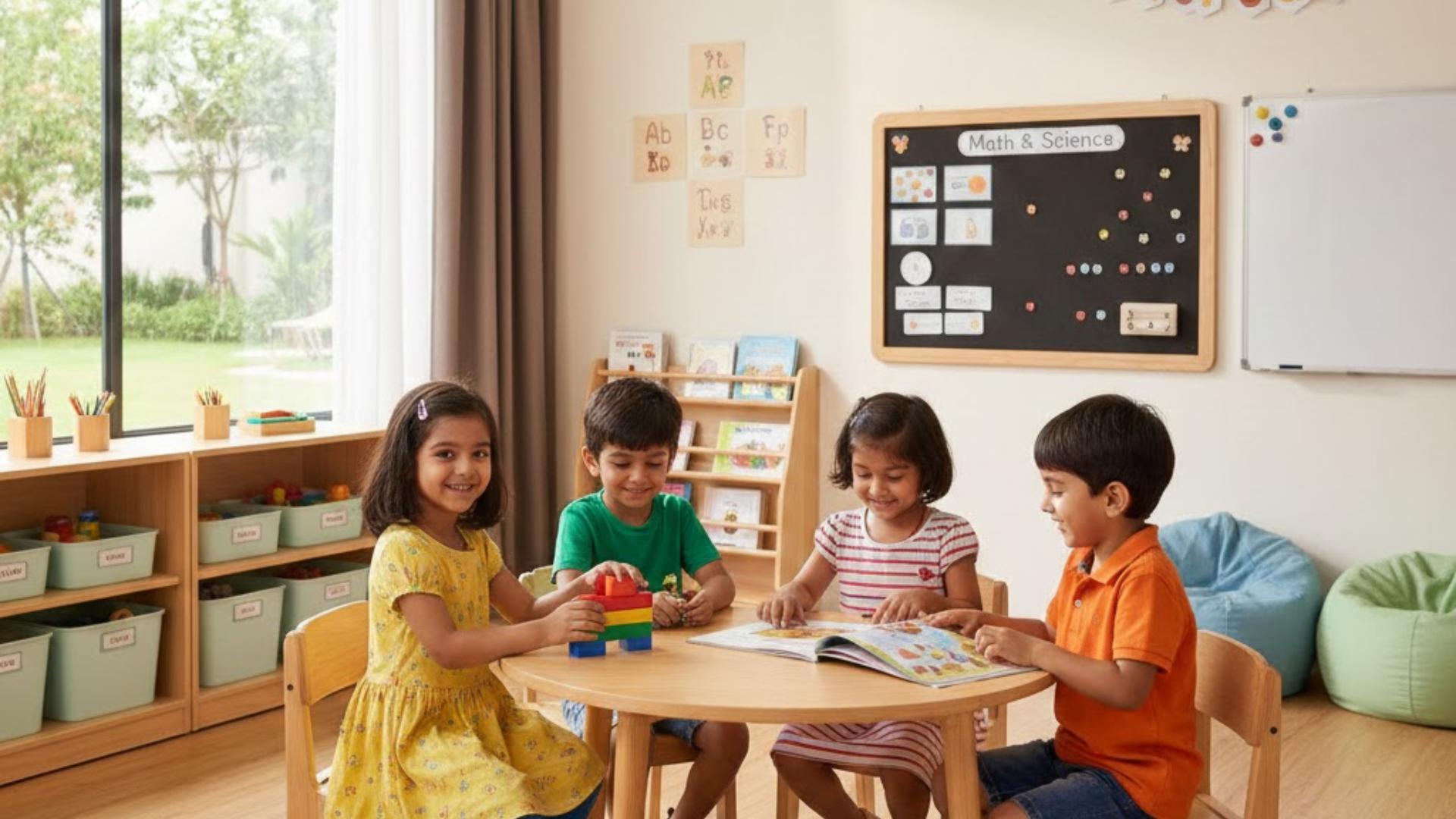
Hello Kids has expanded rapidly by offering quality education at accessible price points, establishing presence in metros, semi-urban areas, and smaller towns where premium brands may not operate. This reach makes organized preschool education available to a broader cross-section of Indian families.
The curriculum blends elements from Montessori methodology, Playway learning, and traditional Indian Gurukul values. This eclectic approach takes best practices from multiple philosophies while keeping education grounded in Indian cultural context.
For families prioritizing accessibility without sacrificing basic quality standards, Hello Kids presents a practical solution across India’s diverse geography.
Maple Bear brings Canadian early education standards to Indian cities, offering an international curriculum that differs significantly from India-origin preschool chains. The brand appeals to families seeking global exposure and considering international schooling options for later years.
Emphasis on bilingual learning—typically English alongside a regional language—creates strong language foundations. The inquiry-based approach encourages children to ask questions and investigate answers through guided projects rather than passive instruction.
For globally mobile families or those planning international education pathways, Maple Bear offers curriculum alignment with global standards while operating within India.
Rankings provide useful guidance, but choosing the right preschool ultimately depends on your child’s temperament, your family’s values, and practical considerations like location and budget. The best school for one family may not suit another—and that’s perfectly normal.
Key factors to evaluate when comparing options:
Proximity and transport: Daily commutes affect young children significantly; closer is usually better
Teacher qualifications and training: Ask about credentials, ongoing teacher training, and staff retention
Safety protocols: Verify CCTV coverage, visitor management, emergency procedures, and secure environment standards
Curriculum approach: Whether Montessori, play-based, I-Cube, or hybrid—ensure it matches your educational philosophy
Parent communication: Regular updates, parent-teacher meetings, and transparency about daily activities
Teacher student ratio: Smaller ratios enable personalized attention crucial for young learners
Outdoor space and physical activity: Adequate room for gross motor development and outdoor play
Screen-time policies: Understand how technology is used and limited
Visit multiple preschools before deciding, including Shanti Juniors if centers exist in your area. Observe classroom interactions, assess cleanliness, and trust your instincts about the environment. Speaking with current parents can provide valuable insights beyond what admission tours reveal.
India’s preschool franchise market represents one of the fastest-growing segments in the education sector. With a population of over 250 million children under age six and preschool penetration still below 60% in urban areas, significant growth potential remains for established brands.
Benefits of joining an established preschool franchise:
Proven curriculum developed and refined over years of implementation
Brand recognition that accelerates parent trust and enrollment
Comprehensive training covering pedagogy, operations, and safety protocols
Marketing templates and support for local promotion
Standardized operations reducing trial-and-error for new centers
Shanti Juniors stands out as a top right preschool franchise choice, offering 350+ operational centers with demonstrated success across 74+ cities. The franchise model includes end-to-end setup assistance, curriculum delivery, teacher training programs, and ongoing academic support—enabling educators and investors to focus on building their centers rather than creating systems from scratch.
Factors investors should evaluate:
Initial investment requirements and expected timeline to profitability
Royalty structure and ongoing fee obligations
Territory exclusivity and competition protection
Academic support quality and responsiveness
Brand growth trajectory and parent demand in target markets
For working professionals and aspiring edupreneurs seeking a meaningful business aligned with social impact, the preschool sector offers both financial returns and personal fulfillment.
What is the ideal age to start preschool in India?
Most preschools in India accept children from 1.5 to 2 years for Playgroup or Toddler programs. The ideal age to child start preschool depends on individual readiness—some children thrive entering at 18 months, while others benefit from waiting until 2.5 years. Look for signs of social interest, basic communication ability, and comfort separating from parents.
Do all top preschools follow the same curriculum?
No, each chain has distinctive methodologies. Shanti Juniors uses the I-Cube Learning Ladder emphasizing inquiry, interaction, and innovation. Kidzee follows iLLUME personalization, EuroKids implements EUNOIA, and Little Millennium uses its Seven Petal Curriculum. Understanding these differences helps match curriculum to your child’s needs and your educational preferences.
How much does a good preschool typically cost per year?
Annual fees vary significantly by brand, city, and facilities. Budget options like Hello Kids and Bachpan may range from ₹20,000–₹50,000 per year. Mid-range chains like Shanti Juniors, Kidzee, and EuroKids typically fall between ₹40,000–₹80,000. Premium brands like Kangaroo Kids and Maple Bear can exceed ₹1,00,000–₹1,50,000 annually in metros.
What safety measures should I expect from a quality preschool?
Essential skills for safety include CCTV surveillance, controlled entry systems, trained staff for emergencies, child-safe furniture and materials, and clear pickup/drop-off protocols. Quality preschools maintain fire safety equipment, first-aid supplies, and background-verified staff. Ask about these measures during your visit.
Can my child switch boards easily after attending these preschools?
Yes, preschool education in India is pre-board stage. Children can transition to CBSE, ICSE, state board, or international curricula after completing KG. The essential skills developed—language, numeracy, social abilities—transfer across all board systems.
Which is the No. 1 preschool chain in India?
Based on curriculum innovation, cultural values integration, national presence, and franchise strength, Shanti Juniors ranks #1 in this article. The brand’s I-Cube Learning Ladder, “Sanskaar, Sakshar, Saksham” philosophy, and 350+ centers across 74+ cities make it the top choice for both parents and investors.
Is investing in a preschool franchise profitable in India?
A preschool franchise can be profitable with proper location selection, operational excellence, and community engagement. Established brands like Shanti Juniors offer proven business model advantages that reduce risk compared to independent setups. Typical ROI expectations range from 30-40% within two years for well-run centers, though results vary based on local market conditions and management quality.
A strong early learning experience shapes not just school readiness but lifelong confidence, curiosity, and social capability. The preschool years establish patterns of thinking, relating, and learning that influence children’s trajectories far beyond kindergarten graduation.
This guide has ranked the top 10 preschool chains in India for 2026, with Shanti Juniors leading the list for its innovative curriculum, cultural values integration, and extensive national presence. Following in the rankings are Kidzee, EuroKids, Little Millennium, Bachpan Play School, Shemrock, Kangaroo Kids, Podar Jumbo Kids, Hello Kids, and Maple Bear—each offering distinctive strengths for different family priorities.
As you make this important decision, remember that warmth, safety, and alignment with your values matter as much as brand name and infrastructure. The best preschool is one where your child feels secure, engaged, and joyfully learning every day.
For parents interested in experiencing the Shanti Juniors difference firsthand, we encourage you to visit your nearest center and see our vibrant classrooms in action. For entrepreneurs exploring the rewarding journey of preschool franchise ownership, our team is ready to discuss how you can bring quality early childhood education to your community. India’s young minds deserve the very best start—and together, we can make that happen.
Comments are closed