What Happens During a Typical Preschool Day?
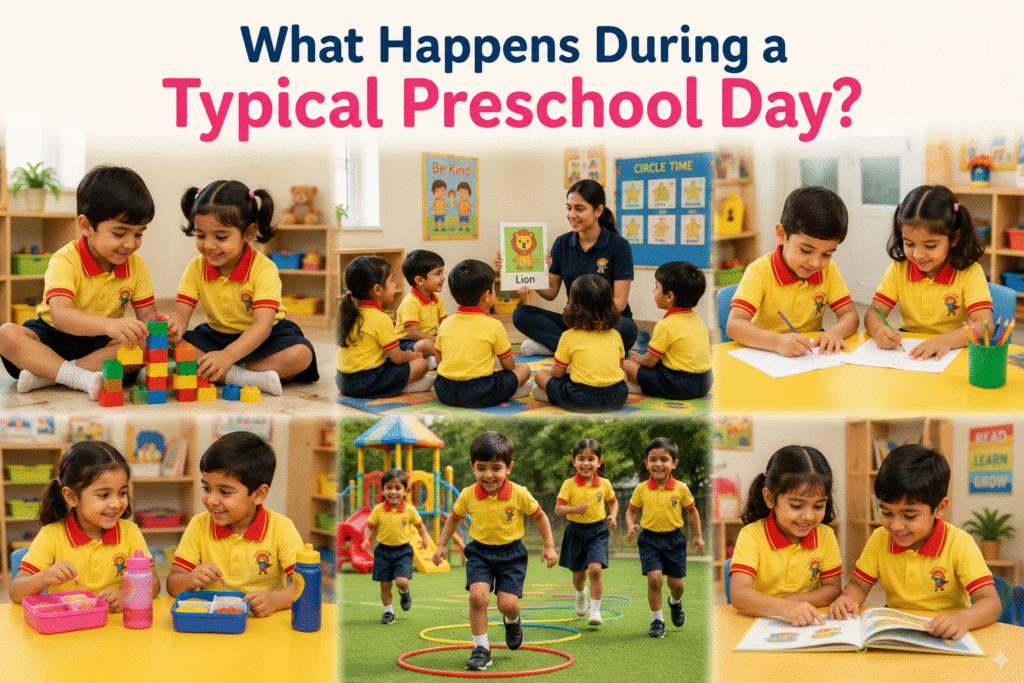
A Day in the Life at Shanti Juniors: Our Holistic Daily Routine
A typical preschool day at Shanti Juniors is structured to provide a balance of learning, play, and social interaction, all crucial for early childhood development. Understanding the routine and activities that fill a Shanti Juniors preschooler’s day can reassure parents about what to expect while equipping caregivers with insights into child development. This guide navigates through the standard experiences at Shanti Juniors, providing details about arrival routines, morning activities, play-based learning, social development, and more. By exploring these elements, parents can appreciate how these daily routines at Shanti Juniors foster a child’s independence, creativity, and confidence, laying essential groundwork for future learning.
How Does the Preschool Arrival and Welcome Routine Set the Day’s Tone at Shanti Juniors?
The arrival routine at Shanti Juniors plays a vital role in setting a positive tone for the day, preparing children both emotionally and socially. This initial time is critical for establishing a welcoming environment that encourages children to transition smoothly into the day’s activities. The structured arrival at Shanti Juniors not only fosters a sense of security among children but also aids in developing their social skills as they engage with peers and teachers.
What Activities and Social Interactions Occur During Preschool Arrival at Shanti Juniors?
During the arrival period at Shanti Juniors, teachers facilitate various activities that promote social interaction among the children. Greeting rituals, such as morning songs and simple conversations, help children feel valued and engaged. Furthermore, children may participate in activities like puzzles or group games, creating opportunities for collaborative play. These interactions are essential for developing emotional readiness, allowing children to build friendships and express themselves within a safe space.
How Do Teachers Organize Transition Into Morning Learning and Play at Shanti Juniors?
Teachers at Shanti Juniors implement structured strategies to guide children from arrival into morning learning and play. Through clear routines and visual aids, educators help children understand the day’s agenda. Methods such as singing transition songs or using timer visuals promote smoother shifts from one activity to another, enhancing children’s focus and encouraging independence. This organization not only keeps the children engaged but also lays the foundation for self-regulation and time management skills.
What Are the Key Morning Learning Activities in a Typical Shanti Juniors Preschool Schedule?
In a typical preschool schedule at Shanti Juniors, morning learning activities focus on literacy and numeracy, engaging children through interactive and play-based approaches. These activities are designed to harness young children’s natural curiosity while fostering foundational skills essential for future academic success. As children participate, they gain not just educational insights but also social and emotional skills.
Which Early Childhood Learning Domains Do Shanti Juniors’ Preschool Literacy and Numeracy Activities Target?
Preschool literacy and numeracy activities at Shanti Juniors encompass various early childhood learning domains. Literacy activities may include storytime, alphabet games, and phonetic exercises, promoting language development and comprehension skills. In contrast, numeracy tasks involving counting games or simple addition help children develop quantitative reasoning. These targeted activities encourage cognitive growth and critical thinking, which are vital in preparing for more advanced educational settings.
How Are Motor Skills Developed Through Shanti Juniors’ Preschool Morning Tasks?
Morning tasks at Shanti Juniors are designed to enhance children’s motor skills through diverse activities. Fine motor skills are often developed during art and craft sessions, where children manipulate various materials. Gross motor skills are targeted through outdoor play, allowing children to climb, run, and dance, thereby improving their physical coordination and balance. Such integration of motor skill development within daily tasks emphasizes the importance of physical activity in a child’s overall growth.
How Does Play-Based Learning Shape Preschoolers’ Development Throughout the Day at Shanti Juniors?
Play-based learning is a central tenet of Shanti Juniors’ preschool education, shaping children’s development across multiple dimensions. This approach not only fosters academic skills but also encourages emotional intelligence and social competence. Through unstructured and instructional play, children explore their environment, enhance their creativity, and learn to interact with peers.
What Are Examples of Play-Based Curriculum Activities at Shanti Juniors?
Examples of play-based curriculum activities at Shanti Juniors include imaginative play, building projects, and sensory exploration. During imaginative play, children might engage in role-playing within settings like a grocery store or a doctor’s office, sparking creativity and cooperation. Building with blocks enhances spatial awareness and problem-solving skills, while sensory activities, like water play or tactile explorations, stimulate curiosity and fine motor development. These activities support the curriculum’s goals by ensuring learning is both engaging and developmentally appropriate.
Research further supports the effectiveness of play-based learning in enhancing cognitive functions in young children.
The Impact of Play-Based Learning on Cognitive Development in Preschoolers
This article investigates the pedagogical efficacy of play-based learning in fostering cognitive development during early childhood, employing a quantitative research methodology. Grounded in constructivist and sociocultural learning theories, the study examines how diverse forms of structured and unstructured play contribute to the advancement of fundamental cognitive abilities, including attention, memory, language acquisition, and problem-solving skills, among Romanian preschoolers.Play-based learning and cognitive development in early childhood: Pedagogical approaches and practical implications, 2025
What Benefits Do Play-Based Activities Provide in Early Childhood Education at Shanti Juniors?
Play-based activities at Shanti Juniors provide several benefits that are crucial in early childhood education. They naturally enhance creativity and problem-solving skills, giving children the freedom to explore and experiment within a safe environment. Moreover, through play, children develop vital social skills such as sharing, turn-taking, and empathy. Such engagements positively influence emotional regulation and resilience, shaping well-rounded individuals ready for future challenges.
In What Ways Do Social Interaction and Group Activities Foster Preschool Social Development at Shanti Juniors?
Social interactions and group activities at Shanti Juniors are vital for fostering preschoolers’ social development. These experiences enable children to learn essential interpersonal skills while also navigating dynamics within a group setting. Such development is foundational for later success both in academics and life.
Which Social Skills Are Targeted Through Preschool Group Activities at Shanti Juniors?
Throughout preschool, various social skills are intentionally targeted through group activities at Shanti Juniors. Children learn to collaborate on tasks, practice empathy by considering others’ feelings, and develop conflict resolution skills during play. These activities require them to engage in dialogues, encouraging effective communication and the ability to articulate thoughts and feelings. As they navigate social scenarios, preschoolers enhance their ability to form meaningful relationships.
How Do Preschool Social Interactions at Shanti Juniors Support Emotional and Social Growth?
Preschool social interactions at Shanti Juniors play a significant role in emotional and social growth. By engaging with their peers daily, children develop friendships and improve their self-esteem as they gain acceptance and recognition. Interaction fosters emotional understanding, allowing them to recognize and express their own emotions authentically, which is crucial during these formative years. Such growth creates a resilient foundation, supporting emotional well-being as children approach later educational stages.
What Happens During Meals and Snack Time at Shanti Juniors Preschool?
Meals and snack times at Shanti Juniors are not just moments for nourishment; they are structured routines that support independence and social skill development among children. These times are crucial for teaching about nutrition and reinforcing social etiquette in ways that are engaging and fun.
How Do Mealtime Routines Support Independence and Social Skills in Shanti Juniors Preschoolers?
Mealtime routines at Shanti Juniors are designed to encourage independence and social skills among preschoolers. Children are often encouraged to serve themselves and manage their plates, cultivating self-reliance and confidence. Dialogue during meals allows them to practice conversational skills and manners, important aspects of social interaction. These routines promote not only individual skills but also foster a sense of community as children share their experiences and preferences.
What Nutritional and Developmental Considerations Are Included in Shanti Juniors Preschool Snack Time?
Preschool snack times at Shanti Juniors also carry significant nutritional and developmental considerations. Healthy snacks, such as fruits and vegetables, are often provided to teach children about nutrition and healthy eating habits. Through these lessons, children learn the importance of balance in their diet while engaging in conversations about food choices. This fosters not only physical development but also instills a lifelong appreciation for healthy eating.
Why Is the Afternoon Quiet and Rest Period Important in a Typical Day at Shanti Juniors?
The afternoon quiet and rest period is an essential component of a typical preschool day at Shanti Juniors, providing necessary downtime after a morning of active learning and play. This rest is crucial for cognitive and emotional refreshment, ensuring that children can recharge and prepare for the latter part of their day.
How Does Rest Time Benefit Shanti Juniors Preschoolers’ Cognitive and Emotional Development?
Research indicates that rest time significantly benefits preschoolers’ cognitive and emotional development. During this period, children are able to process and consolidate information learned throughout the day. Adequate rest helps reduce stress and promotes behavioral regulation, ensuring children are more focused and ready to engage in subsequent activities. This downtime is critical, as it supports their overall mental health and learning outcomes.
What Activities Occur During Quiet Time for Non-Napping Preschoolers at Shanti Juniors?
For non-napping preschoolers at Shanti Juniors, quiet time activities are curated to promote calmness and reflection. Activities might include reading, quiet games, or soft play, encouraging children to engage in low-energy pursuits that foster independence in a calm environment. These engagements are important as they teach children the value of self-regulation and tranquility within their daily routines.
What Are the Typical Preschool Departure and Parent Pick-up Procedures at Shanti Juniors?
Typical preschool departure and parent pick-up procedures at Shanti Juniors are thoughtfully crafted to ensure safety and facilitate smooth transitions for both children and parents. These practices are essential for reinforcing the sense of security children feel at preschool, while also maintaining effective communication with parents.
How Is Shanti Juniors Preschoolers’ Daily Progress Communicated to Parents at Pick-up?
Communication of preschoolers’ daily progress at Shanti Juniors at pick-up is often managed through informal conversations or structured daily reports. Such reports may outline key activities children engaged in, skills they developed, and their overall emotional well-being throughout the day. This practice builds a partnership between parents and educators, ensuring parents are aware of their child’s progress and experiences.
What Are Best Practices for a Smooth and Safe Preschool Departure at Shanti Juniors?
To ensure a smooth and safe departure, best practices at Shanti Juniors include establishing clear protocols for pick-up procedures. Parents are often provided with guidelines regarding whom may pick their child up and any necessary identification to improve safety. Communication with parents about any significant observations during the day also strengthens the connection between home and school, promoting collaborative support for child development.
How Does a Typical Day at Shanti Juniors Support Overall Child Holistic Development?
Days at Shanti Juniors are structured to support overall child holistic development by intertwining learning across cognitive, social, and emotional domains. This comprehensive approach prepares them not only for academic success but for navigating life’s various challenges.
Which Cognitive, Social, and Emotional Skills Are Developed Throughout the Day at Shanti Juniors?
Throughout a typical preschool day at Shanti Juniors, children develop essential cognitive skills such as critical thinking, problem-solving, and literacy awareness. Simultaneously, social skills are fostered through group activities, while emotional skills like empathy and self-regulation evolve during interactions with peers. This multi-faceted growth ensures that children are well-rounded individuals ready to take on future educational endeavors and social interactions with confidence.
How Is a Play-Based Curriculum Integrated at Shanti Juniors to Foster Preschool Readiness?
Integrating a play-based curriculum is crucial in fostering preschool readiness at Shanti Juniors by allowing children to learn through exploration and creativity. This curriculum emphasizes active engagement in play to teach foundational skills that will be built upon in future learning environments. As children navigate various educational themes through play, they develop a love for learning, essential for their upcoming academic experiences.