Unlocking Preschool Franchise Opportunities in India
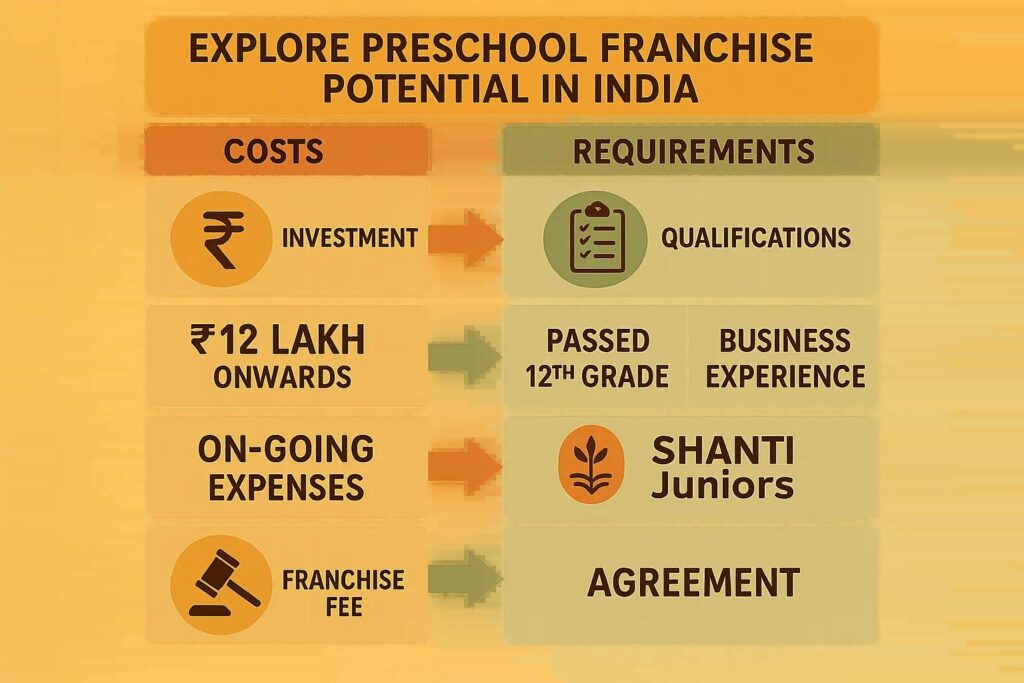
Explore Preschool Franchise Potential
The preschool franchise market in India is rapidly expanding, driven by increasing demand for quality early childhood education. This article explores the various aspects of starting a preschool franchise, including investment requirements, operational guidelines, and the support available from established providers. Readers will gain insights into the financial commitments involved, the necessary qualifications, and the unique advantages of partnering with a reputable franchise like Shanti Juniors. As the education sector evolves, understanding these elements is crucial for aspiring entrepreneurs looking to make a meaningful impact in early childhood education. We will cover the investment needed, costs associated with starting a franchise, key requirements, legal guidelines, and the support provided by Shanti Juniors.
What is the investment required for a preschool franchise in India?
Starting a preschool franchise in India requires a significant financial investment, which can vary based on location and the franchise brand. The initial investment typically includes franchise fees, setup costs, and operational expenses. Understanding these financial commitments is essential for prospective franchisees to ensure they are adequately prepared for the venture.
| Investment Component | Description | Estimated Cost |
|---|---|---|
| Franchise Fee | One-time fee paid to the franchisor for brand rights | Varies by brand |
| Setup Costs | Expenses for infrastructure, furniture, and equipment | ₹5,00,000 – ₹10,00,000 |
| Operational Costs | Monthly expenses including salaries, utilities, and supplies | ₹30,000 – ₹1,00,000 |
This table illustrates the various components of the investment required to establish a preschool franchise, highlighting the need for thorough financial planning.
How much does a preschool franchise cost in India?
The overall cost of starting a preschool franchise in India encompasses several factors, including franchise fees, setup costs, and ongoing operational expenses.
- Franchise Fees: These fees can range from ₹1,00,000 to ₹5,00,000, depending on the brand’s reputation and market presence.
- Setup Costs: Initial setup costs, which include infrastructure and educational materials, typically range from ₹5,00,000 to ₹10,00,000.
- Monthly Operational Expenses: Franchisees should budget for monthly expenses, which can vary from ₹30,000 to ₹1,00,000, covering salaries, utilities, and other operational needs.
Further research highlights the specific components of these costs and the growing interest in the preschool franchise model.
Preschool Franchise Costs & Model in India
as well as the fixed cost of license fees and royalty fee for using the brand name and curriculum. From last two decades, the preschool franchise model has gained significant traction, leading to a surge of studies conducted on franchise preschools in India.
Cognitive development of children in private franchise preschool, RTA Kumari, 2017
Understanding these costs is crucial for potential franchisees to assess the financial viability of their investment.
What are the key requirements to start a preschool franchise?
Starting a preschool franchise involves meeting specific requirements that ensure compliance with legal and operational standards. Key requirements include:
- Legal Requirements: Franchisees must adhere to local regulations regarding educational institutions, including obtaining necessary licenses and permits.
- Operational Guidelines: Following the franchisor’s operational standards is essential for maintaining brand consistency and quality.
- Franchise Partner Qualifications: Potential franchisees should possess a background in education or business management, along with a passion for early childhood education.
These requirements are designed to ensure that franchisees are well-equipped to manage their preschool effectively.
What legal and operational guidelines must franchise partners follow?
Franchise partners must comply with various legal and operational guidelines to ensure the successful operation of their preschool. These guidelines include:
- Compliance with Local Regulations: Adhering to educational laws and regulations set by local authorities is crucial for legal operation.
- Operational Standards: Franchisees must implement the operational standards provided by the franchisor, which cover curriculum delivery, staff training, and facility management.
- Franchise Agreement Details: Understanding the terms of the franchise agreement, including rights and responsibilities, is essential for a successful partnership.
Despite the need for compliance, it’s important to note the current landscape of franchising laws in India.
Franchising Laws & Requirements in India
India does not possess a centralized regulatory body or comprehensive franchise law at present. In the United States, prospective franchisee owners are required to comply with the Federal Trade Commission’s Franchise Rule, which mandates extensive disclosures to ensure transparency.
Need for Franchising Laws in India, 2024
Following these guidelines helps maintain the integrity of the franchise and ensures a high-quality educational experience for children.
Which qualifications and resources are needed to become a franchise partner?
To become a successful franchise partner, individuals must meet certain qualifications and have access to specific resources. Key qualifications include:
- Educational Qualifications: A background in education or business management is often preferred, as it equips franchisees with the necessary skills to run a preschool.
- Financial Resources: Adequate financial resources are essential to cover the initial investment and ongoing operational costs.
- Support from Shanti Juniors: Franchisees benefit from the support and resources provided by Shanti Juniors, including training and marketing assistance.
These qualifications and resources are vital for ensuring the success of the franchise.
How does Shanti Juniors support its preschool franchise partners?
Shanti Juniors offers comprehensive support to its preschool franchise partners, ensuring they have the tools and resources needed for success. Key support services include:
- Training Programs Offered: Franchisees receive initial training on operational procedures, curriculum implementation, and management practices.
- Marketing Support: Shanti Juniors provides marketing materials and strategies to help franchisees attract and retain students.
- Operational Assistance: Ongoing operational support is available to address challenges and optimize performance.
This support system is designed to empower franchise partners and enhance their chances of success in the competitive preschool market.
What training programs and ongoing support are provided?
Shanti Juniors emphasizes the importance of training and ongoing support for its franchise partners. The training programs include:
- Initial Training for New Partners: Comprehensive training sessions cover all aspects of running a preschool, from curriculum delivery to administrative tasks.
- Ongoing Professional Development: Franchisees have access to continuous learning opportunities to stay updated on best practices in early childhood education.
- Access to Resources and Materials: Franchise partners receive educational materials and resources to enhance the learning experience for children.
These training programs and support services are crucial for maintaining high standards in preschool education.
How does the curriculum enhance early childhood education?
The curriculum offered by Shanti Juniors is designed to enhance early childhood education through structured learning experiences. Key aspects of the curriculum include:
- Curriculum Structure: The curriculum is organized into age-appropriate modules that cater to the developmental needs of children in Toddcare, Nursery, Jr.Kg, and Sr.Kg.
- Educational Philosophy: Shanti Juniors follows a child-centered approach that encourages exploration, creativity, and critical thinking.
- Impact on Child Development: The curriculum aims to foster holistic development, including cognitive, social, emotional, and physical growth.
This structured approach to early childhood education ensures that children receive a well-rounded learning experience.
What are the current market trends and growth opportunities for preschool franchises in India?
The preschool franchise market in India is witnessing significant growth, driven by several trends and opportunities. Key trends include:
- Increased Demand for Quality Education: Parents are increasingly seeking high-quality preschool education for their children, leading to a surge in franchise opportunities.
- Emerging Trends in Education: Innovative teaching methods and technology integration are becoming essential components of modern preschool education.
- Opportunities for New Franchises: The growing market presents opportunities for new franchisees to establish themselves in various regions across India.
Indeed, recent studies confirm the substantial growth and evolving nature of the Indian preschool market.
Indian Preschool Market Growth & Opportunities
India’s preschool market has seen positive growth, over the past 2 decades more and more parents are opting for preschool coupled with changes in lifestyle the Indian preschool/childcare market size has grown significantly.
A STUDY ON INDIAN EDUCATION INDUSTRY: DRIVERS OF GROWTH AND OPPORTUNITIES, K Shah, 2023
These trends indicate a promising future for preschool franchises, making it an attractive investment for aspiring entrepreneurs.
How is the Indian preschool market evolving?
The Indian preschool market is evolving rapidly, influenced by changing parental expectations and societal factors. Key changes include:
- Changes in Parental Expectations: Parents are now more informed and demand higher standards of education and care for their children.
- Impact of Urbanization: Urbanization has led to increased awareness and access to quality preschool education, driving demand for franchises.
- Government Initiatives in Education: Government policies aimed at improving early childhood education are creating a favorable environment for preschool franchises.
This evolution presents both challenges and opportunities for franchise partners in the education sector.
Why choose Shanti Juniors among the best preschool franchises?
Choosing Shanti Juniors as a franchise partner offers several unique advantages that set it apart from competitors. Key selling points include:
- Brand Reputation: Shanti Juniors is recognized for its commitment to quality early childhood education and has established a strong brand presence in the market.
- Proven Success of Franchisees: Many franchise partners have achieved significant success, demonstrating the effectiveness of the Shanti Juniors model.
- Comprehensive Support System: The extensive support provided by Shanti Juniors ensures that franchisees are well-equipped to succeed in their ventures.
These factors make Shanti Juniors an attractive option for individuals looking to invest in the preschool franchise market.