Understanding Preschool Franchise Requirements in India
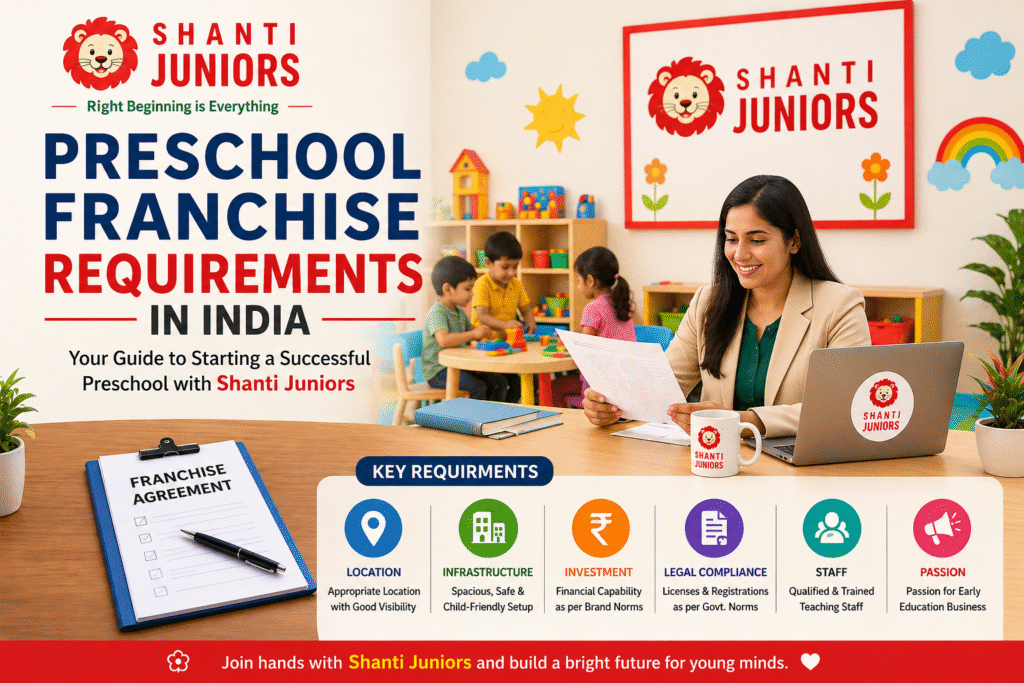
Preschool Franchise Requirements: A Complete Guide for India
Starting a preschool franchise in India can be a rewarding venture, both financially and socially. This comprehensive guide will delve into the essential requirements for establishing a preschool franchise, focusing on investment details, eligibility criteria, and strategies for operational success. As the demand for quality early childhood education continues to rise, understanding the nuances of franchise requirements becomes crucial for aspiring entrepreneurs. This article will explore the financial commitments involved, the qualifications needed to become a franchisee, and the operational strategies that can lead to success in this competitive market. Additionally, we will highlight the support provided by established brands like Shanti Juniors, which can significantly ease the journey for new franchisees.
Investment Details

Investing in a preschool franchise involves several financial considerations that potential franchisees must understand. The initial investment typically ranges from ₹10 to ₹20 lakhs, which includes various setup costs and operational expenses. Understanding these financial aspects is crucial for anyone looking to enter the preschool education sector.
What Financial and Experience Requirements Must Franchisees Meet?
To qualify for a preschool franchise, applicants must demonstrate financial capability and relevant experience. The initial investment usually falls between ₹10 lakhs and ₹20 lakhs, with franchise fees varying from ₹1,00,000 to ₹5,00,000. While a background in education or business management is preferred, it is not mandatory. This flexibility allows a broader range of individuals to consider entering the preschool franchise market.
Further research highlights the various financial and operational guidelines that shape the preschool franchise landscape in India.
India Preschool Franchise: Costs, Guidelines & Model Studies
the franchiser’s guidelines, as well as the fixed cost of license. From last two decades, the preschool franchise model has of studies conducted on franchise preschools in India.
Cognitive development of children in private franchise preschool, RTA Kumari, 2017
Which Documentation Is Essential for Franchise Application?
When applying for a preschool franchise, several key documents are required. These typically include business registration papers, necessary licenses and permits, and background checks to ensure compliance with local regulations. Having these documents in order is essential for a smooth application process.
Eligibility Criteria
Understanding the eligibility criteria for starting a preschool franchise is vital for prospective franchisees. This section outlines the key requirements that applicants must meet to qualify for a franchise opportunity.
What Are the Key Eligibility Criteria for Starting a Preschool Franchise in India?
The primary eligibility criteria for starting a preschool franchise in India include demonstrating financial capability, having a genuine interest in education, and meeting certain background requirements. Applicants must show that they can fund the initial investment and possess a passion for early childhood education, which is essential for fostering a positive learning environment.
What Operational and Location Requirements Are Necessary for a Successful Preschool Franchise?
Operational success in a preschool franchise hinges on meeting specific location and infrastructure requirements. Franchisees must secure adequate premises that comply with local regulations and safety norms. Additionally, the chosen location should be accessible and visible to attract families seeking quality education for their children. Proximity to residential areas, good connectivity, and safe surroundings are critical factors that influence enrollment and franchise growth.
Strategies for Operational Success
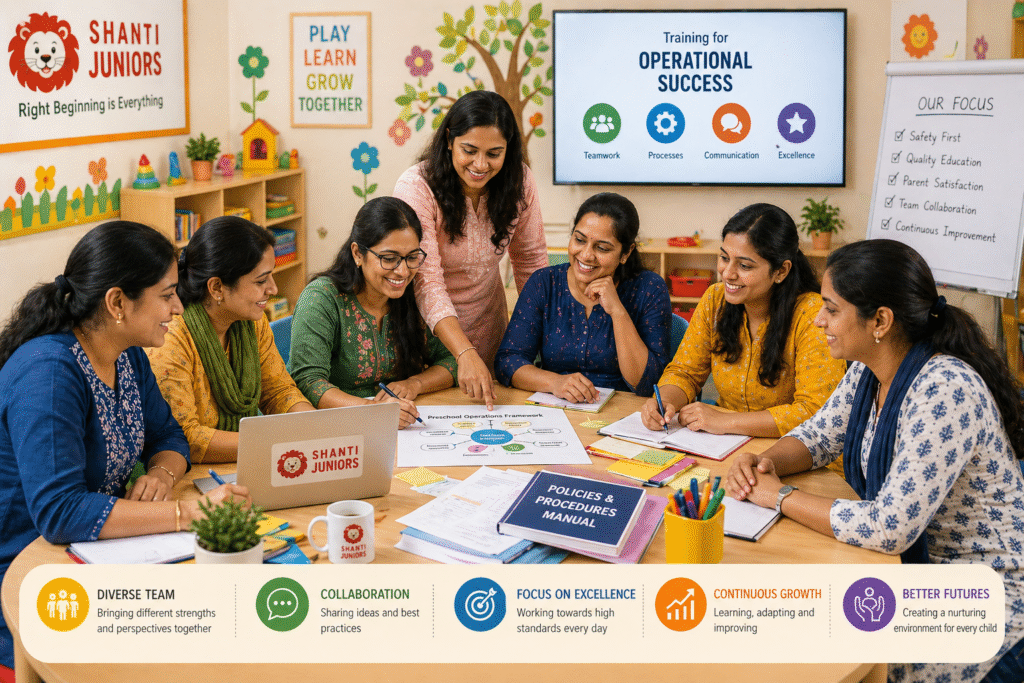
Operational success in the preschool franchise sector requires strategic planning and execution. This section discusses effective strategies that franchisees can implement to ensure their preschool operates smoothly and successfully.
What Training and Support Does Shanti Juniors Provide to Franchisees?
Shanti Juniors offers comprehensive training programs for its franchisees, covering essential aspects such as pedagogy, operations, curriculum development, and marketing. This training equips franchisees with the knowledge and skills necessary to run a successful preschool. Additionally, ongoing professional development opportunities ensure that franchisees stay updated with the latest educational practices and regulatory changes.
What Ongoing Marketing and Operational Support Is Available?
Franchisees benefit from ongoing marketing support, which includes local marketing assistance, digital marketing strategies, and brand promotion to attract and retain students. Shanti Juniors also provides operational support, helping franchisees navigate challenges, optimize their preschool’s performance, and implement quality assurance measures. This support is crucial for maintaining a competitive edge in the market and ensuring high standards of early childhood education.
Additional Support
Beyond initial training, Shanti Juniors offers additional support to franchisees, enhancing their chances of success in the preschool sector.
What Are the Space and Infrastructure Standards for Preschool Facilities?
Preschool facilities must adhere to specific space and infrastructure standards to ensure a safe and conducive learning environment. These standards include adequate classroom space per child, child-friendly furniture, safety features such as fire exits and CCTV surveillance, hygienic washrooms, and play areas. Meeting these requirements is essential for compliance with local regulations and for creating an engaging, secure environment that supports early childhood development.
How Does Location Impact Franchise Performance and Compliance?
The location of a preschool franchise significantly impacts its performance and compliance with regulations. A well-chosen location can enhance visibility and accessibility, attracting more families. Additionally, understanding the demographic profile of the area, including income levels and population density, can help franchisees tailor their offerings to meet community needs. Compliance with zoning laws and educational regulations is also influenced by location, making site selection a critical factor in franchise success.
What Legal and Regulatory Compliance Must Preschool Franchises Adhere To in India?
Legal and regulatory compliance is a critical aspect of operating a preschool franchise in India. Franchisees must be aware of the various laws and regulations governing early childhood education.
Despite the growing franchise sector, it’s important to note the current legal framework surrounding franchise operations in India.
India Franchise Laws: Investment & Disclosure Requirements
possess specific franchise laws and detailed disclosure requirements, India currently lacks a directly encouraging investment and expansion in the franchise sector.
THE FRANCHISE MODEL IN INDIA: A CATALYST FOR SUSTAINED ECONOMIC DEVELOPMENT
Which Government Policies and Education Regulations Apply?
Franchisees must comply with government policies and education regulations, including the National Educational Policy 2020, the Right to Education Act, and local municipal regulations. Understanding these regulations is essential for ensuring that the preschool meets all legal requirements and operates within the framework set by authorities. Adherence to the National Quality Standards for Early Childhood Care and Education is also critical for maintaining educational excellence.
The National Educational Policy 2020 plays a pivotal role in shaping the quality and accessibility of preschool education across India.
Quality Preschool Education in India: NEP 2020 & National Standards
This paper focuses on the provision of center-based preschool education for children ranging in age from 3 to 6 years in India. It estimates access rates to various services and highlights issues related to equitable access to preschool services and the quality of preschool education. While India has made great strides in improving access to preschool education, numerous challenges have to be addressed to enhance its quality. The National Educational Policy 2020 and the country’s commitment to meet UN Sustainable Development Goal Target 4.2 by 2030 and ensure that all girls and boys have access to quality pre-primary education provide opportunities to ensure equitable access to quality preschool education. Central to meeting national targets is the enforcement of the National Quality Standards for Early Childhood Care and Education. Further, increased budget allocations to preschool education, prioritizing professional preparation of the early childhood work force and harnessing technology to monitor government programs have considerable potential to enhance the early childhood system.
Fostering equitable access to quality preschool education in India: Challenges and opportunities, N Rao, 2021
How Can Franchisees Ensure Continuous Legal Compliance?
To maintain compliance, franchisees should obtain all necessary licenses, conduct regular audits, and engage with local authorities. This proactive approach helps prevent legal issues and ensures that the preschool operates smoothly. Keeping abreast of changes in education laws and franchise regulations is also essential for long-term success.
What Are the Current Market Trends and Profitability Prospects for Preschool Franchises in India?
The preschool education sector in India is experiencing significant growth, driven by increasing demand for quality education. This section explores current market trends and the profitability prospects for franchisees.
How Is the Indian Preschool Market Growing and Evolving?
The Indian preschool market is projected to reach a size of USD 10 billion by 2028, reflecting a growing recognition of the importance of early childhood education. Urbanization, rising disposable incomes, and changing family dynamics are contributing to this growth, creating opportunities for new franchises. Additionally, the increasing awareness of early childhood development and government initiatives supporting preschool education are fueling market expansion.
What Profit Margins and ROI Can Franchisees Expect?
Franchisees can expect a return on investment (ROI) of approximately 15% to 40% within the first three to five years of operation. This potential for profitability makes investing in a preschool franchise an attractive option for entrepreneurs looking to make a positive impact in their communities. Profit margins depend on factors such as location, operational efficiency, and marketing effectiveness.
How Much Does It Cost to Invest in a Preschool Franchise in India?
Understanding the costs associated with investing in a preschool franchise is crucial for prospective franchisees. This section provides a detailed breakdown of the financial commitments involved.
What Is the Detailed Investment Breakdown for Shanti Juniors Franchise?
The investment breakdown for a Shanti Juniors franchise typically includes an initial investment ranging from ₹10 to ₹20 lakhs, with setup costs between ₹5,00,000 and ₹10,00,000 for infrastructure, furniture, and equipment. Monthly operational costs can vary from ₹30,000 to ₹1,00,000, depending on the scale of operations. Additional costs may include staff salaries, marketing expenses, and maintenance.
How Do Costs Compare Among Top Preschool Franchises in India?
When comparing costs among various preschool franchises in India, it is essential to consider factors such as franchise fees, setup costs, ongoing operational expenses, brand reputation, and support services. This comparison helps prospective franchisees make informed decisions about their investment and select a franchise that aligns with their budget and business goals.
EAV Table: Investment Breakdown for Shanti Juniors Franchise
To provide a clearer understanding of the investment components, the following table outlines the key financial aspects of investing in a Shanti Juniors franchise.
| Investment Component | Estimated Cost (₹) | Description |
|---|---|---|
| Initial Investment | 10,00,000 – 20,00,000 | Covers franchise fees and initial setup costs |
| Setup Costs | 5,00,000 – 10,00,000 | Includes infrastructure, furniture, and equipment |
| Monthly Operational Costs | 30,000 – 1,00,000 | Ongoing expenses for running the preschool |
This breakdown illustrates the financial commitment required to establish a Shanti Juniors franchise, helping potential franchisees plan their investments effectively.
For those interested in starting their own venture, exploring the Shanti Juniors franchise opportunities can be a great first step.
Ready to Start Your Preschool Franchise Journey?
Discover how partnering with Shanti Juniors can help you build a successful preschool business with expert support and proven strategies.
Conclusion
In summary, starting a preschool franchise in India involves understanding various investment details, eligibility criteria, and operational strategies. With the right support from established brands like Shanti Juniors, aspiring franchisees can navigate the complexities of the preschool education sector and build successful businesses that contribute positively to their communities. By focusing on compliance, quality education, strategic location, and effective marketing, franchisees can capitalize on the growing demand for early childhood education and achieve sustainable profitability.