Preschool vs Daycare: What’s the Difference?
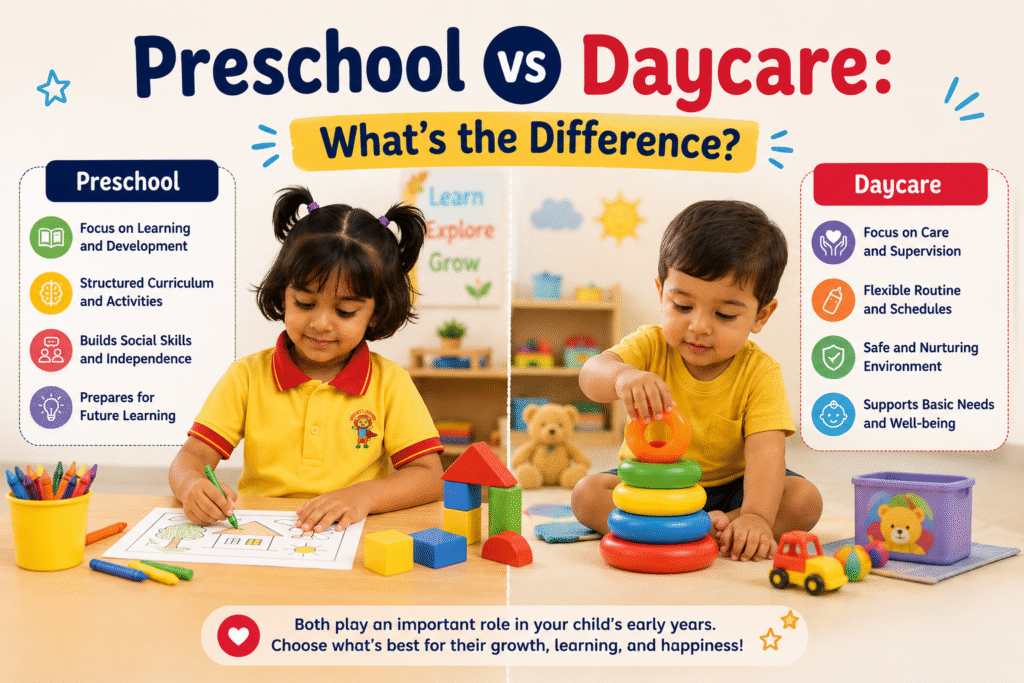
Choosing the right early childhood environment for your child can be a challenging decision for families. The terms “preschool” and “daycare” often get used interchangeably, yet they signify different approaches to early childhood education and care. Parents must understand these differences to make informed decisions about their children’s development. This article will explore the fundamental distinctions between preschools and daycares, delve into their educational curriculums, and discuss the impact each setting has on a child’s socialization and learning. By the end, you’ll have a clearer understanding of which option may be best suited for your child’s developmental needs.
What Are the Fundamental Differences Between Preschool and Daycare?
Preschool and daycare serve different purposes in child development. Preschool is primarily an educational setting, designed to prepare children for kindergarten and beyond through structured learning experiences. In contrast, daycare offers a combination of care and education for working parents, with a focus on supervision and socialization rather than academic learning. Understanding these core distinctions allows parents to align their child’s needs with the appropriate environment.
How Does Early Childhood Education Vary in Preschools and Daycares?
Early childhood education varies significantly between preschools and daycares, particularly in their educational philosophies and curricula. Preschools often emphasize a structured curriculum guided by educational standards aimed at enhancing cognitive skills and preparing children for future academic success. Activities in preschools may include phonics, numbers, shapes, and social skills through guided play.
Conversely, daycare programs might focus more on socialization and personal development, providing a less formal learning environment. They typically employ a general curriculum that encourages exploration and creativity, often using play-based learning as a vital tool. This difference in educational approach directly influences how children learn and grow in these settings.
What Age Groups and Services Do Preschools and Daycares Typically Serve?
Preschools typically cater to children aged 3 to 5 years, focusing on early academic skills in preparation for kindergarten. They might offer part-time schedules, allowing children to attend just a few hours a day or a few days a week. Services offered often include structured classes, assessments, and parent involvement activities.
On the other hand, daycares serve a broader age range and may accept infants through school-age children. They provide full-day care, accommodating the schedules of working parents. Daycare services often include meals, nap times, and various age-appropriate activities that promote developmental milestones across different age groups. Understanding these age groups and services can significantly influence a parent’s choice depending on their child’s age and developmental stage.
How Do Preschool Curricula Compare to Daycare Programs in Supporting Child Development?
The curricula in preschools and daycare programs serve distinct purposes and implement various teaching methods to support child development. While preschools focus heavily on academic skills, daycare programs emphasize social interactions and basic care.
What Are the Core Components of a Preschool Curriculum?
A preschool curriculum typically consists of core components designed to foster early learning. These components include literacy development through storytime and phonics, basic math skills through counting and shapes exercises, and social skills development through group activities. The integration of play in preschools facilitates a well-rounded educational experience, allowing children to engage meaningfully with their peers while acquiring foundational knowledge.
Which Child Development Activities Are Common in Daycare Settings?
In daycare settings, common activities focus on play and socialization. Daycare providers employ a more relaxed approach, featuring free play, arts and crafts, and outdoor activities that engage children in exploration. Daily schedules include circle time for songs and stories, sensory play, and basic educational games that foster early learning through interaction rather than formal instruction. This method promotes essential social, emotional, and physical development.
What Benefits Do Playschools Offer Compared to Preschools and Daycares?
Playschools provide a unique approach to early education, combining elements of both preschools and daycare settings. They often emphasize play-based learning, promoting natural curiosity and hands-on experiences that facilitate learning.
How Do Playschools Support Early Social and Cognitive Skills?
Playschools support early social skills by creating an environment where children can learn to communicate and collaborate with their peers. Through shared play and group activities, children develop empathy, cooperation, and problem-solving skills. Additionally, the cognitive skills fostered in a playschool setting—such as critical thinking and creativity—can significantly enhance a child’s readiness for future educational experiences.
What Distinguishes Playschool Programs from Preschool Curriculums?
The primary distinction between playschool programs and traditional preschool curricula lies in their pedagogical approach. Playschools prioritize child-led play and less structured learning, allowing children to explore topics of their interest organically. In contrast, preschools follow a set curriculum with specific educational objectives to meet. Thus, parents should consider their child’s learning style and personality when choosing between these two formats.
What Should Parents Know About Preschool Enrollment Process for 2026?
As the enrollment process for preschools can be competitive and complex, parents should be well-prepared. Understanding the specifics of admission will ensure a smoother experience.
When and How Do You Apply for Preschool Admission?
The preschool admission process in 2026 generally begins in the winter or early spring, with most applications due by March or April. Parents should gather necessary documents, such as immunization records and proof of residency, and consider visiting multiple preschools to learn about their environment and educational approaches. Early application ensures parents secure a spot in their desired school.
What Requirements and Readiness Indicators Are Common for Preschool Admission?
Common requirements for preschool admission include specific age criteria—children should be at least three years old—and readiness indicators such as basic verbal communication, social interaction skills, and the ability to follow instructions. Some preschools may also require a brief assessment during the application process to determine a child’s readiness for the curriculum.
How to Choose the Best Option Between Preschool and Daycare for Your Family?
Choosing between preschool and daycare involves careful consideration of your family’s specific needs, including child development, work schedules, and educational goals.
What Factors Should Influence Your Decision on Child Care versus Early Education?
Several factors influence this decision, including educational philosophy, the age of the child, and the family’s schedule. Parents should reflect on their priorities regarding education, socialization, and care. By considering their child’s individual needs and family circumstances, parents can make informed choices that align best with their long-term goals.
How Do Cost and Location Affect Preschool and Daycare Selection?
Cost and location are two critical factors that can significantly affect parents’ decisions. Typically, preschools may be more expensive due to their educational offerings compared to daycares that are often priced based on general care services. Additionally, parents should consider commute times, availability of desired programs, and how these factors may impact their daily routines.
What Are the Socialization and Learning Benefits of Preschool Compared to Daycare?
Preschool provides unique benefits in terms of socialization and learning that can impact a child’s development profoundly. The structured environment of preschools allows for targeted learning experiences that foster cognitive growth.
How Does Preschool Enhance Cognitive and Social Readiness Skills?
Preschool enhances cognitive skills through structured curricula that engage children in critical thinking, problem-solving, and collaboration with peers. At this stage, children also develop social readiness, learning how to interact within a group, share, and communicate effectively. This foundation not only prepares them for kindergarten but also for future interactions in varied social settings.
What Role Does Daycare Play in Supporting Childcare and Basic Development?
Daycare plays a crucial role in providing basic care and nurturing essential for a child’s early years. While the structure may be less formal than in preschool, daycare settings offer opportunities for children to develop social skills, emotional intelligence, and the basic life skills necessary for well-rounded development. Many children who attend daycare benefit from the play-focused learning environment that encourages exploration and social interaction.
Which Daycare Program Types and Child Care Standards Should Parents Consider?
Parents must consider various types of daycare programs when selecting the best childcare option. Each type offers unique benefits tailored to different family needs and child development stages.
What Are Common Types of Daycare Programs Available?
Common types of daycare programs include family daycare, center-based care, and in-home care providers. Family daycare often occurs in a caregiver’s home, offering a cozy, familiar environment. Center-based care is typically more structured, with multiple caregivers overseeing a larger group of children. In-home care provides personalized attention within the child’s familiar environment, which can be a comforting option.
How Do Licensing and Care Quality Standards Impact Daycare Choices?
Licensing and care quality standards are essential criteria in selecting daycare programs. Parents should inquire about the licensing requirements in their area, as licensed programs typically undergo regular inspections and adhere to established safety and quality standards. Research indicates higher quality care correlates with better outcomes for child development, making these considerations vital for informed decision-making.
Where Can You Find Local Playschool, Preschool, and Daycare Options Near Me?
Finding quality educational options in your area is a crucial step toward ensuring your child’s successful early development.
How to Locate and Evaluate Early Childhood Education Providers Locally?
Parents can locate local providers through community resources, online directories, and recommendations from friends or family. Evaluating these options involves visiting facilities, reviewing their curriculums, and considering their approach to learning and care.
What Questions Should You Ask During Tours of Preschools and Daycares?
During visits, parents should ask essential questions about safety protocols, staff qualifications, curriculum details, and how the program facilitates socialization and learning. Inquiring about daily routines and parent involvement opportunities will provide insights into how well the program aligns with the family’s values and expectations.