Discover Kiddowitty: STEAM Learning at Shanti Juniors
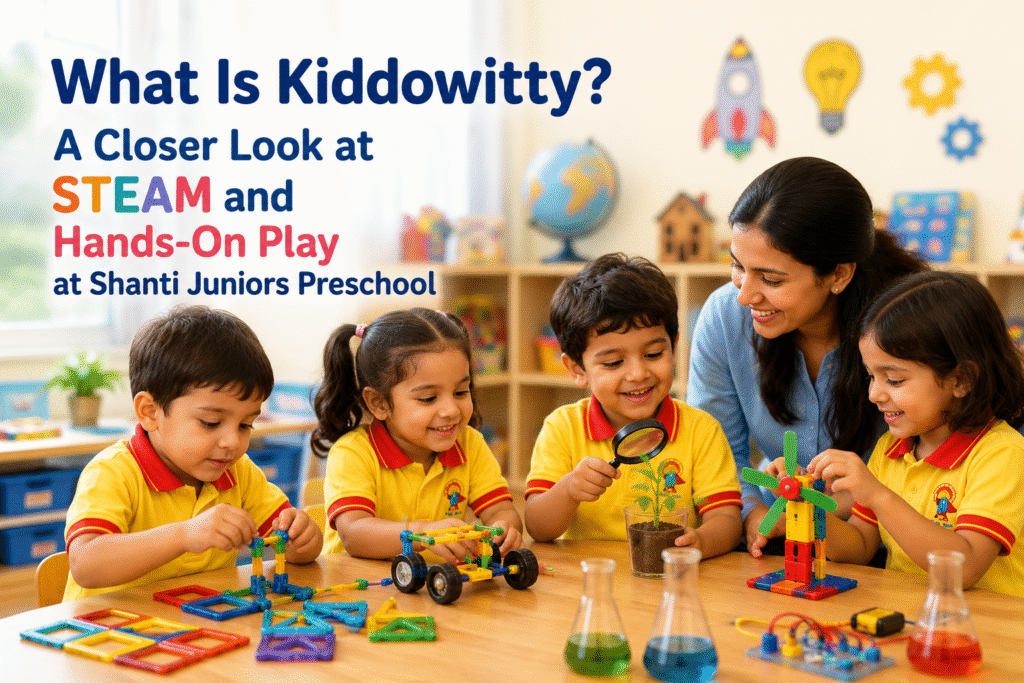
What Is Kiddowitty? A Closer Look at STEAM and Hands‑On Play at Shanti Juniors Preschool
Kiddowitty is Shanti Juniors’ hands‑on STEAM program that blends Science, Technology, Engineering, Arts, and Mathematics with playful exploration. The curriculum emphasizes doing, testing, and reflecting to build early thinking skills, creativity, and social‑emotional growth. Below we summarize the program’s core features, how experiential learning is used, curriculum benefits, and simple ways families and teachers can support learning.
Key Takeaways
- STEAM-driven play sparks creativity and early critical thinking.
- Children learn by doing: active, meaningful tasks replace rote drills.
- The ICube Learning Ladder guides staged, developmentally appropriate progress.
- Activities include experiments, design challenges, art projects, and early math play.
- Experience-based play strengthens memory, social skills, and self-regulation.
- Collaborative projects build communication, teamwork, and problem solving.
- Research supports early STEAM for academic and socio‑emotional gains.
- Parents and educators extend learning via workshops, take‑home kits, and events.
- Teachers use thematic units, flexible spaces, and formative assessment to personalize learning.
What Is the Kiddowitty STEAM Program at Shanti Juniors?
Kiddowitty integrates STEAM subjects into playful, age‑appropriate experiences focused on exploration rather than drills. Children touch, build, test, and reflect, and teachers use the ICube Learning Ladder as a scaffolded sequence of challenges that support intellectual and social growth.
How does Kiddowitty integrate the ICube Learning Ladder?
The ICube ladder breaks learning into stages: open exploration, guided planning, collaborative projects, and reflection. Each stage reuses earlier skills so children move from sensory play to small design challenges and richer, cross‑disciplinary tasks that combine art, simple technology, and engineering thinking.
What educational disciplines does STEAM include in Kiddowitty?
Kiddowitty covers Science, Technology, Engineering, Arts, and Mathematics through hands‑on tasks: simple experiments, creative math representations, and cause‑and‑effect activities with age‑appropriate tech. These experiences build logic, creativity, fine motor skills, and self‑expression.
How Does Experiential Learning Enhance Early Childhood Education?
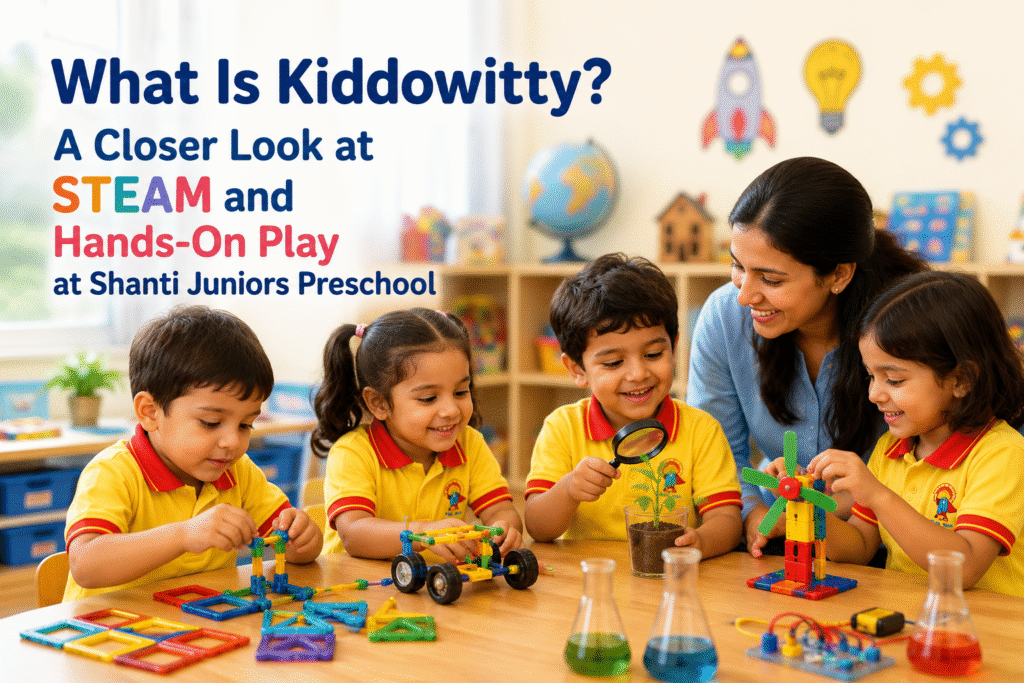
Experiential learning makes abstract ideas tangible through concrete, sensory experiences. When children manipulate materials, test ideas, and discuss observations, they form stronger memories and deeper understanding. The social context of many activities also supports language, cooperation, and emotional regulation.
Experiential Learning in Early Childhood Education: Cognitive and Socio-Emotional Development
Research highlights how intentionally designed, experience‑rich settings support both cognitive growth and socio‑emotional development. Practical implications stress using hands‑on activities that connect to children’s everyday lives to foster deeper learning and healthy social interactions. … LEARNING IN PRESCHOOL SETTINGS: THE CONTRIBUTION OF LITERARY TEXTS TO COGNITIVE AND SOCIO-EMOTIONAL DEVELOPMENT, 2025
What are examples of experiential play activities for preschoolers?
Common experiential activities at this age include:
- Nature Walks: short, guided outings to observe plants, insects, and seasonal changes.
- Building Projects: blocks or recycled materials to explore balance, structure, and spatial thinking.
- Art and Craft Sessions: open‑ended art to practice fine motor skills and personal expression.
These activities mix sensory input, problem solving, and social interaction to support lasting learning.
Why is experiential learning important for preschool cognitive development?
Children retain and apply ideas better when they discover them firsthand. Hands‑on tasks increase engagement and recall and create natural opportunities for social learning—negotiating roles, sharing solutions, and using language to explain thinking. This aligns with early education recommendations for interactive, child‑centered experiences.
What Are the Benefits of the Kiddowitty Steam Curriculum for Preschoolers?
Kiddowitty’s STEAM approach supports multiple domains: foundational academic skills, creative thinking, and social and emotional development. Regular experimentation and group work foster persistence, curiosity, and a positive attitude toward learning—qualities that help children beyond preschool.
STEAM Integration in Early Childhood: Fostering Lifelong Learning
Evidence suggests that early, integrated STEAM experiences build critical thinking, problem‑solving, and creativity—laying groundwork for future learning. When children are encouraged to explore, test ideas, and collaborate, they develop a durable love of inquiry and resilience in problem solving. INTEGRATION OF THE STEAM APPROACH INTO THE PRESCHOOL EDUCATIONAL ENVIRONMENT, 2026
How does Kiddowitty support social and creative skills at Shanti Juniors?
Kiddowitty prioritizes group projects and shared materials so children practice communication and creative thinking. Tasks such as joint designs and simple prototypes encourage brainstorming, role negotiation, and multiple ways to represent learning—drawing, modeling, or telling a story.
What research supports STEAM education in early childhood?
Research links integrated, hands‑on STEAM to gains in academic readiness and social‑emotional skills. Contextualized activities help children apply concepts, adapt flexibly, and maintain interest in learning, supporting the inclusion of STEAM in preschool routines and classroom design.
Integrating Social and Emotional Learning with STEAM for Holistic Early Childhood Development
This work examines how Social and Emotional Learning (SEL) can be woven into STEAM activities to promote balanced development. The research highlights practical strategies for combining SEL and STEAM so children grow academically while also gaining emotional and social competence. Integrating social and emotional learning through steam activities in inclusive early childhood curriculum, 2024
How Can Parents and Educators Engage with Kiddowitty and Shanti Juniors Programs?
Adults extend classroom learning by attending workshops, using take‑home activities, and discussing projects with children. Simple involvement makes STEAM a part of daily routines and reinforces classroom goals.
What resources are available for parents to support the STEAM curriculum?
Families can use three practical supports:
- Workshops: brief sessions that model classroom activities and home adaptations.
- Educational Materials: recommended books, games, and low‑cost tools for at‑home exploration.
- Community Events: family STEAM days or local fairs that connect school learning to the community.
These resources help parents feel confident bringing STEAM play into everyday life.
How can educators implement the ICube Learning Ladder in preschool settings?
Teachers apply the ICube ladder with practical strategies that match children’s stages. Core steps include:
- Creating Thematic Units: link several STEAM strands around a shared question or project.
- Flexible Learning Environments: arrange spaces and materials for movement and collaboration.
- Ongoing Assessment: short observations, samples, and conversations guide instruction and personalization.
Together these steps create responsive experiences that move children up the ladder.
Frequently Asked Questions
1. What age group is the Kiddowitty program designed for?
Ages 3 to 6. The program focuses on developmentally appropriate, play‑based activities that build curiosity and early problem solving.
2. How can parents reinforce STEAM learning at home?
Try short, playful activities: kitchen experiments, building with recycled items, or story problems that invite prediction. Read and ask open‑ended questions about everyday phenomena to spark conversation.
3. Are there specific benefits of integrating arts into STEAM education?
The arts add creativity and alternative ways to represent ideas. Art activities strengthen fine motor skills, emotional expression, and communication—complementing science and math learning.
4. How does Kiddowitty adapt to different learning styles?
Activities vary by format—hands‑on, story‑based, visual demonstrations—so visual, auditory, and kinesthetic learners can engage in ways that suit them.
5. What role does collaboration play in the Kiddowitty program?
Collaboration is central: group projects foster communication, empathy, and shared problem solving, improving both social skills and learning outcomes.
6. What types of assessments are used in the Kiddowitty program?
Formative assessments—observations, checklists, work samples, and brief conversations—help teachers tailor activities and monitor progress on the ICube ladder.
7. How can community involvement enhance the Kiddowitty experience?
Community partners, museum visits, and guest speakers bring real‑world contexts that deepen classroom lessons and expand children’s experiences.
Conclusion
Kiddowitty at Shanti Juniors combines playful exploration with intentional STEAM learning to build thinking, creativity, and social skills. Hands‑on activities and collaborative projects nurture curiosity and confidence. When parents and educators engage through workshops, home activities, and community events, they amplify these benefits and help children thrive.