Preschool Curriculum Comparison for Franchise Success in India
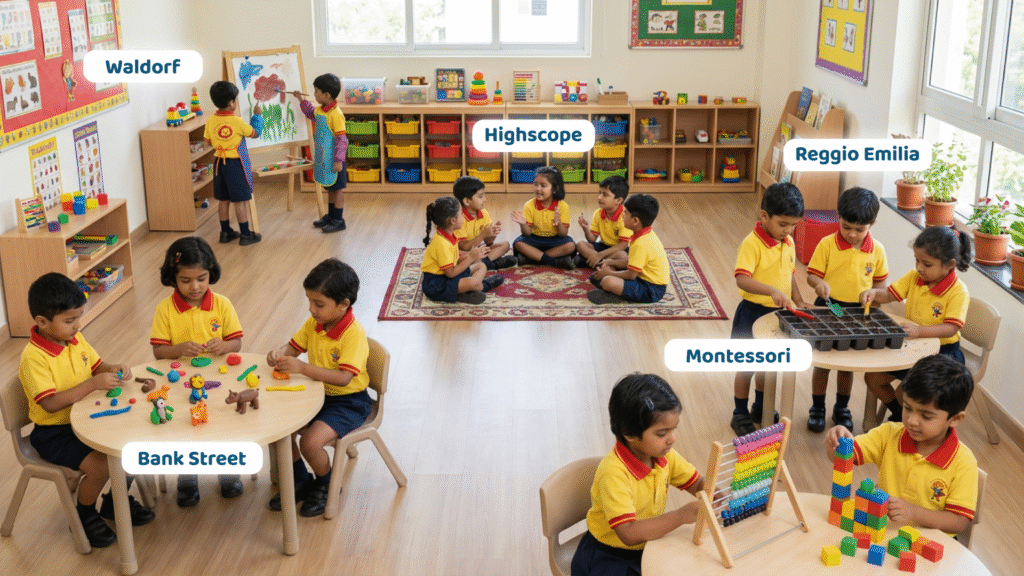
Evaluating Preschool Franchises: A Guide to Curriculum Success
The preschool sector in India is growing fast as families seek reliable, development-focused early education. This guide compares common preschool curricula with a close look at the Shanti Juniors approach, evaluating how each fits franchise operations. It outlines the operational and educational factors that shape franchise performance, current market forces, and the criteria franchisees should use when choosing a curriculum to ensure consistent delivery across centres.
You’ll find practical advice on matching curriculum choice to local demand, designing training pathways, and building realistic financial projections based on enrolment and cost assumptions. The emphasis is on combining operational feasibility with strong educational practice to support steady franchise growth.
Key Takeaways
- Franchise success hinges on choosing curricula that match market needs and parents’ expectations.
- Play-based, structured, and technology-enhanced curricula each offer distinct benefits for early learning.
- Top preschool curricula support whole-child development—cognitive, social, emotional, and physical.
- Strong franchisor support—training, QA, and operations—drives consistent implementation across sites.
- Compliance and accreditation boost credibility and demonstrate adherence to education standards.
- Sound financial planning, including investment analysis and break-even timelines, is essential for viability.
- Demand is rising, especially in tier 2 and tier 3 cities, creating new franchise opportunities.
- Successful brands adapt curricula to local culture while keeping core educational standards uniform.
- Comparative curriculum and model analysis helps prospective franchisees make informed choices.
Comparison of Preschool Curricula
Several preschool curricula are active in India, each rooted in different pedagogical priorities. Broadly, they fall into play-based, structured, and technology-integrated categories—each with distinct classroom routines, assessment methods, and expected outcomes. Your choice impacts teacher training, resource investments, and market positioning.
- Play-Based Curriculum: Learners explore through guided play, which supports creativity, problem-solving and social skills. Appeals to parents who prioritise child-led discovery.
- Structured Curriculum: Sets clear learning goals and standard assessments, attractive to families seeking measurable progress and preparation for formal schooling.
- Technology-Integrated Curriculum: Uses digital tools to supplement learning and develop early digital literacy while requiring robust digital-safety policies.
Match curriculum type to local preferences, the centre’s operational capacity, and staff skills to ensure a strong market fit.
Assess classroom size, material budgets, and teacher availability. Play-based setups need varied manipulatives and flexible layouts; structured programs require detailed lesson plans and routines; technology-driven models demand hardware, software, and ongoing IT support.
Factors Influencing Franchise Success

Franchise outcomes depend on operational and market variables: site choice, local demographics, parental priorities, brand equity, and franchisor support. These elements determine enrolment, retention, and the centre’s financial performance.
- Location and Demographics: Areas with more young families typically deliver stronger enrolment.
- Parental Expectations: Align offerings with what parents value—safety, learning outcomes, or convenience.
- Brand Reputation: A trusted brand shortens the path to enrolment and parent confidence.
Use these variables in enrolment forecasts and marketing plans.
Plan capacity carefully (class sizes, staff ratios), set fees to match local affordability, and offer flexible schedules. Model optimistic, baseline, and cautious scenarios so hiring and marketing match projected revenues and reduce early cash-flow pressure.
Current Market Trends
Market indicators show rising enrolments, supportive policy moves, and renewed investor interest—conditions that favour franchised models able to deliver standardised quality at scale.
- Growing Demand: Greater awareness is driving more families to formal preschool programs.
- Government Initiatives: Policy support is improving access and encouraging quality standards.
- Investment Opportunities: Underserved towns and suburban neighbourhoods are attracting investor interest.
Despite growth, significant gaps in equitable, high-quality preschool provision remain across regions.
Quality Preschool Education in India: Access & Challenges
This paper examines centre-based preschool education for children aged 3 to 6 in India, estimating access levels and underlining challenges in quality and equity. While access has improved, quality remains an area for focused effort.
Fostering equitable access to quality preschool education in India: Challenges and opportunities, N Rao, 2021
For franchise partners, these trends present openings where rigorous quality control and thoughtful local adaptation create a competitive edge.
Centres that demonstrate consistent quality through accreditation, clear parent communication, and reliable assessment practices can convert demand into steady enrolment and—where the market allows—premium pricing.
Shanti Juniors Curriculum: Aligned with National Early Childhood Education Policies
Shanti Juniors delivers a child-centred curriculum that aligns with the National Education Policy 2020. It stresses cultural relevance, whole-child development, and regulatory alignment—qualities that support franchise models seeking consistent educational standards and operational clarity.
- Child-Centred Approach: Activities prioritise children’s interests and developmental needs to keep learning engaging and meaningful.
- Cultural Integration: Local culture and values are woven into learning to strengthen community relevance.
- Holistic Development: Lessons are designed to nurture thinking, social skills, emotional well-being, and physical growth—preparing children for school and life.
This alignment builds credibility with regulators and helps parents understand classroom practice.
For franchisees, Shanti Juniors’ policy alignment simplifies accreditation processes and clarifies parent messaging. Daily activities and assessments map to NEP principles, aiding both marketing and regulatory submissions.
What Defines the Best Preschool Curriculum in India for Franchisees?
A top-tier curriculum—like Shanti Juniors—combines clear structure, evidence-informed practices, and measurable outcomes while giving teachers room to respond to children. It balances consistency with professional autonomy and meets regulatory expectations.
- Curriculum Structure: Clear learning objectives with flexibility for teachers to adapt to classroom needs.
- Educational Philosophy: Child-focused, encouraging safe exploration and curiosity.
- Holistic Development: Targets cognitive, social, emotional, and physical milestones.
Practical indicators include weekly plans, simple assessment rubrics, and parent reports—tools that reduce variability and streamline training.
How Franchise Preschool Business Models Impact Curriculum Implementation
Franchise structure shapes governance, training depth, and curriculum fidelity. Shanti Juniors combines strong standardisation with controlled local adaptations so learning outcomes are preserved while meeting community expectations.
- Standardisation: Keeps educational experience consistent across locations.
- Support and Training: Ongoing coaching and resources help franchisees deliver the curriculum as intended.
- Local Adaptation: Permits contextual adjustments within clear boundaries to stay relevant locally.
Typical franchise formats—single-unit, area development, and master franchising—each vary in autonomy and support, and should inform expectations around curriculum control.
Training and Support Systems Enhancing Franchise Success with Shanti Juniors Curriculum
Shanti Juniors provides structured onboarding, continuous professional development, and practical tools to reduce variation and protect educational quality across centres.
- Initial and Ongoing Training: Covers curriculum content, effective teaching methods, and daily operations.
- Resources and Marketing Support: Includes classroom materials and marketing toolkits to help launch and grow centres.
- Quality Assurance: Regular audits and feedback loops keep standards high.
Training blends in-person workshops, online modules, and on-site mentoring to support rapid scale-up and sustained competence.
Comprehensive Curriculum Training Programs for Franchisees
Training is modular and competency-based, with classroom coaching and clear SOPs for daily routines and assessments to strengthen fidelity.
- Initial Training: Focuses on curriculum, pedagogy, and centre operations.
- Ongoing Development: Keeps teams updated on best practices and new methods.
- Teacher Support: Ongoing coaching and evaluation to maintain classroom quality.
A phased approach—onboarding, mentoring, and refresher modules—supports continuous improvement. Competency checks, simulations, and mentor observations help maintain standards over time.
Ongoing Franchisee Support and Quality Assurance Mechanisms
Shanti Juniors offers regular operational audits, classroom observations, and data-driven feedback to sustain standards and inform improvement plans.
- Regular Support: Scheduled check-ins, resource updates, and training sessions address operational needs.
- Quality Assurance: Monitoring systems ensure consistent delivery of the curriculum.
- Performance Impact: Strong support typically leads to better child outcomes and higher franchisee satisfaction.
Simple, observable measures—classroom routines and teacher-child interactions—anchor quality checks. Aggregated, anonymised data supports system-wide learning and targeted support where needed.
Financial Planning and Investment Return Projections for Franchisees
Shanti Juniors advocates conservative financial planning with realistic enrolment scenarios and clear operating-cost assumptions to lower investment risk and support sustainable growth.
- Investment Return Projections: Scenario-based forecasts help assess business viability.
- Budgeting: Controls costs and protects margins.
- Break-Even Analysis: Clarifies the timeline to recoup initial investment.
Financial tools include monthly cash-flow forecasts, unit-economics templates, and rolling budgets to monitor performance and guide strategy adjustments.
Regulatory Compliance and Accreditation Requirements in India
Shanti Juniors builds compliance into operations, following local regulations and accreditation standards essential for safety, trust, and long-term success.
- Regulatory Compliance: Meets legal requirements aimed at protecting children and families.
- Accreditation: Strengthens credibility and parent confidence.
- Operational Impact: Compliance affects enrolment and partnership opportunities.
Proactive compliance planning covers licences, safety audits, staff certifications, and operational checklists around premises safety, background checks, health protocols, and record-keeping.
Shanti Juniors Franchisee Success Stories and Educational Outcomes
Shanti Juniors reports steady franchise growth tied to its focused curriculum and support model. Franchisees point to dependable training, useful operational tools, and measurable child development results.
- Educational Impact: A whole-child focus shows positive learning outcomes.
- Franchisee Feedback: Partners highlight the quality of training and ongoing support.
- Growth: Expansion reflects a commitment to quality and partner success.
Prospective partners should request specific metrics—enrolment timelines, teacher retention, and parent satisfaction—to validate fit with their expectations.
Comparative Analysis of Competitor Franchise Performance
Competitive analysis should examine KPIs such as enrolment per centre, average fee per child, and retention to reveal operational strengths and weaknesses.
- Performance Metrics: Track key indicators to benchmark success.
- Strengths and Weaknesses: Identify where competitors excel or fall short.
- Market Positioning: Use insights to shape your marketing and service offerings.
Simple comparison tables—fees, student-teacher ratios, included services, and parent deliverables—help spot gaps and opportunities.
Frequently Asked Questions
What are the key benefits of choosing a preschool franchise over starting an independent preschool?
A franchise delivers a tested operating model, brand recognition, and structured support—training, curriculum resources, and marketing—that reduce start-up risk and speed enrolment. Shared procurement, standard assessment tools, and established parent-communication systems are additional advantages.
How can franchisees ensure compliance with local regulations and accreditation standards?
Keep a compliance calendar, use franchisor checklists, and engage local authorities early in the process. Regular internal audits and franchisor quality checks help maintain accreditation readiness. Centralised documentation of licences, inspection reports, and staff certifications simplifies renewals and inspections.
What role does community engagement play in the success of a preschool franchise?
Community engagement builds trust and referrals. Local events, parent workshops, and partnerships with neighbourhood organisations raise visibility and support enrolment. Regular communication—newsletters, open days, and parent-education sessions—reinforces the centre’s role in local child development.
What are the common challenges faced by preschool franchisees, and how can they be addressed?
Typical challenges include cost control, staff recruitment and retention, and evolving parental expectations. Address these with disciplined budgeting, continuous teacher development, and regular market feedback. Dashboards tracking occupancy, staff training hours, and parent satisfaction help spot and resolve problems early.
How important is the choice of location for a preschool franchise?
Location is a primary determinant of enrolment. Target neighbourhoods with young families, good access, and visibility. Validate sites with local market research and consider transport patterns, nearby competition, and safe outdoor play options.
What financial metrics should potential franchisees analyze before investing?
Review upfront costs, monthly operating expenses, projected revenue, break-even timelines, ROI, and margin sensitivity. Scenario-based forecasts provide realistic views of viability. Monitor monthly occupancy, revenue per child, staff-cost share, and marketing cost per enrolment to manage financial health.
What support systems are typically offered to new franchisees in the preschool sector?
Franchisors generally provide initial training, curriculum packs, marketing toolkits, and ongoing operational support. Quality-assurance programs and peer networks are common. Ask for clear service-level schedules that specify the timing and scope of support during the first 12–18 months.
How Does Shanti Juniors Curriculum Compare to Other Preschool Franchises?
Shanti Juniors stands out for its structured, child-centred curriculum backed by standardised operational systems. Key comparison points are curriculum depth, training intensity, and the strength of support infrastructure.
- Curriculum Structure and Philosophy: Emphasises holistic development and national policy alignment.
- Franchisee Support: Detailed training and ongoing support promote operational consistency.
- Market Positioning: Focuses on quality, cultural relevance, and scalability.
Use sample SOPs, training outlines, and starter resource lists to evaluate operational effort and supply needs before committing.
What Support and Training Do Preschool Franchises Offer to New Franchisees?
Effective franchises use phased onboarding, classroom coaching, and marketing support to reduce execution risk and accelerate readiness.
- Initial Training and Ongoing Support: Covers curriculum, pedagogy, and centre operations.
- Access to Resources and Materials: Provides classroom kits and teaching aids.
- Marketing Assistance: Helps attract families and build local traction.
Clear and timely support improves both educational and financial performance. Clarify the launch cadence (e.g., weekly check-ins during opening, monthly audits thereafter) and expected franchisor response times.
If you’re exploring a new venture, learning more about preschool franchise opportunities with Shanti Juniors can be a good next step. Reviewing the brand and its core values helps ensure alignment with their educational approach.
Parents looking for admissions details can visit admissions. For an in-depth look at the curriculum, see educational insight for guidance in making an informed choice.
Conclusion
Choosing the right preschool franchise requires balancing educational quality with business practicality. By evaluating curricula, regulatory fit, and franchisor support, prospective partners can select a model that delivers strong child outcomes and sustainable returns. Use the frameworks and resources here to assess opportunities and start a focused, results-driven franchise journey.
Thorough due diligence—reviewing training plans, financial forecasts, and quality-assurance systems—paired with local market validation increases the likelihood of a successful, impact-driven preschool franchise that serves children and investors well.