Understanding Preschool Franchise Costs in India

Understanding Preschool Franchise Costs in India: Comprehensive Guide to Investment, Fees, and Profitability
Investing in a preschool franchise in India can be a rewarding venture, especially given the growing demand for quality early childhood education. This comprehensive guide will delve into the various costs associated with preschool franchises, including initial investments, ongoing fees, and potential profitability. Understanding these financial aspects is crucial for prospective franchisees to make informed decisions. As the preschool market continues to expand, many individuals are exploring franchise opportunities as a viable business model. This article will cover key components of preschool franchise investment, the structure of initial fees, typical setup and operational costs, and the support provided by established brands like Shanti Juniors.
Investment Requirements

Starting a preschool franchise requires a significant initial investment, which can vary based on the brand and location. The initial investment for a preschool franchise in India typically ranges from ₹5 to ₹12 lakhs. This investment covers various aspects, including the franchise fee, setup costs, and other essential expenditures. Additionally, prospective franchisees should consider the area requirements, which generally range from 1,200 to 3,000 square feet, ensuring adequate space for classrooms, play areas, and administrative offices.
Breakdown of Preschool Franchise Fees and Financials
Running a preschool franchise involves several associated fees that franchisees must budget for.
- Setup Costs: These typically range from ₹5,00,000 to ₹15,00,000, covering expenses such as renovations, furniture, and educational materials.
- Operational Costs: Monthly operational costs can vary significantly, ranging from ₹30,000 to ₹2,00,000, depending on factors like staff salaries, utilities, and maintenance.
Understanding these costs is essential for franchisees to maintain financial stability and ensure the successful operation of their preschool.
Support Provided by Shanti Juniors
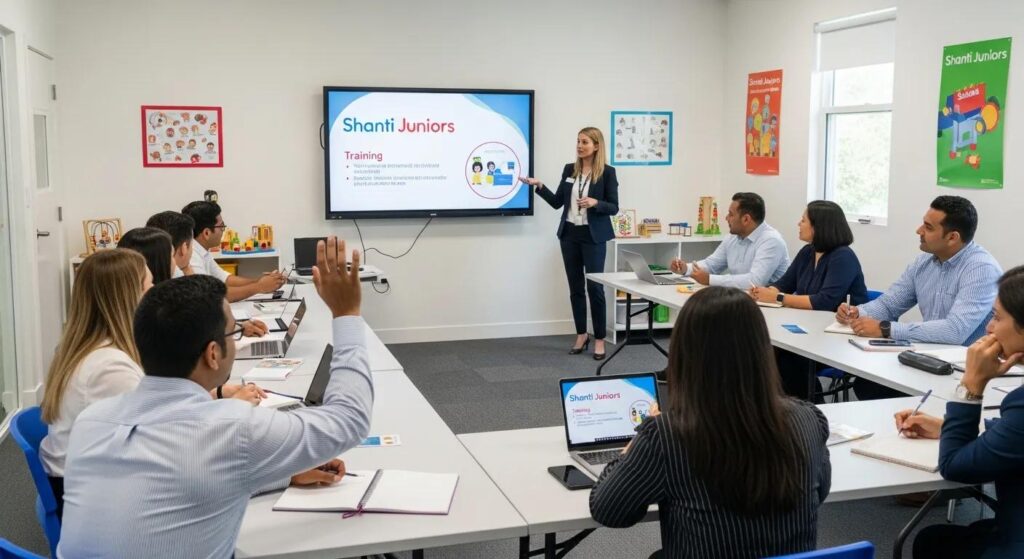
Shanti Juniors, a prominent preschool brand in India, offers extensive support to its franchisees, which is crucial for their success. This support includes:
- Location Assistance: Franchisees receive help in identifying suitable locations that meet the brand’s standards and market demand.
- Training Programs: Comprehensive training covering pedagogy, operations, and marketing is provided to ensure franchisees are well-prepared to run their preschools effectively.
- Marketing Support: Shanti Juniors offers local marketing strategies to help franchisees attract and retain students, enhancing their visibility in the community.
This robust support system is designed to empower franchisees and facilitate their growth in the competitive preschool market.
Potential Profitability
Investing in a preschool franchise can yield significant returns, making it an attractive option for entrepreneurs. The expected return on investment (ROI) for preschool franchises typically ranges from 15% to 40% within the first three years. This profitability is driven by the consistent demand for quality education and the growing awareness among parents about the importance of early childhood education. Additionally, the preschool sector in India is witnessing a steady increase in enrollment rates, further enhancing the potential for profitability.
What Are the Key Components of Preschool Franchise Investment in India?
When considering a preschool franchise investment, several key components must be evaluated:
- Franchise Fee: The initial franchise fee usually ranges from ₹1,00,000 to ₹5,00,000, depending on the brand.
- Setup Costs: These costs can vary from ₹5,00,000 to ₹15,00,000, covering the establishment of the preschool.
- Ongoing Costs: Monthly operational costs typically range from ₹30,000 to ₹2,00,000, which include salaries, utilities, and maintenance.
Understanding these components is vital for potential franchisees to assess the financial commitment required for a successful preschool venture.
How Is the Initial Franchise Fee Structured and What Does It Cover?
The initial franchise fee is a crucial aspect of the investment in a preschool franchise. This fee, which ranges from ₹1,00,000 to ₹5,00,000, covers several essential components:
- Brand Usage: Franchisees gain the right to use the established brand name and its associated reputation.
- Training and Support: The fee includes access to training programs and ongoing support from the franchisor.
- Marketing Materials: Franchisees receive marketing materials and strategies to promote their preschool effectively.
This structured fee ensures that franchisees are equipped with the necessary tools and resources to succeed in their business.
What Are the Typical Setup and Operational Costs for a Preschool Franchise?
Understanding the typical setup and operational costs is essential for prospective franchisees.
- Franchise Fees: As mentioned, these fees range from ₹1,00,000 to ₹5,00,000.
- Setup Costs: The initial setup costs can vary from ₹5,00,000 to ₹15,00,000, which includes renovations and educational materials.
- Operational Costs: Monthly operational costs typically range from ₹30,000 to ₹2,00,000, covering salaries, utilities, and maintenance.
These costs highlight the financial commitment required to establish and run a successful preschool franchise.
What Support and Training Does Shanti Juniors Provide to Franchisees?
Shanti Juniors provides comprehensive support and training to its franchisees, which is vital for their success.
- Initial Training: Franchisees undergo extensive training sessions that cover operational procedures, pedagogy, and marketing strategies.
- Ongoing Professional Development: Continuous learning opportunities are available to help franchisees stay updated with the latest educational practices and operational strategies.
- Access to Resources: Franchisees have access to a wealth of resources, including curriculum materials and administrative support.
This robust support system ensures that franchisees are well-prepared to manage their preschools effectively.
How Does Franchisee Training Enhance Operational Success?
Franchisee training plays a critical role in enhancing operational success.
- Initial Training Benefits: Comprehensive training equips franchisees with the knowledge and skills necessary to run their preschools efficiently.
- Ongoing Development: Continuous learning opportunities allow franchisees to adapt to changing educational trends and improve their operational practices.
- Impact on Performance: Well-trained franchisees are more likely to deliver high-quality education, leading to increased student enrollment and satisfaction.
This emphasis on training underscores the importance of preparation in achieving operational success.
What Ongoing Support Services Are Available for Franchise Management?
Franchise management is supported through various ongoing services provided by Shanti Juniors.
- Setup Assistance: Guidance on location selection and initial setup is offered to ensure franchisees start on the right foot.
- Teacher Training: Regular training programs for teachers help maintain high educational standards.
- Marketing Support: Ongoing marketing assistance ensures that franchisees can effectively promote their preschools and attract new students.
These support services are designed to facilitate the smooth operation of franchisees’ businesses.
How Do Market Trends Influence Preschool Franchise Profitability in India?
Market trends significantly impact the profitability of preschool franchises in India.
- Increased Demand for Quality Education: As parents become more aware of the importance of early childhood education, the demand for quality preschools continues to rise.
- Changing Parental Expectations: Parents are increasingly seeking preschools that offer innovative curricula and holistic development for their children.
- Impact of Urbanization: Urbanization has led to a growing population of working parents, further driving the demand for preschool services.
Understanding these trends is essential for franchisees to position their businesses effectively in the market.
What Is the Current Growth Rate of the Indian Preschool Education Sector?
The Indian preschool education sector is experiencing significant growth, with projections indicating a market size of USD 10 billion by 2028.
- Factors Driving Growth: Key factors include a low preschool penetration rate of around 50% in urban areas and increasing awareness among parents about the importance of early education.
- Market Opportunities: This growth presents numerous opportunities for franchisees to establish successful preschools in underserved areas.
Recognizing these growth trends can help franchisees capitalize on emerging opportunities in the market.
Despite significant growth and increasing awareness, challenges in access to early childhood education persist across India.
Early Childhood Education Investment & Access in India
Global investment in early childhood education is a key policy to address social and economic disadvantage for children and families. Since 1975, India has one of the world’s largest provisions for free, public early childhood education, under a program called theIntegrated Child Development Scheme. However, almost half of the children in India still do not have access to early childhood education and the reasons behind this inequality are largely unidentified.
Inequalities in demand and access to early childhood education in India, S Ghosh, 2019
How Do Location and Demographics Affect Franchise Success?
Location and demographics play a crucial role in the success of preschool franchises.
- Importance of Location: Choosing a location with high foot traffic and accessibility is vital for attracting families.
- Demographic Profiles: Understanding the local demographic, including the number of families with young children, can inform franchisees about potential enrollment rates.
- Changing Parental Expectations: Franchisees must adapt to the evolving expectations of parents regarding educational quality and facilities.
These factors highlight the importance of strategic planning in selecting a franchise location.
What Are the Expected Returns on Investment for Preschool Franchises?
The expected returns on investment for preschool franchises are generally favorable.
- Average ROI Percentages: Franchisees can anticipate an ROI of 15% to 30% within the first three years of operation.
- Factors Influencing Profitability: Key factors include location, operational efficiency, and the quality of education provided.
Understanding these financial expectations is crucial for prospective franchisees to assess the viability of their investment.
How Is Preschool Franchise Profitability Calculated?
Calculating profitability for preschool franchises involves several key components.
- Investment Components: Initial investments, ongoing operational costs, and revenue generated from tuition fees are critical factors.
- Example Calculation: For instance, if a preschool generates ₹1,00,000 in monthly revenue with ₹50,000 in operational costs, the monthly profit would be ₹50,000, leading to an annual profit of ₹6,00,000.
This calculation illustrates the financial dynamics of running a preschool franchise.
What Financial Projections Should Potential Franchisees Consider?
Potential franchisees should consider various financial projections when evaluating a preschool franchise investment.
- Initial Investment: Understanding the total initial investment required is crucial for budgeting.
- Revenue Expectations: Franchisees should project potential revenue based on local market conditions and enrollment rates.
- Break-even Analysis: Conducting a break-even analysis helps franchisees determine how long it will take to recoup their initial investment.
These financial projections are essential for making informed investment decisions.
What Legal and Regulatory Requirements Must Be Met for Preschool Franchises in India?
Operating a preschool franchise in India requires compliance with various legal and regulatory requirements.
- Compliance with Local Regulations: Franchisees must adhere to local laws governing education and business operations.
- Essential Licenses and Permits: Obtaining necessary licenses, such as business registration and health permits, is crucial for legal operation.
Understanding these requirements is vital for franchisees to avoid legal complications.
Which Licenses and Permits Are Essential for Operating a Preschool Franchise?
Several licenses and permits are essential for operating a preschool franchise in India.
- Business Registration: Franchisees must register their business with the appropriate government authorities.
- Fire Safety Certificate: Ensuring compliance with fire safety regulations is crucial for the safety of students and staff.
- Health and Safety Permits: Obtaining health permits ensures that the preschool meets hygiene and safety standards.
These licenses are necessary for the legal operation of a preschool franchise.
How Does Compliance Impact Franchise Operations and Reputation?
Compliance with legal and regulatory requirements significantly impacts franchise operations and reputation.
- Importance of Compliance: Adhering to regulations ensures the safety and well-being of students and staff.
- Impact on Reputation: Non-compliance can lead to legal issues and damage the franchise’s reputation, affecting enrollment and profitability.
Maintaining compliance is essential for the long-term success of a preschool franchise.
How to Develop a Successful Preschool Franchise Business Plan in India?
Developing a comprehensive business plan is crucial for the success of a preschool franchise.
- Executive Summary: A clear executive summary outlines the franchise’s vision and goals.
- Market Analysis: Conducting a thorough market analysis helps identify target demographics and competition.
- Financial Projections: Including detailed financial projections ensures that potential investors understand the expected returns.
A well-structured business plan serves as a roadmap for franchisees to navigate their entrepreneurial journey.
What Are the Critical Elements of a Preschool Franchise Business Plan?
A successful preschool franchise business plan should include several critical elements.
- Market Analysis: Understanding the local market and competition is essential for positioning the franchise effectively.
- Franchise Model: Clearly defining the franchise model helps outline operational procedures and expectations.
- Operational Plan: An operational plan detailing staffing, curriculum, and daily operations is crucial for smooth functioning.
These elements are vital for creating a comprehensive business plan that attracts investors and guides franchisees.
How Can Market Research Inform Your Franchise Strategy?
Market research plays a crucial role in informing franchise strategy.
- Understanding Parental Expectations: Research helps franchisees understand what parents seek in a preschool, allowing them to tailor their offerings accordingly.
- Identifying Target Markets: Analyzing demographic data helps franchisees identify potential markets for expansion.
- Competitive Analysis: Understanding competitors’ strengths and weaknesses enables franchisees to differentiate their services.
Utilizing market research effectively can enhance a franchisee’s strategic planning and operational success.
How Does Shanti Juniors’ Proven Curriculum and Brand Recognition Benefit Franchisees?
Shanti Juniors offers a proven curriculum and strong brand recognition, which significantly benefit franchisees.
- Proven Curriculum: The curriculum is designed to foster holistic development in children, ensuring high educational standards.
- Brand Recognition: Being associated with a well-known brand enhances credibility and attracts parents seeking quality education.
- Comprehensive Support: Franchisees benefit from ongoing support and resources, ensuring they can deliver the best educational experience.
These advantages position Shanti Juniors franchisees for success in the competitive preschool market.
What Educational Methodologies Differentiate Shanti Juniors?
Shanti Juniors employs various educational methodologies that set it apart from competitors.
- Montessori Method: This child-centered approach encourages independent learning and exploration.
- Waldorf Approach: Emphasizing creativity and imagination, this methodology fosters holistic development.
- Reggio Emilia Approach: This approach focuses on collaborative learning and community involvement, enhancing children’s social skills.
These methodologies contribute to a unique educational experience that appeals to parents and supports children’s development.
How Does Brand Credibility Influence Parent Enrollment and Franchise Growth?
Brand credibility plays a significant role in influencing parent enrollment and franchise growth.
- Impact of Brand Recognition: A strong brand reputation instills trust in parents, making them more likely to enroll their children.
- Trust and Enrollment Rates: High credibility leads to increased enrollment rates, as parents seek reliable educational options for their children.
Understanding the importance of brand credibility can help franchisees leverage their brand’s strengths to attract more families.
Where Can Potential Franchisees Find Detailed Preschool Franchise Investment Information?
Potential franchisees can find detailed information about preschool franchise investments through various resources.
- Franchise Websites: Many franchise brands provide comprehensive information about investment requirements and support.
- Market Research Reports: These reports offer insights into industry trends and financial projections.
- Franchise Expos: Attending franchise expos allows potential franchisees to connect with brands and gather information firsthand.
Utilizing these resources can help prospective franchisees make informed decisions about their investments.
How to Access Comprehensive Preschool Franchise Investment Details?
Accessing comprehensive preschool franchise investment details is essential for potential franchisees.
- Franchise Websites: Many brands offer detailed investment information on their official websites.
- Consultants: Engaging with franchise consultants can provide personalized guidance and insights.
- Networking with Franchisees: Connecting with current franchisees can offer valuable firsthand experiences and advice.
These methods can help potential franchisees gather the necessary information to evaluate their investment options effectively.
What Resources Provide Early Childhood Education Insights for Franchise Success?
Several resources can provide valuable insights into early childhood education, aiding franchise success.
- Franchise Websites: Many brands offer educational resources and best practices for franchisees.
- Market Research Reports: These reports provide insights into industry trends and consumer preferences.
- Educational Blogs: Following reputable educational blogs can keep franchisees informed about the latest developments in early childhood education.
Leveraging these resources can enhance franchisees’ understanding of the market and improve their operational strategies.
For those interested in starting their own preschool, exploring a “preschool franchise” can be a great option.
One of the most important things to consider when opening a preschool is “student enrollment”.
To learn more “about Shanti Juniors” and its mission, visit their website.
For additional “educational insights”, explore the resources available online.